

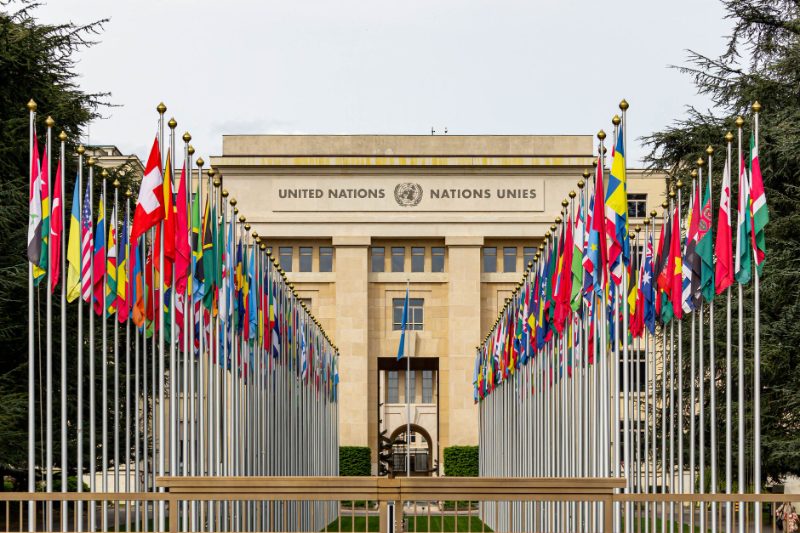
India’s exports of goods and services touched a record $863.1 billion in 2025-26, up from $676.5 billion in 2021-22, according to figures presented during the country’s 8th Trade Policy Review at the World Trade Organisation held on July 21 and 23, 2026. Commerce Secretary Rajesh Agrawal led the Indian delegation through the review, which covered India’s trade policies from January 2021 to December 2025.
The Trade Policy Review is a periodic WTO exercise in which member countries’ trade policies and practices are examined by the broader membership. More than 40 WTO members took part in questioning India’s delegation, submitting over 900 written questions covering tariffs, non-tariff measures, subsidies, digital trade rules and agricultural support programmes.
How Does India’s Export Growth Compare Globally?
The roughly 28% rise in combined goods and services exports over four years places India among the faster-growing major exporters through a period marked by global supply chain disruption, the pandemic recovery cycle, and rising protectionism among advanced economies. Services exports, led by IT, business process outsourcing and professional services, have been a key driver of the headline figure, cushioning goods exporters who faced tariff headwinds in markets such as the United States. Officials at the review pointed to production-linked incentive schemes and free trade agreements, including the recently operational India-UK pact, as structural contributors to the export trajectory.
What Did WTO Members Question India On?
The more than 900 questions submitted by member countries focused heavily on India’s tariff structure for agricultural goods, its use of quantitative restrictions and export duties on commodities such as rice, and the transparency of subsidy programmes for sectors including electronics manufacturing and textiles. Several members also raised queries on India’s digital trade and data localisation rules, reflecting ongoing friction between India’s data governance approach and the WTO’s broader push toward liberalised e-commerce rules. India’s delegation defended its policy space as necessary for food security and domestic manufacturing capacity building consistent with its development status.
Market and Trade Reaction
Exporter associations described the record figures as validation of policy continuity, while cautioning that the second half of 2026 carries fresh headwinds from US Section 301 tariffs and forced-labour duties affecting Indian shipments. Currency and equity markets showed no material reaction to the WTO review itself, since the proceedings are consultative rather than binding, but trade economists flagged the review as a useful benchmark for assessing India’s export resilience heading into a more tariff-fragmented global environment.
What Happens Next?
The WTO secretariat will publish a formal secretariat report and India’s own policy statement from the review in the coming weeks, alongside members’ questions and India’s written responses. These documents typically inform future trade negotiations and are referenced by trading partners during bilateral FTA talks, including India’s ongoing negotiations with the United States and the European Union.
Frequently Asked Questions
What is India’s Trade Policy Review at the WTO?
It is a periodic WTO exercise in which member countries examine a nation’s trade policies; India’s 8th review was held on July 21 and 23, 2026, covering the period from January 2021 to December 2025.
How much did India’s exports grow according to the review?
India’s combined goods and services exports reached a record $863.1 billion in 2025-26, up from $676.5 billion in 2021-22, a rise of roughly 28% over four years.
What issues did WTO members raise about India’s trade policy?
Members submitted over 900 questions, focusing mainly on agricultural tariffs, export restrictions on commodities like rice, subsidy transparency, and India’s digital trade and data localisation rules.








Leave a comment