

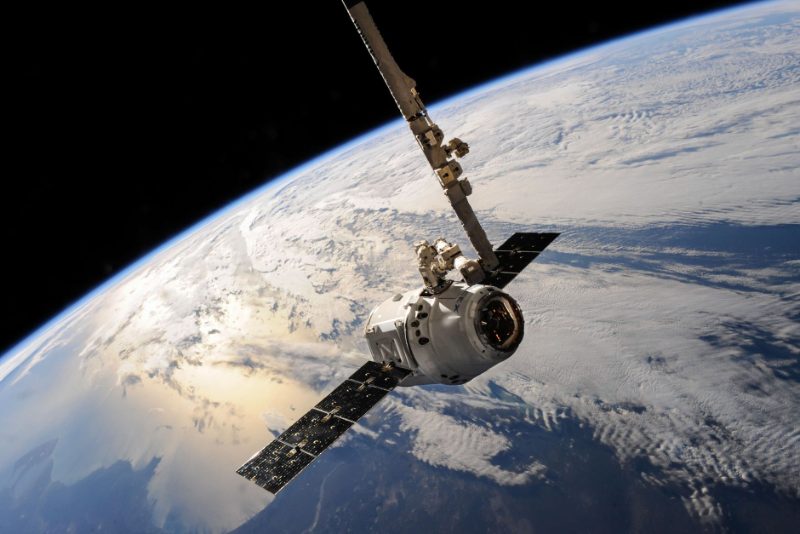
Bengaluru-based spacetech startup Pixxel has raised $100 million in a Series C funding round, the largest single funding round ever secured by an Indian space technology company. The round was led by Temasek and Seraphim Space, with participation from new investors 360 ONE Asset and IMM Invest alongside existing backers who increased their commitments.
The investment brings Pixxel’s total funding to $195 million and marks a strategic pivot for the six-year-old company, founded by Awais Ahmed and Kshitij Khandelwal, from a hyperspectral satellite operator into a broader Earth-intelligence and space-infrastructure business. Pixxel currently operates a constellation of hyperspectral imaging satellites that capture over 150 spectral bands, used by agriculture, mining, defence and environmental monitoring customers to detect changes invisible to standard optical satellites.
Why Did Pixxel Raise $100 Million in Series C Funding?
Pixxel says the fresh capital will fund new sensing technologies, advanced analytics software and sovereign space systems, as it broadens its ambitions beyond imaging into full-stack Earth-intelligence infrastructure. The company plans to expand its satellite constellation and invest heavily in the software layer that turns raw hyperspectral data into actionable insights for governments and enterprises. With India’s space sector opened to private players since 2020, Pixxel has positioned itself as a national champion capable of competing with global players such as Planet Labs and Maxar.
What Does This Mean for India’s Space Technology Ecosystem?
The $100 million round is a signal that global institutional capital now sees Indian deep-tech and spacetech startups as investable at scale, not just as niche science projects. India’s space economy, currently valued at roughly $8.4 billion, is targeted by the government to grow to $44 billion by 2033, and private companies like Pixxel, Agnikul Cosmos and Skyroot Aerospace are central to that push. For Indian businesses in agriculture, insurance, mining and infrastructure, wider access to high-resolution hyperspectral data could translate into better crop yield forecasting, faster disaster response and more precise resource mapping.
Industry Reaction and Expert Commentary
Investors described the round as a vote of confidence in India’s ability to build sovereign space infrastructure rather than depend solely on foreign satellite data providers. Seraphim Space, a repeat investor, noted that Pixxel’s shift toward an Earth-intelligence platform aligns with rising global demand for climate monitoring and precision agriculture data. Industry analysts tracking India’s startup funding landscape point out that 2026 has seen fewer but larger deep-tech rounds, with deep-tech and spacetech bets forming an increasingly consistent part of weekly funding activity rather than a rare exception.
What Happens Next?
Pixxel is expected to launch additional satellites to expand its hyperspectral constellation over the next 12 to 18 months while scaling its analytics platform for enterprise and government customers. The company has also signalled interest in sovereign space system contracts, potentially aligning with India’s defence and strategic sectors. Watch for further announcements on satellite launches, new government contracts, and possible international expansion as Pixxel works to convert this capital into a broader Earth-intelligence business.
Frequently Asked Questions
How much funding did Pixxel raise in its Series C round?
Pixxel raised $100 million in Series C funding, led by Temasek and Seraphim Space, bringing its total funding raised to date to $195 million.
What does Pixxel do?
Pixxel is an Indian spacetech company that operates hyperspectral imaging satellites, capturing detailed spectral data used for agriculture, mining, defence and environmental monitoring applications.
Why is this funding round significant for India?
It is the largest funding round ever raised by an Indian spacetech company, signalling growing global investor confidence in India’s private space sector and its push toward sovereign space infrastructure.













Leave a comment