

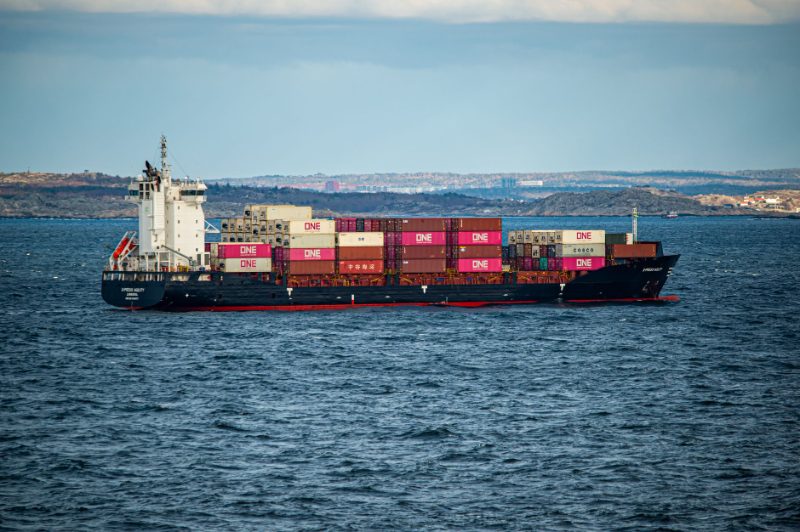
Kerala seaport goes live for direct cargo — breaking Colombo’s monopoly on India’s maritime transshipment.
Kerala’s Vizhinjam International Seaport crossed a landmark on August 18, 2026, formally beginning full export and import cargo operations as a designated customs port — ending India’s decades-long near-total dependence on Sri Lanka’s Colombo Port and Singapore’s Port of Tuas for transshipment of containers destined for Indian ports. The Adani Ports-developed facility, with a natural depth of 18–20 metres capable of handling ultra-large container vessels of 24,000 TEU capacity without dredging, is the first port on India’s coastline genuinely competitive with Colombo’s specification for post-Panamax vessel calls.
India currently pays approximately $200–400 million annually in transshipment charges at Colombo and Singapore for containers that could theoretically transit Indian ports directly. Vizhinjam’s commissioning begins the process of internalising this value. In its first full operational year, the port is targeted to handle 1 million TEUs — modest by Colombo’s 7-million-TEU annual throughput, but representing significant capture of South Asia-bound cargo currently transshipping through Sri Lanka.
For Indian exporters of chemicals and manufactured goods to European, West African, and transatlantic markets, the new port offers direct-call services that eliminate the 2–5 day delay and $150–300 per container premium associated with Colombo transshipment. Maersk, MSC, and CMA CGM have confirmed direct service calls at Vizhinjam from Q4 2026.
How Does Vizhinjam Port Affect Indian Export Costs?
Indian exporters save $150–300 per container and 2–5 days in transit time by using Vizhinjam directly instead of transshipping through Colombo or Singapore. For the chemicals and coatings industry exporting to Europe and West Africa, this significantly improves competitiveness against regional rivals.
Frequently Asked Questions
When did Vizhinjam Port start full EXIM operations?
Vizhinjam International Seaport began full export and import cargo operations as a designated customs port on August 18, 2026. Developed by Adani Ports, it is India’s first deep-water port capable of handling 24,000 TEU ultra-large container vessels without dredging.
How does Vizhinjam Port challenge Colombo’s transshipment role?
Vizhinjam’s 18–20 metre natural depth matches Colombo’s vessel specification, allowing it to attract direct calls from post-Panamax vessels currently calling Colombo for Indian cargo. Its target of 1 million TEUs in its first year begins internalising $200–400 million in annual transshipment charges India currently pays to Sri Lanka and Singapore.











Leave a comment