

India’s two largest conglomerates are racing to close a structural supply gap in polyvinyl chloride that has kept the country dependent on imports for nearly a third of its consumption. Reliance Industries is building a 1.5 million tonne per annum PVC complex, while Adani Group is developing a 2 MTPA build-out of its own, together adding 3.5 MTPA of fresh domestic capacity that industry estimates suggest will narrow India’s roughly 2.5 million-tonne local supply-demand gap by 2027. The investments mark the most significant capacity addition in India’s plastics value chain in over a decade and come as the broader domestic plastics industry, valued at an estimated $47 billion in 2026, pushes to reduce reliance on imported resin from China, the United States and the Middle East.
PVC is among the most widely used polymers in India, consumed heavily in pipes and fittings for water supply, irrigation and sanitation infrastructure, as well as in cables, packaging film and construction applications. Despite this scale of demand, India has historically imported a large share of its PVC resin requirement because domestic capacity additions lagged consumption growth, leaving manufacturers exposed to volatile international prices and anti-dumping duty disputes with China and other exporting nations. The Reliance and Adani projects, once commissioned, are expected to materially shift that balance, positioning India to become substantially more self-sufficient in a polymer that underpins its infrastructure and housing construction boom.
The timing aligns with a broader wave of investment and policy attention on the plastics sector, most visibly on display at PLASTINDIA 2026, the industry’s flagship exhibition held in Delhi this year, which showcased both manufacturing scale-up and a parallel push toward sustainability. Organisers and government officials used the platform to highlight India’s ambition to nearly double plastics exports, from around $10 billion currently to a targeted $20 billion by 2027, positioning the country as a global manufacturing and export hub for packaging, automotive components and healthcare-grade plastics even as it builds out upstream polymer capacity.
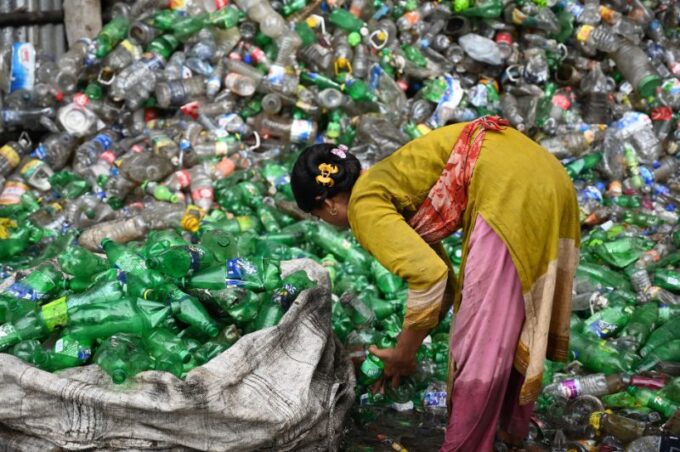
Alongside the capacity build-out, Gujarat is emerging as a hub for chemical recycling technologies that convert mixed plastic waste into ISCC-Plus certified resins suitable for reuse in food-grade and industrial applications. This dual push, expanding virgin polymer capacity while simultaneously scaling circular-economy infrastructure, reflects pressure on Indian manufacturers from both domestic policy on extended producer responsibility and international buyers who increasingly demand recycled content certification, particularly from European and North American customers sourcing packaging and automotive components from India.
Market participants say the capacity additions are likely to have a stabilising effect on domestic PVC pricing over the medium term, reducing the volatility Indian converters have faced when global supply disruptions or anti-dumping actions in destination markets disrupt import flows. Piping and infrastructure companies, which are among the largest consumers of PVC resin in India, stand to benefit most directly from more predictable domestic supply as the government continues to push large-scale water infrastructure programmes such as Jal Jeevan Mission, which relies heavily on PVC and HDPE piping.
Looking ahead, analysts expect the Reliance and Adani projects to reshape competitive dynamics across India’s downstream plastics processing industry, potentially compressing margins for smaller resin traders who have historically profited from import arbitrage, while benefiting large-scale converters who can secure long-term domestic supply contracts. With packaging accounting for over 41% of India’s plastics market and healthcare and pharmaceutical applications posting the fastest segment growth, the coming wave of upstream capacity is likely to be a key enabler of India’s broader ambition to double its plastics exports and cement Western India’s petrochemical clusters as a genuine alternative to established Middle Eastern and Chinese supply chains.








Leave a comment