

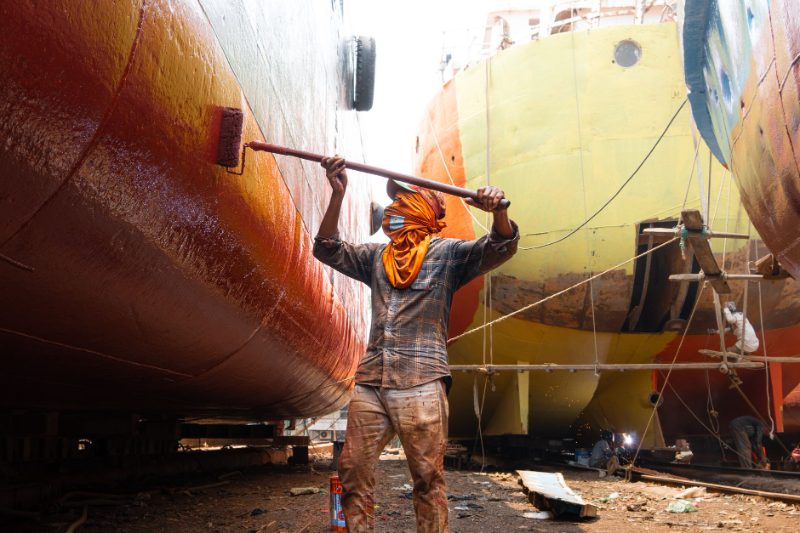
India’s paints and coatings industry, currently valued at approximately USD 9.6 billion, is on track to reach USD 16.5 billion by FY30 — but FY25 exposed significant margin stress across the sector, according to a new analysis by Rubix Data Sciences. The paints industry India is emerging from two years of subdued demand growth, with sector players now cautiously optimistic about a sustained recovery driven by infrastructure investment, rural demand, and new entrants reshaping competitive dynamics.
The broader market is projected to grow from USD 11.45 billion in 2025 to USD 12.51 billion in 2026, with a CAGR of 9.28% taking it to USD 19.5 billion by 2031. By resin type, acrylic coatings account for 36.48% of the market and are forecast to grow at 9.56% through 2031. Architectural applications dominate, accounting for 77.12% of total market size as of 2025.
Why Is India’s Paints Industry Heading for USD 16.5 Billion?
Three structural forces are driving the long-term growth of the paints industry India: sustained public-sector infrastructure spending (roads, bridges, metro projects), the rollout of new production capacity that is expected to nearly double industry output by FY 2027, and deeper penetration into Tier 2 through Tier 4 towns where per capita paint consumption remains well below the national average. Rising agricultural incomes and the government’s Pradhan Mantri Awas Yojana (PMAY) housing scheme have also added a significant volume tailwind for decorative paints, particularly in rural and semi-urban markets.
What Is Driving Margin Stress in the Paint Sector?
FY25 was marked by a convergence of headwinds: raw material cost inflation (particularly crude-linked inputs such as titanium dioxide, epoxy resins, and solvents), increased advertising and distribution spend as Grasim Industries’ Birla Opus brand entered the market with aggressive pricing, and a slower-than-expected demand recovery. Rubix Data Sciences noted that companies had to absorb a significant portion of input cost increases rather than pass them through, compressing EBITDA margins across the board. The Bureau of Indian Standards (BIS) and Central Pollution Control Board (CPCB) VOC compliance requirements are also compelling manufacturers to invest in reformulation — a further near-term cost burden.
Market Reaction and Industry Response
Leading players — Asian Paints, Berger Paints, Kansai Nerolac, and Akzo Nobel India — have responded with calibrated price adjustments, premium product launches, and expansion into adjacent categories such as waterproofing, construction chemicals, and wood coatings. Asian Paints reported full-year FY26 consolidated sales of Rs 35,516 crore (up 5.1%), while Berger Paints logged an 11.8% volume increase in Q4 FY26. New entrant Birla Opus has reportedly captured 6–8% market share within its first two years of national operations — an unusually rapid gain that is forcing incumbents to sharpen their competitive responses, including dealer incentive schemes and digital tinting machine deployments.
What Happens Next?
The near-term outlook for the paints and coatings sector hinges on three key variables: crude oil and TiO2 price trajectories, the pace of housing completions under PMAY, and the monsoon impact on construction activity in Q2 FY27. Analysts expect demand to recover to high-single-digit volume growth from Q3 FY27 onward, supported by completion of deferred housing projects. The export opportunity in industrial coatings — particularly for auto OEMs, infrastructure, and marine applications — is also gaining attention, with India’s coating exports growing at 11% CAGR over the last five years.
Frequently Asked Questions
What is the current size of India’s paints industry?
India’s paints and coatings industry is currently valued at approximately USD 9.6–11.45 billion (estimates vary by methodology), and is projected to reach USD 12.51 billion in 2026. Long-term forecasts from multiple research firms put the market at USD 16.5–19.5 billion by 2030–31, growing at a CAGR of approximately 9–10%.
Who are the top companies in India’s paint market?
Asian Paints is the market leader with roughly 40% share, followed by Berger Paints (18–20%), Kansai Nerolac, Akzo Nobel India, and Indigo Paints. Grasim Industries’ Birla Opus brand, launched in 2024, is the most significant new entrant and has gained an estimated 6–8% share in its first two years of operations.
What is causing margin pressure in the India paints sector in 2025–26?
Margin pressure in the India paints sector stems from raw material cost inflation (titanium dioxide, crude-linked solvents and resins), aggressive pricing by new entrant Birla Opus, higher advertising and distribution spend, and reformulation costs driven by tightening VOC emission norms from BIS and CPCB. Companies are recovering through calibrated price hikes and premiumisation strategies.








Leave a comment