

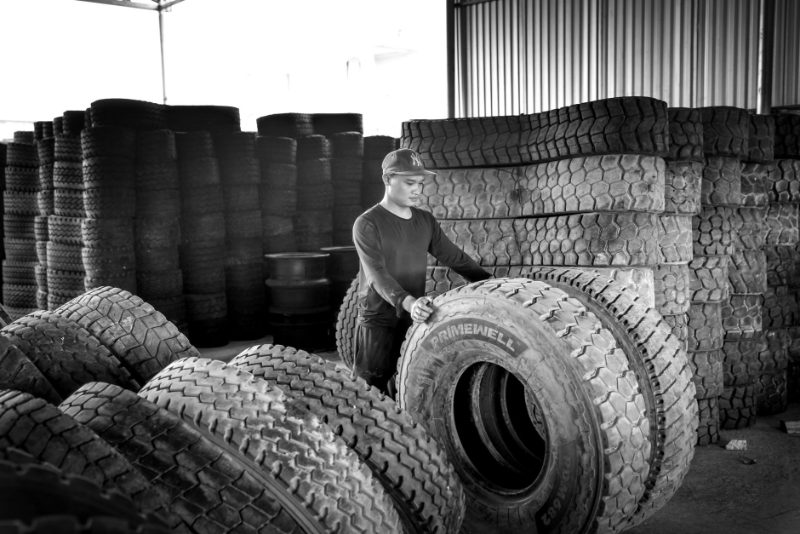
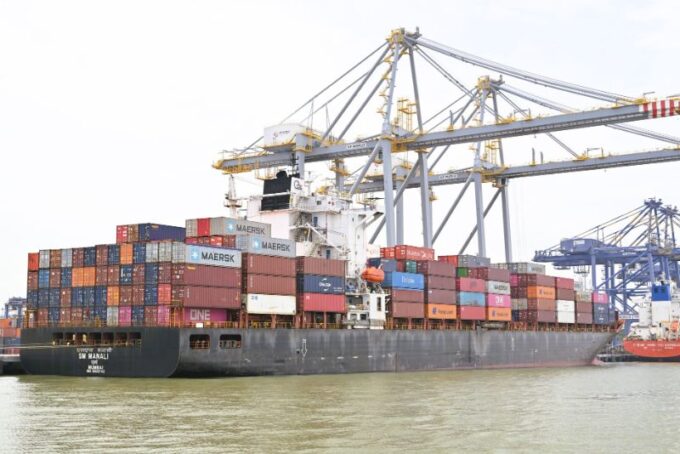
Liberia’s ban on the export of raw natural rubber has tightened global supply at a time when inventories are already running low, adding an upward price bias to the global rubber market and directly raising India’s rubber import costs. The Liberia rubber export ban impact on India is being closely monitored by tyre makers, rubber goods manufacturers, and commodity traders, as the West African nation is among the significant natural rubber producers whose policy actions can move global prices.
The ban — which restricts the export of unprocessed natural rubber to encourage domestic value addition — comes as global natural rubber prices are already running approximately 30.61% above year-ago levels, with benchmark prices at 217.20 USD cents per kg as of July 10, 2026. For India, which imports natural rubber to supplement domestic production when supply falls short of tyre industry demand, any additional tightening of global supply is a cost headwind.
Why Has Liberia Banned Raw Natural Rubber Exports?
Liberia’s ban on raw rubber exports is a policy designed to shift the country from a raw commodity exporter to a value-added rubber goods producer. By restricting raw natural rubber exports, the government aims to incentivise domestic processing — including rubber sheet manufacturing, compound rubber production, and latex concentrate plants — that would generate more employment and higher export revenues per tonne. This export restriction model has precedents in other commodity-exporting nations and mirrors moves made by Indonesia and Malaysia with palm oil processing at various points. For the global rubber market, it removes a meaningful volume of raw supply, forcing buyers to either pay premium prices or source from alternative origins.
How Does the Liberia Rubber Export Ban Affect India’s Rubber Industry?
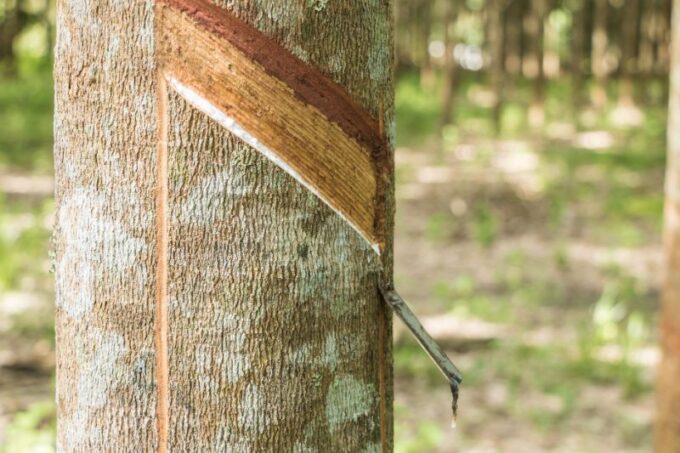
India is the world’s fourth-largest consumer of natural rubber and fifth-largest consumer of combined natural and synthetic rubber. The country’s tyre industry — led by companies like MRF, Apollo Tyres, CEAT, and JK Tyre — relies heavily on natural rubber as a primary raw material. India’s domestic rubber production, concentrated in Kerala (over 90% of output) and Tripura (approximately 9%), is supplemented by imports when domestic supply is insufficient, which occurs seasonally during the monsoon tapping disruption and structurally when demand growth outpaces plantation output. With Liberia’s supply now restricted from global markets, India’s rubber importers face higher import parity prices, squeezing the input cost advantage that cheaper imported rubber previously offered versus domestic supply at Rs 25,350 per 100 kg (RSS4, May 2026).
Market Reaction and Industry Response
India’s tyre manufacturers have responded to sustained high rubber prices through a combination of selective price hikes, synthetic rubber substitution (where technically feasible), and efficiency improvements in compound formulations. MRF — India’s largest tyre company by revenue — and Apollo Tyres have both cited elevated natural rubber costs in their recent earnings commentary. The Automotive Tyre Manufacturers Association (ATMA) is closely tracking global supply developments, including the Liberia ban, to assess the cumulative import cost impact. The Rubber Board of India’s iSNR sustainability certification initiative and the INR Konnect Platform, which aims to bring untapped plantation holdings into production by connecting idle land with interested growers, represent medium-term supply responses that could partially offset import dependency.
What Happens Next?
The duration and scope of Liberia’s raw rubber export ban will determine how significant its market impact proves over the remainder of 2026. If the ban remains in force through the September–December peak supply period in West Africa, the pressure on global rubber prices could intensify. For India, the key questions are: whether the Rubber Board accelerates its productivity improvement programmes in Kerala and Tripura; whether tyre companies pass on higher costs to vehicle OEMs and replacement market buyers; and whether synthetic rubber (SBR and BR) import volumes increase as a substitution strategy. Rubber futures on the Tokyo Commodity Exchange (TOCOM) and Shanghai Futures Exchange (SHFE) will be watched closely for directional signals.
Frequently Asked Questions
What is Liberia’s rubber export ban and why does it matter for India?
Liberia has banned the export of raw natural rubber to encourage domestic processing and value addition. This reduces global supply of natural rubber at a time when inventories are already low, pushing prices higher globally. India, which imports natural rubber to supplement domestic production, faces higher import costs as a result.
How much natural rubber does India import annually?
India imports natural rubber to bridge the gap between domestic production — mainly from Kerala and Tripura — and demand from the tyre and rubber goods industries. Import volumes fluctuate based on domestic production levels, monsoon impact on tapping, and the price differential between imported and domestic rubber grades.
Which Indian companies are most affected by rising natural rubber prices?
India’s tyre manufacturers are the most directly affected, including MRF (India’s largest tyre company by revenue), Apollo Tyres, CEAT, JK Tyre, and Balkrishna Industries (BKT). These companies use natural rubber as a primary raw material, and sustained price increases at 30%+ above year-ago levels place significant pressure on their gross margins.








Leave a comment