

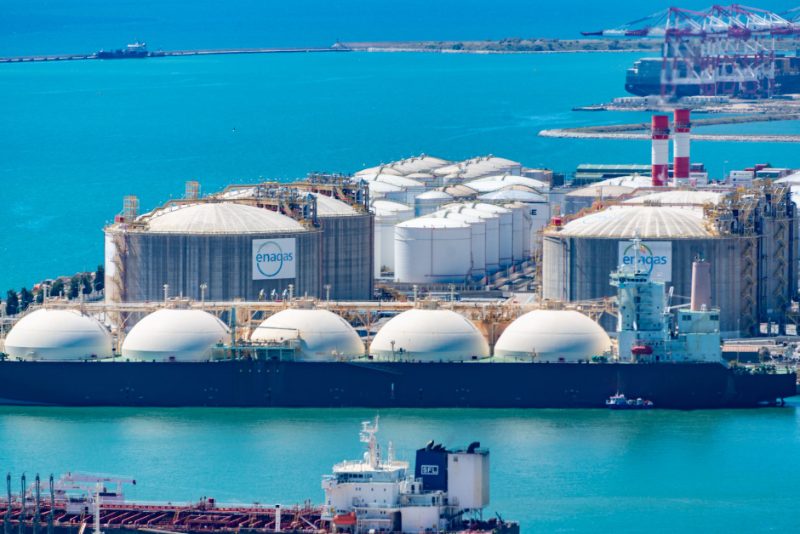
IndianOil LNG Private Limited (IOLPL) has received environmental clearance from the Ministry of Environment, Forest and Climate Change (MoEFCC) to double the LNG regasification capacity of its Ennore terminal in North Chennai from 5 million tonnes per annum (MTPA) to 10 MTPA, at an investment of approximately Rs 3,400 crore. The IndianOil LNG Ennore expansion green nod, announced on July 7, 2026, marks a significant step in strengthening southern India’s natural gas supply infrastructure and supporting the chemical and industrial sectors across Tamil Nadu, Andhra Pradesh, and Karnataka.
The expanded terminal will increase daily regasification output from 20 million standard cubic metres per day (MMSCMD) to 40 MMSCMD, effectively doubling the volume of liquefied natural gas that can be converted into pipeline-ready gas. The Ennore LNG terminal, located at Kamarajar Port in North Chennai, is one of India’s key LNG import facilities and serves as a critical energy hub for gas-intensive industries in the southern peninsula.
What Does the Ennore LNG Expansion Mean for South India’s Chemical Industry?
The IndianOil LNG Ennore expansion will substantially increase the availability of natural gas — a key feedstock and fuel — for chemical plants, fertiliser units, power generation facilities, and industrial consumers across Tamil Nadu, Andhra Pradesh, and Karnataka. Southern India’s chemical industry, which includes petrochemical clusters around Chennai, Vizag (Visakhapatnam), and Mangalore, has historically faced tighter gas supply constraints than the northern and western regions served by the Dahej and Hazira terminals. By doubling Ennore’s capacity, IOLPL will enable a step-up in gas availability that can support expansion of existing chemical plants, encourage new investments in gas-based manufacturing, and support the transition of industrial boilers and furnaces away from liquid fuels. The investment of Rs 3,400 crore underscores the strategic importance attached to southern India’s energy infrastructure.
Why Did MoEFCC Grant Environmental Clearance Now?
The environmental clearance from MoEFCC represents the culmination of an extensive environmental impact assessment (EIA) process, including public hearings and technical scrutiny. LNG regasification terminals are relatively low-impact in terms of direct emissions compared to coal or oil-based facilities, as regasification is a physical process that converts liquid LNG back to its gaseous form. The regulatory green nod signals confidence in IOLPL’s environmental management plan for the expanded facility, including provisions for fugitive emissions control, water management, and marine environment protection at the coastal Kamarajar Port site. India’s push to raise natural gas’s share of the country’s primary energy mix from approximately 6% to 15% by 2030 also provides strong policy tailwinds for LNG terminal capacity additions.
Market Reaction and Industry Response
The environmental clearance for IOLPL’s Ennore expansion was reported by Chemical Industry Digest on July 7, 2026, and is being seen as a positive signal for India’s gas infrastructure build-out. For IndianOil Corporation (IOC), the parent company, the expansion strengthens its position in the LNG import and distribution segment, complementing its existing refining and pipeline network. Gas-intensive chemical manufacturers in the southern region — including fertiliser plants in Andhra Pradesh and petrochemical units in Tamil Nadu — stand to benefit most directly, with improved supply security and potentially more competitive gas pricing as infrastructure capacity grows. City gas distribution (CGD) companies serving southern urban centres are also expected to benefit from the improved supply availability.
What Happens Next?
With environmental clearance secured, IOLPL is expected to initiate detailed engineering and procurement for the Rs 3,400 crore expansion project. Construction timelines for LNG terminal expansions of this scale typically range from 3 to 5 years, depending on civil work, cryogenic equipment procurement, and regulatory commissioning approvals. The project will be closely watched by India’s gas sector as a bellwether for future southern India LNG capacity additions. Other terminal operators and potential new entrants may also benchmark their own expansion plans against the pace of IOLPL’s execution. Meanwhile, India’s overall LNG import capacity — currently spread across Dahej, Hazira, Dabhol, Kochi, Mundra, and Ennore — will grow significantly once the Ennore expansion comes online, supporting the country’s clean energy and industrial gas goals.
Frequently Asked Questions
What is the IndianOil LNG Ennore terminal expansion project?
IndianOil LNG Private Limited received environmental clearance on July 7, 2026, to expand its Ennore LNG terminal in North Chennai from 5 MTPA to 10 MTPA at a cost of Rs 3,400 crore. The expansion will double daily regasification capacity from 20 MMSCMD to 40 MMSCMD, boosting natural gas supply across Tamil Nadu, Andhra Pradesh, and Karnataka.
Which industries in South India will benefit from the Ennore LNG expansion?
Chemical plants, fertiliser units, petrochemical complexes, gas-based power plants, and industrial consumers across Tamil Nadu, Andhra Pradesh, and Karnataka will be the primary beneficiaries. The expansion addresses a long-standing gas supply gap in southern India, which has fewer pipeline connections to domestic gas fields than the north and west.
What is India’s natural gas share in the energy mix and what is the 2030 target?
Natural gas currently accounts for approximately 6% of India’s primary energy mix. The government has set a target to raise this to 15% by 2030, which requires significant expansion of LNG import terminals, gas pipelines, and city gas distribution networks. The Ennore expansion is one step in this broader infrastructure build-out.










Leave a comment