

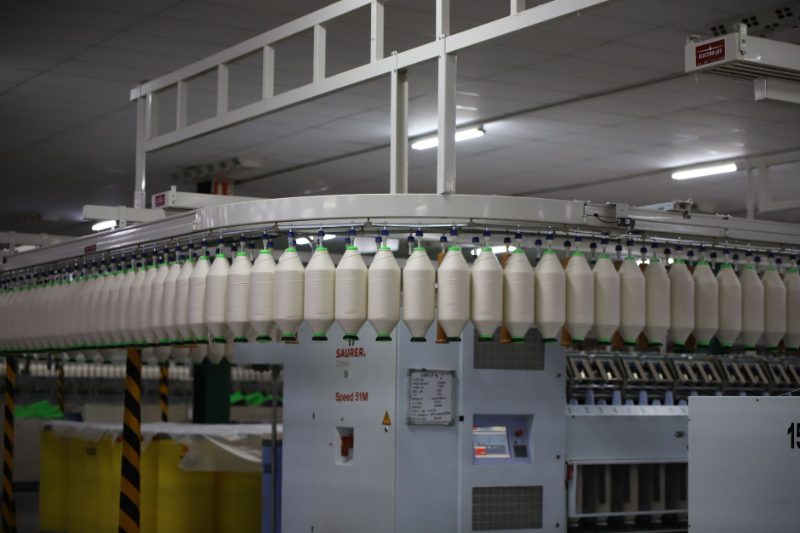
Vardhman Textiles reported operational performance broadly steady in its June 2026 quarter, with yarn and fabric sales in line with the year-ago period, even as rising domestic cotton prices squeezed margins. The company’s new ReNova plant capacity expansion began commercial operations in July, alongside an expanded 14,000-spindle melange yarn facility.
India’s largest integrated textile maker leaned on its diversified geographic footprint, spanning the UK, EU, Japan, South America, Egypt, Australia, and India, to maintain healthy capacity utilisation despite global demand headwinds. Management flagged that margins are under pressure from rising cotton costs in India, and cautioned that profitability may not fully recover unless yarn prices move up correspondingly.
Why Are Vardhman Textiles’ Margins Under Pressure?
Rising domestic cotton prices have increased input costs faster than yarn realisations have moved, compressing spinning margins even though sales volumes held steady. This mirrors the broader stress on India’s cotton textile value chain, where a below-average monsoon and delayed sowing have raised concerns about future crop supply, keeping cotton price expectations elevated even as global yarn demand remains only moderately strong.
What Does This Mean for India’s Textile Industry?
Vardhman’s experience shows that even large, diversified integrated players are not immune to the cotton cost-yarn price mismatch squeezing the wider textile sector. The commissioning of the ReNova plant and expanded melange yarn capacity signals continued capital investment in value-added segments, suggesting large players are betting on product mix and scale to offset near-term margin pressure rather than pulling back on expansion.
Market Reaction and Industry Response
Analysts covering Vardhman’s June-quarter earnings call highlighted the company’s ability to hold sales broadly steady despite global headwinds as a positive, even as they flagged the cotton price-driven margin compression as the key swing factor to watch. The results add to a broader narrative across Indian textile exporters this quarter, where steady volumes have not been enough to offset rising input costs and a recent cut to the RoDTEP export incentive rate.
What Happens Next?
Vardhman will look to ramp up utilisation at its newly operational ReNova plant and expanded melange yarn lines to drive volume growth in the coming quarters. Whether yarn prices rise enough to offset elevated cotton costs will depend largely on the trajectory of India’s cotton crop this season and export demand from key markets, both of which remain uncertain given the delayed monsoon.
Frequently Asked Questions
Why are Vardhman Textiles’ margins under pressure?
Margins are being squeezed by rising domestic cotton prices that have outpaced yarn price increases, even though the company’s sales volumes remained broadly stable during the quarter.
What new capacity did Vardhman Textiles add this quarter?
The company’s ReNova plant began commercial operations in July, alongside an expanded melange yarn facility with 14,000 spindles, adding to its value-added product capacity.
How is Vardhman managing global demand headwinds?
The company relies on a diversified geographic sales base spanning the UK, EU, Japan, South America, Egypt, Australia, and India to maintain healthy capacity utilisation despite uneven global demand.










Leave a comment