

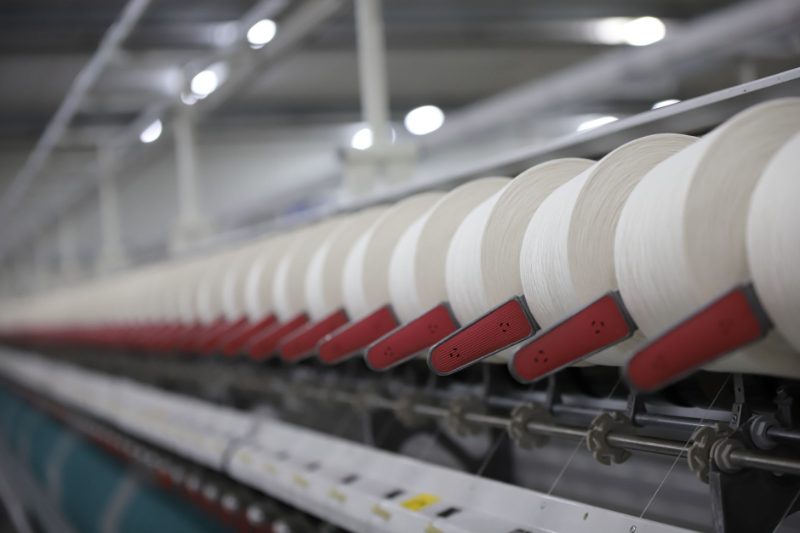
India’s textile industry has asked the central government to extend the duty-free import window for raw cotton by six months beyond its current October 31 expiry, as cotton yarn prices have jumped 60% in 2026 and raw cotton prices are up roughly 20%. The Tiruppur Exporters’ Association is among the bodies leading the push, warning that letting the waiver lapse now would hit spinners and exporters just as they head into the crucial festive and winter order season.
The government had removed the 11% import duty on raw cotton from June 1 to October 31, 2026, to improve fibre availability and give the domestic textile industry access to cotton at more competitive prices. With that window set to close at the end of October, industry associations are now lobbying for an extension, and reports suggest the Centre may extend the exemption at least until December, though no final decision has been taken as of mid-September. Cotton remains the backbone of India’s spinning industry, which employs millions of workers directly and indirectly across ginning, spinning, weaving and garmenting units, making raw material cost swings a matter of significant employment concern as well as trade competitiveness.
Why Is India’s Textile Industry Seeking a Cotton Duty Waiver Extension?
India’s cotton production declined by 2.35% to around 290 lakh bales in the 2025-26 season, marking a sixth consecutive year of falling domestic output, while consumption has continued to outpace supply. Poor rainfall in key cotton-growing regions including Vidarbha, Marathwada, Telangana and parts of Gujarat has added to supply concerns for the current season. With domestic cotton tight and yarn prices having jumped 60% in 2026, exporters argue that continued duty-free imports are essential to keep Indian yarn and garment prices competitive against rivals like Bangladesh and Vietnam.
What Does This Mean for India’s Textile and Apparel Sector?
A lapse in the duty waiver would immediately raise input costs for spinning mills reliant on imported cotton, a cost that would likely flow through to yarn, fabric and garment prices across the value chain. For export-oriented clusters like Tiruppur, which competes directly with lower-cost Asian rivals for global apparel orders, even a modest cost disadvantage can affect order flow. Conversely, an extension would provide continued relief to processors while doing little to address the underlying structural issue of declining domestic cotton yields, which industry groups say needs longer-term investment in seed technology and farmer support.
Market Reaction and Industry Response
Textile trade bodies have broadly welcomed the prospect of an extension, framing it as a necessary bridge measure while domestic cotton production issues are addressed separately. Commerce Minister Piyush Goyal has previously urged industry clusters like Tiruppur to double exports and create jobs over the coming years, a goal that trade groups say depends heavily on stable and competitive raw material costs. Some domestic cotton growers’ representatives have pushed back on extending duty-free imports, arguing it depresses farm-gate prices for Indian cotton farmers already dealing with a falling harvest.
What Happens Next?
A government decision on extending the cotton duty waiver is expected before the current window lapses on October 31, 2026, with industry sources suggesting an extension to December is the most likely outcome. Textile exporters will be watching closely, as any gap between the current window’s expiry and a formal extension announcement could create uncertainty for import planning. The broader debate over India’s cotton production decline and its impact on the textile value chain is expected to continue into the 2026-27 budget cycle. Industry associations have also flagged that the uncertainty itself carries a cost, since spinning mills and exporters typically need to lock in import contracts weeks or months ahead of shipment, making a late decision on the waiver almost as disruptive as an outright lapse.
Frequently Asked Questions
Why is India’s textile industry asking for a cotton duty waiver extension?
Cotton yarn prices have risen 60% in 2026 and domestic cotton production has fallen for six consecutive years, so exporters say continued duty-free imports are needed to keep Indian textiles price-competitive globally.
When does the current cotton import duty waiver expire?
The existing waiver on the 11% import duty on raw cotton, in effect since June 1, 2026, is due to expire on October 31, 2026, unless extended by the government.
Could the cotton duty waiver be extended, and for how long?
Reports suggest the Centre may extend the exemption at least until December 2026, though industry bodies like the Tiruppur Exporters’ Association have asked for a six-month extension.










Leave a comment