


Sangam (India) Ltd’s Q1 FY27 results show profit after tax surging more than 18-fold year-on-year to Rs 41 crore, up from just Rs 2 crore in the same quarter last year, as the Rajasthan-based integrated textile manufacturer delivered a sharp margin recovery. Revenue for the quarter rose 8.1% year-on-year to Rs 867 crore, while the company simultaneously reaffirmed a Rs 1,500 crore capital expenditure plan to complete its integration from fibre to finished garments.
The results, announced on July 20, 2026, showed profit before tax surging to Rs 55 crore from just Rs 3 crore in Q1 FY26. Gross profit rose 26.7% year-on-year to Rs 378 crore, with gross margin expanding by 640 basis points to 43.6%, while EBITDA climbed 59.6% to Rs 112 crore from Rs 70 crore a year earlier, pushing the EBITDA margin up to 12.9% from 8.8%.
Why Did Sangam India’s Q1 FY27 Profit Jump 18-Fold?
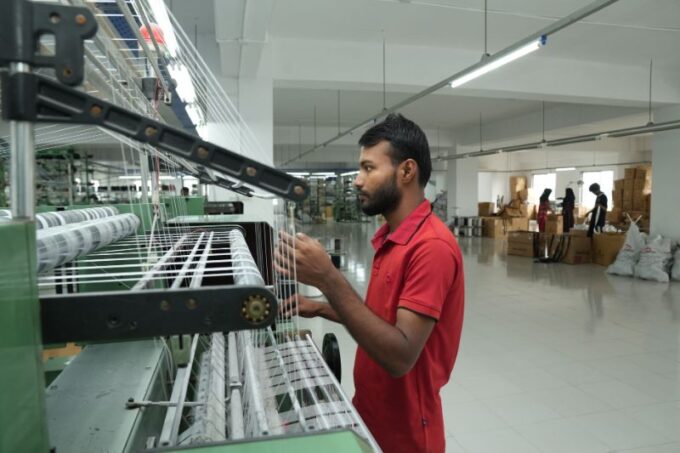
Sangam (India), an integrated textile manufacturer spanning spinning, denim fabrics, PV fabrics, recycled polyester fibre and seamless garments, attributed the sharp profitability improvement to better realisations, an improved product mix, and operating leverage rather than volume-led growth, as revenue actually moderated 1.5% sequentially from Rs 880 crore in Q4 FY26. Denim fabric capacity utilisation stood at 98% and PV fabric utilisation at 97% during the quarter, among the strongest levels in the company’s recent history.
The company’s revenue mix remained diversified, with denim fabric contributing 31% of sales, cotton yarn 25%, woven fabric with processing 22%, PV yarn 20%, and garments 2%. Domestic sales made up 67% of revenue while exports accounted for 33%, with the company shipping to more than 50 countries, reducing its dependence on any single product segment or geography.
What Does This Mean for India’s Textile Manufacturing Sector?
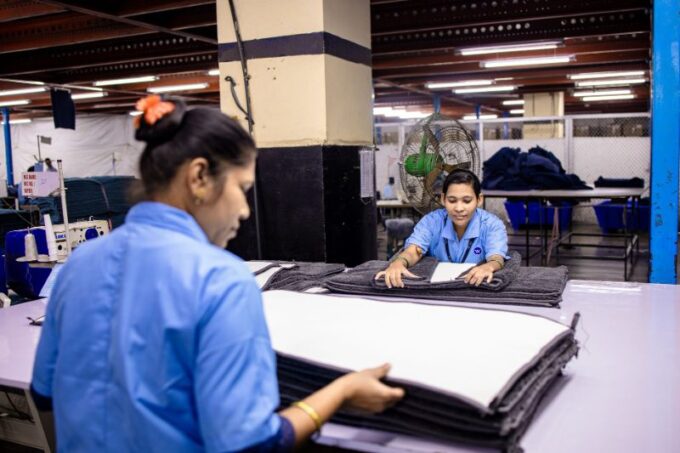
Sangam India’s results reflect a broader push among India’s integrated textile manufacturers toward operational efficiency and forward integration into higher-value garment manufacturing, a strategy aimed at capturing more margin within the textile value chain rather than remaining reliant on commodity yarn and fabric sales. The company’s Rs 1,500 crore capex plan, expected to be completed by March 2029, includes manufacturing capacity for 10 lakh denim garments and 5 lakh PV garments per month, positioning Sangam to supply finished garments rather than only yarn and fabric.
Management expects the expansion projects to generate around Rs 300 crore in annual EBITDA at full utilisation, creating an additional growth engine for the business. The capex will also fund modernisation of 80,000 cotton yarn spindles, 2,700 new open-end rotors, two new denim production lines, and a 40 TPD expansion of recycled polyester fibre capacity.
Market Reaction and Industry Response
Shares of Sangam (India) traded lower by 2.79% following the results despite the sharp profit beat, closing at Rs 619.2 as some investors booked profits after a strong run-up ahead of the results. The company’s market capitalisation stood at Rs 3,129 crore. Industry watchers noted that the scale of the capex commitment, financed through a mix of internal accruals and term debt, signals management’s confidence in sustained demand for value-added denim and garment products from both domestic and export apparel brands.
What Happens Next for Sangam India?
Investors will track progress on the Rs 1,500 crore expansion through FY29, along with the company’s renewable energy investments, which include 36 MW of operational capacity and 40.7 MW under implementation, expected to generate annual savings of around Rs 48 crore once complete. Management commentary on sustaining the current EBITDA margin levels, and on export demand from apparel brands prioritising sustainable sourcing, will be closely watched in coming quarters.
Frequently Asked Questions
What was Sangam India’s net profit in Q1 FY27?
Sangam (India) reported a profit after tax of Rs 41 crore in Q1 FY27, up more than 18 times from Rs 2 crore in the same quarter last year, on revenue of Rs 867 crore.
What is Sangam India’s Rs 1,500 crore capex plan for?
The capex plan, to be completed by March 2029, will fund integration from fibre to garments, including new denim and PV garment manufacturing capacity, spindle modernisation, and recycled polyester fibre expansion.
What drove Sangam India’s margin improvement in Q1 FY27?
The margin improvement came from better realisations, an improved product mix, and operating leverage, supported by 98% denim and 97% PV fabric capacity utilisation.










Leave a comment