

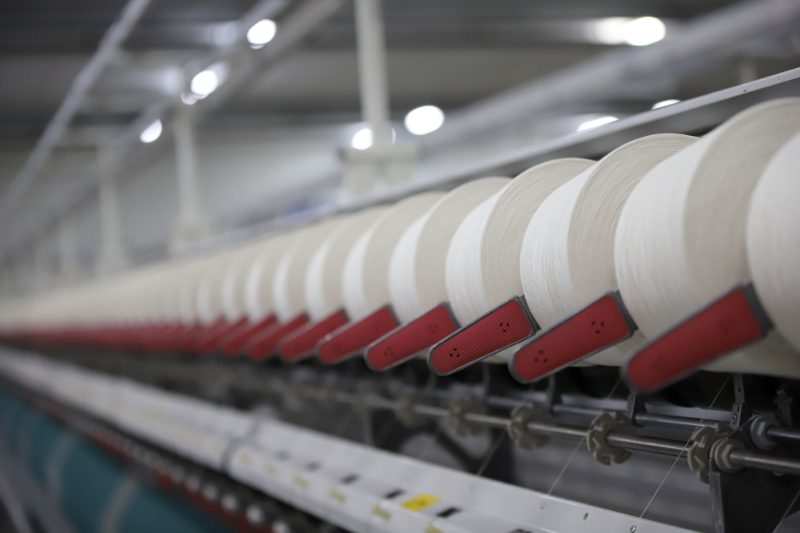
India’s government may extend its customs duty exemption on raw cotton imports beyond October 31, 2026, potentially until December, as it looks to ease input costs for textile manufacturers. The development, reported on September 9, pushed textile stocks including Arvind Mills, Raymond, Raymond Lifestyle and Vardhman Textiles into investor focus.
India had waived the Basic Customs Duty and Agriculture Infrastructure and Development Cess (AIDC) on cotton imports from June 1 to October 31, 2026, to boost domestic cotton availability, lower input costs and improve the competitiveness of the textile and apparel sector. With that window set to close at month-end, the Centre is now weighing a further extension to give mills more predictable access to cotton at global prices.
Why Is India Considering Extending the Cotton Duty Exemption?
Indian spinning and weaving mills have faced persistently elevated domestic cotton prices relative to international benchmarks, a gap that erodes their cost competitiveness against exporters in Bangladesh, Vietnam and China. The original exemption, which removed the roughly 11% duty burden on imported cotton, was designed to let mills top up supply when local cotton falls short of quality or volume needs. Industry bodies have lobbied for a longer-term, more predictable import regime rather than short exemption windows that get renewed at the last minute, arguing that mills need lead time to plan raw material procurement and export orders.
What Does This Mean for India’s Textile Industry?
A further extension would directly benefit yarn and fabric manufacturers such as Vardhman Textiles, Arvind Mills and KPR Mill, which rely on a mix of domestic and imported cotton depending on price and quality. Analysts at Citi have previously described the cotton duty exemption as a “lifeline” for India’s textile sector, noting that it helps offset elevated input costs at a time when the industry is also contending with global demand uncertainty and competition from lower-cost manufacturing hubs. A longer exemption window could also support downstream apparel exporters, who depend on competitively priced yarn and fabric to win international orders.
Market Reaction and Industry Response
Shares of Arvind Mills, Raymond, Raymond Lifestyle and Vardhman Textiles saw trading action on the news, though some counters gave up early gains during the session, according to market commentary from September 9. KPR Mill was also in focus as investors weighed the potential benefit of a longer duty-free import window. The policy speculation adds to a year in which India’s textile sector has been described as turning cautiously optimistic after a testing 2025, supported by structural reforms, easing input constraints, lower interest rates and expanding free trade agreements.
What Happens Next?
The current cotton import duty exemption is due to lapse on October 31, 2026, giving the Centre roughly seven weeks to formally decide on and notify any extension. A similar exemption was extended through the end of 2025 in the prior cycle, suggesting the government has leaned on this tool repeatedly to manage domestic cotton price pressure. Textile industry watchers will be looking for an official notification from the Ministry of Finance or Ministry of Textiles in the coming weeks, along with any change in the duration or scope of the waiver.
Frequently Asked Questions
What is the current cotton import duty exemption in India?
India exempted raw cotton imports from Basic Customs Duty and the Agriculture Infrastructure and Development Cess from June 1 to October 31, 2026, to improve cotton availability and reduce input costs for domestic textile manufacturers.
Which textile stocks are affected by the possible extension?
Arvind Mills, Raymond, Raymond Lifestyle, Vardhman Textiles and KPR Mill were among the stocks in focus on September 9, 2026, as investors weighed the potential benefit of an extended duty-free cotton import window.
Why does India exempt cotton imports from customs duty?
The exemption lowers input costs for spinning and weaving mills when domestic cotton prices run high relative to global benchmarks, helping Indian textile manufacturers stay competitive against rivals in Bangladesh, Vietnam and China.










Leave a comment