

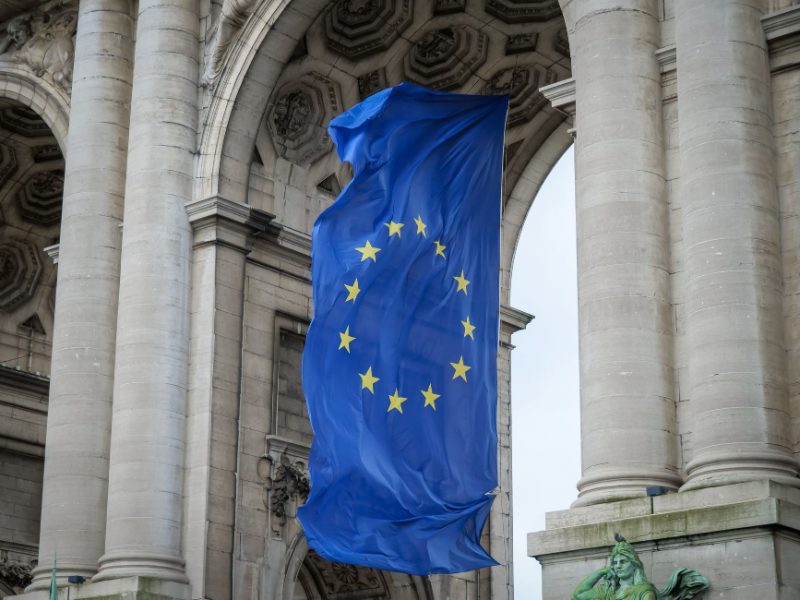
The European Commission has formally presented the landmark India-EU Free Trade Agreement to the Council of the European Union, seeking authorisation to sign and conclude the pact, marking the next formal step toward bringing the world’s largest bilateral trade deal into force. The move follows the conclusion of negotiations on January 27, 2026, and advances an agreement covering a combined market of nearly two billion people.
Under the EU’s treaty-making process, the Commission’s proposal requires Council authorisation, followed by the formal consent of the European Parliament, before the agreement can be concluded. Indian authorities are simultaneously progressing their own domestic ratification procedures, with both sides targeting entry into force later this year or in the first half of 2027.
What Does the India-EU FTA Change for Trade?
The agreement significantly restructures tariffs across major sectors. India has agreed to cut car tariffs from as high as 110% to 10% over five years, with quota-based access for 250,000 EU vehicles annually. In return, the EU has granted immediate zero-duty access for India’s labour-intensive export sectors, including textiles, apparel, leather, footwear, and gems and jewellery. The pact is also expected to reshape trade flows in machinery, pharmaceuticals, medical equipment, services, and food products.
What Do Officials and Analysts Say?
European Commission officials have described the pact as the largest trade agreement either side has ever concluded, calling it commercially significant given the scale of the combined EU-India market, representing nearly 25% of global GDP. Trade analysts have flagged the deal as a structural shift for India’s export competitiveness, particularly in labour-intensive sectors, while automotive industry watchers are focused on how the phased tariff reduction will affect India’s domestic carmakers over the five-year transition window.
Market and Trade Reaction
Exporters in textiles, leather, and gems and jewellery are positioned as immediate beneficiaries once the agreement enters into force, given the zero-duty access negotiated for these sectors. Indian automakers, by contrast, face a gradual opening of the domestic market to EU vehicle imports, with the quota structure designed to phase in competition rather than expose manufacturers abruptly. EU exporters of machinery and pharmaceuticals are similarly expected to gain improved access to India’s market as tariff schedules phase down.
What Happens Next?
The Council of the European Union must first authorise signature of the agreement, after which the European Parliament’s consent is required before formal conclusion. On the Indian side, domestic ratification procedures are running in parallel. Both governments are targeting implementation by late 2026 or the first half of 2027, and businesses in affected sectors are advised to track the ratification timeline closely as tariff schedules will begin phasing in from the agreement’s entry into force.
Frequently Asked Questions
When was the India-EU FTA negotiated?
Negotiations concluded on January 27, 2026. The European Commission has now presented the agreement to the EU Council for authorisation to sign, moving it toward formal conclusion.
What are the key tariff changes under the India-EU FTA?
India will cut car tariffs from up to 110% to 10% over five years with a 250,000-vehicle annual quota, while the EU grants immediate zero-duty access for Indian textiles, apparel, leather, footwear, and gems and jewellery.
When will the India-EU FTA take effect?
Both sides are targeting entry into force by late 2026 or the first half of 2027, pending EU Council authorisation, European Parliament consent, and India’s domestic ratification process.












Leave a comment