

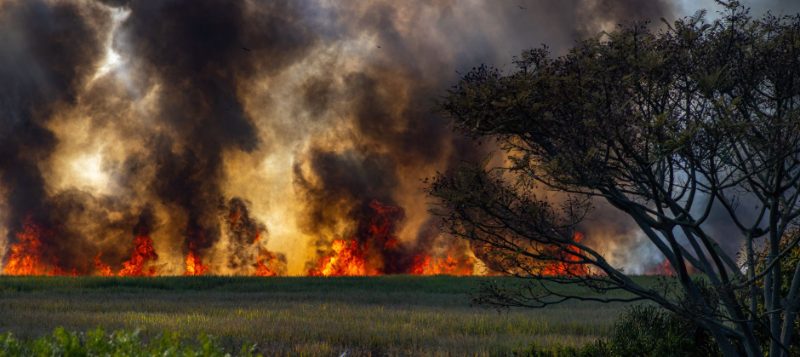
Post-wildfire building surveys reveal systematic adhesion and barrier failures requiring new coating protocols.
Post-wildfire structural assessments conducted across California, British Columbia, and southern Europe are revealing systematic coating failure modes not addressed by current product standards or application protocols. Buildings coated with standard exterior acrylic and alkyd systems in wildfire zones are showing three distinct failure patterns: thermal blistering at temperatures below the paint’s rated maximum; soot penetration through microporous paint films compromising indoor air quality; and adhesion failure on heat-stressed substrates during fire suppression water jet impact.
For Indian manufacturers supplying to export markets, or serving domestic construction in wildfire-adjacent hill station and northern India regions, the research points to a product category gap: no current Indian Standard or Bureau of Indian Standards test method addresses wildfire thermal exposure. The Forest Research Institute (FRI) in Dehradun and IIT Roorkee are the most relevant domestic institutions tracking the intersection of construction materials and fire ecology.
Industry Implications and Market Context
The wildfire-resistant coating segment is emerging as a premium product category in North America and Europe, with commercial products commanding 2–3× standard exterior coating prices. Indian manufacturers with intumescent and thermal-barrier coating capabilities — currently supplied primarily to steel structure and industrial applications — have a natural technology adjacency for entry into this category.
What Happens Next?
ASTM International and ISO are working on new test standards for wildfire exposure of exterior coatings, expected in 2026–2027. Watch for BIS engagement on parallel Indian standards.
Frequently Asked Questions
What causes paint to fail in wildfire conditions?
Three mechanisms: thermal blistering above 80–120°C (below most rated maxima), soot infiltration through film micropores, and adhesion failure under fire suppression water jet impact on heat-stressed substrates.
Are any Indian coatings wildfire-rated?
No current Indian Standard addresses wildfire thermal exposure. Products certified to IS 101 and IS 2074 fire-retardant standards offer partial protection; dedicated wildfire-rated exterior coating standards do not yet exist under BIS.
Where can I find more information?
ASTM, ISO, and the Insurance Institute for Business and Home Safety (IBHS) publish wildfire building materials research. The Indian Paint Association (IPA) is the relevant domestic industry body for tracking BIS standards development.









Leave a comment