

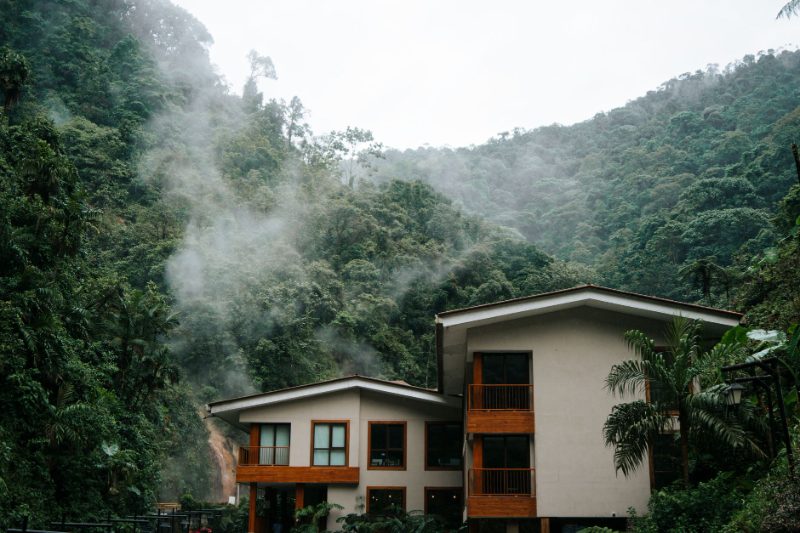
Moisture vapour transmission data is reshaping exterior coating specifications in tropical markets.
Building physics analysis across tropical Southeast Asia, West Africa, and coastal India is revealing that moisture vapour transmission — rather than bulk water ingress — is the primary mechanism behind exterior coating deterioration in humid climates. High ambient humidity (>80% RH) combined with diurnal temperature cycling drives vapour through microporous exterior paint films, condensing at the substrate interface and progressively undermining adhesion.
Established exterior coating specifications in Indian markets have historically prioritised wash resistance and chalking resistance — performance parameters relevant to semi-arid climates. In coastal cities (Mumbai, Kochi, Chennai, Vizag) and northeastern states, the predominant failure mode is delamination driven by internal moisture movement rather than surface wear. This creates a specification mismatch that premium exterior coating manufacturers need to address.
Industry Implications and Market Context
Reformulating for optimised moisture vapour transmission requires investment in breathable coating chemistry — silicate-based, silicone-silicate hybrid, or specifically engineered acrylic systems. This represents a technical upgrade cycle opportunity for manufacturers serving coastal India and high-humidity northeastern markets.
What Happens Next?
BIS and the National Building Code of India (NBC) are reviewing moisture management requirements for exterior coatings. Updated specifications are expected in the NBC 2026 revision cycle.
Frequently Asked Questions
What is moisture vapour transmission in paint coatings?
MVT is the rate at which water vapour passes through a paint film, measured in g/m²/day. High MVT means the coating breathes — letting moisture out but potentially allowing it in. Low MVT traps moisture. Optimal MVT for tropical climates balances substrate drying against condensation prevention.
Which Indian cities are most affected by humid climate coating failure?
Mumbai, Chennai, Kochi, Vizag, Kolkata, Guwahati, and all coastal cities with annual humidity above 75% RH experience systematic delamination from internal moisture movement rather than surface weathering.
Where can I find more information?
BIS IS 15489 covers exterior wall coating performance. The CSIR-SERC in Chennai and IIT Madras are active research centres for building envelope performance in tropical climates.









Leave a comment