

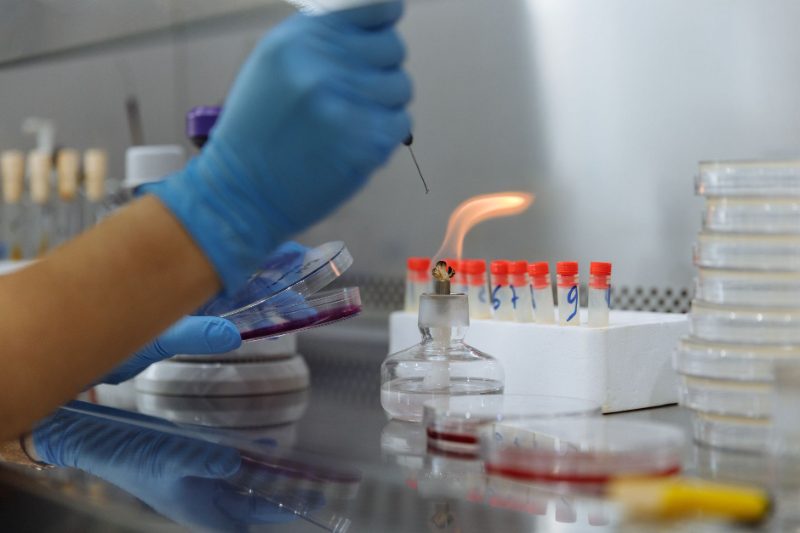
Microbial fermentation produces non-toxic, lightfast pigments from industrial waste streams as inorganic pigment alternatives.
Research programmes at several Indian institutions — IIT Delhi, CSIR-IMTECH, and the Institute of Microbial Technology (IMTECH) — are advancing the commercial potential of bacterially produced pigments including prodigiosin (red), violacein (purple), and indigo-related compounds as stable, non-toxic colorants for coating applications. These microbially synthesised pigments are produced from low-cost agricultural waste feedstocks and demonstrate UV stability and thermal resistance in coating matrices comparable to synthetic organic pigments.
The commercial entry point is speciality and decorative coatings for markets with stringent chemical restrictions — children’s products, food contact packaging coatings, and craft/artisan paint segments where bio-origin certification commands price premiums of 100–300%. The challenge is production economics: fermentation-derived pigments currently cost 5–10× equivalent synthetic organics, requiring scale-up and process optimisation to achieve cost parity.
Industry Implications and Market Context
Bio-derived pigments align with EU and US regulatory trends restricting heavy metal pigments (cadmium, lead, cobalt) and certain synthetic organic azo pigments in consumer products. Indian manufacturers supplying export markets face progressive restrictions on pigment chemistry that bacterial alternatives can address.
What Happens Next?
Commercial scale-up is expected from IMTECH spinoffs. Watch for licensing agreements with speciality coating manufacturers and pilot-scale fermentation trials in H2 2026 and 2027.
Frequently Asked Questions
How are bacterial pigments produced at scale?
Bacterial pigments are produced in large-volume bioreactors (10,000–100,000 litre scale) using optimised growth media from agricultural waste. Downstream processing includes extraction, purification, and standardisation to coating-grade specifications. Cost reduction requires optimising fermentation yield and downstream processing efficiency.
Are bacterial pigments approved for food contact coating applications?
Regulatory approval depends on specific pigment chemistry and jurisdiction. Indigo and prodigiosin have GRAS (Generally Recognised as Safe) status in some formulations; BIS and FSSAI approvals are required for food contact coating claims in India. EU Novel Food and REACH regulations govern European market approval.
Where can I find more information?
CSIR-IMTECH, IIT Delhi, and the Biotechnology Industry Research Assistance Council (BIRAC) publish research on bacterial pigment commercialisation. The Indian Paint Association (IPA) tracks bio-pigment developments for coating applications.













Leave a comment