

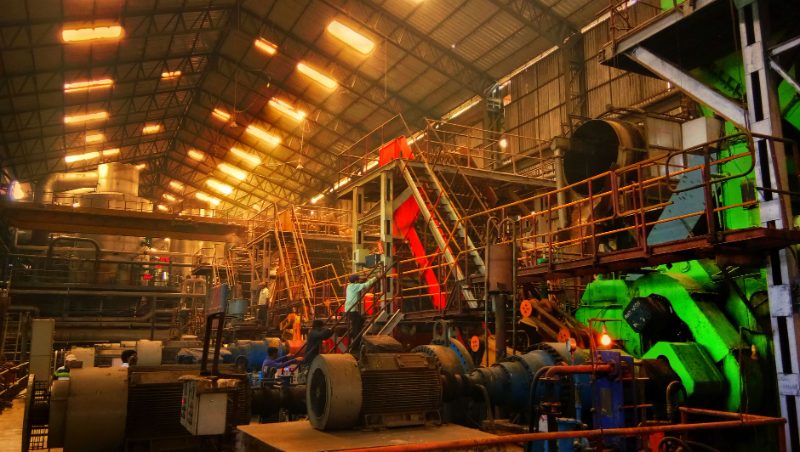
Mumbai-based Balkrishna Industries Ltd (BKT), one of India’s leading off-highway tyre makers, has unveiled a strategic roadmap targeting $2.6 billion in revenue by 2030, alongside board approval to expand its dedicated rubber track production facility in India. The BKT rubber industry India expansion is expected to become operational in the second half of 2026, marking a significant scale-up for the company beyond its core off-highway tyre business.
BKT, which primarily supplies tyres for agricultural, construction and mining equipment, has built a growing rubber tracks business following successful commercialisation of the product line. The new facility expansion, approved by the company’s board, comes as India’s broader tyre and rubber sector navigates a mixed environment of steady domestic demand and cost pressures on natural rubber and other key inputs.
Why Is BKT Betting Big on Rubber Tracks?
Rubber tracks, used on construction and agricultural machinery as an alternative to traditional wheeled tyres, represent a fast-growing niche within the off-highway equipment segment globally. BKT’s decision to expand dedicated production capacity signals confidence that this segment can meaningfully contribute to its target of reaching $2.6 billion in revenue by 2030, up sharply from its current base, as the company diversifies beyond its traditional off-highway tyre portfolio.
What Does BKT’s Roadmap Mean for India’s Tyre Industry?
BKT’s expansion comes as the Indian tyre market, valued at $14.45 billion in 2025, is projected to reach $27.67 billion by 2034 at a 7.49% CAGR, driven by India’s expanding vehicle fleet and infrastructure build-out. Analysts covering the sector note that Indian tyre industry growth is expected to moderate somewhat in the near term due to cost pressures, making product diversification — such as BKT’s push into rubber tracks — an important lever for maintaining growth momentum.
Market Reaction and Industry Response
Industry watchers have noted BKT’s roadmap as one of the more ambitious growth targets set by an Indian tyre and rubber products maker in recent years. The Automotive Tyre Manufacturers Association (ATMA) has continued to flag input cost pressures, particularly natural rubber pricing, as a key variable for the sector’s margin trajectory through 2026, even as demand indicators from agriculture and construction equipment makers remain firm.
What Happens Next for BKT and India’s Rubber Sector?
The expanded rubber tracks facility is slated to come online in the second half of 2026, and investors will be watching subsequent quarterly results for early signs of revenue contribution from the new capacity. Broader sector data on natural rubber input costs and tyre export volumes over the coming quarters will also help gauge whether BKT’s 2030 revenue target is on track.
Frequently Asked Questions
What is BKT’s revenue target and by when?
Balkrishna Industries (BKT) is targeting $2.6 billion in revenue by 2030, representing a significant expansion from its current operations centred on off-highway tyres and rubber tracks.
When will BKT’s expanded rubber tracks facility open?
The board-approved expansion of BKT’s dedicated rubber tracks production facility is expected to become operational in the second half of 2026.
How big is India’s overall tyre market right now?
India’s tyre market was valued at $14.45 billion in 2025 and is projected to grow to $27.67 billion by 2034 at a compound annual growth rate of 7.49%.








Leave a comment