

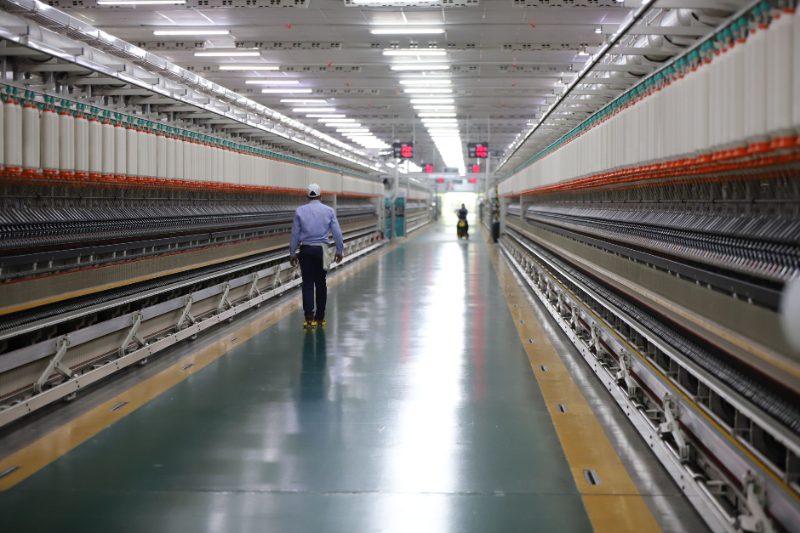
New Delhi Declaration launches 5-year roadmap to embed emerging economies deeper into global value chains.
Buried within the New Delhi Declaration’s 140 paragraphs is an industrial policy commitment with transformative potential for Indian manufacturers: the launch of the BRICS Global Value Chain Action Plan 2026–2030. The plan commits all eleven BRICS member economies to actively promote the participation of developing nations in higher-value manufacturing segments of global production — moving beyond raw material export and low-cost assembly toward design, innovation, and specification-grade industrial output. For India’s chemicals, coatings, specialty materials, and industrial manufacturing base, this commitment is not merely rhetorical.
The GVC Action Plan targets three specific mechanisms. First, technology transfer frameworks between BRICS members — enabling smaller economies to access production technologies held by larger ones through structured licensing and joint venture programmes. Second, industrial park development and co-investment in manufacturing zones aligned with BRICS member trade routes. Third, market access commitments for MSME manufacturers seeking to supply higher-value segments of BRICS member supply chains rather than being restricted to commodity inputs.
India’s position as the plan’s architect — chairing BRICS in 2026 — means Indian industry associations had the most direct input into the action plan’s design. AIPMA, the Federation of Indian Export Organisations, and the Chemical and Petrochemicals Manufacturers’ Association all engaged with the Ministry of Commerce during India’s BRICS presidency. The priority sectors identified for manufacturing cooperation include specialty chemicals, pharmaceuticals and active pharmaceutical ingredients, advanced materials, engineering goods, and digital manufacturing infrastructure.
The plan’s five-year timeline — to 2030 — aligns with India’s own ‘Viksit Bharat’ development ambitions. If intra-BRICS trade grows at the 8–10% annually that the action plan targets, India’s industrial exports to BRICS economies could increase from their current $65 billion base to $100+ billion by 2030. For the paint and coatings industry specifically, the Russian market — where Indian coating exports grew 340% following the 2022 supply chain reconfiguration — and the Iranian and Egyptian markets represent the most immediately accessible growth corridors.
Frequently Asked Questions
What is the BRICS GVC Action Plan 2026–2030?
The BRICS GVC Action Plan 2026–2030 is a five-year framework launched at the New Delhi BRICS Summit to help BRICS member economies move up global value chains. It targets technology transfer, industrial park co-investment, and market access for MSME manufacturers across the 11 BRICS nations.
How does the BRICS GVC Action Plan benefit Indian manufacturers?
Indian manufacturers gain structured access to technology transfer opportunities, preferential positioning in BRICS supply chains, and market access to $5+ trillion in BRICS GDP. Priority sectors include specialty chemicals, advanced materials, pharmaceuticals, and engineering goods — areas where India has strong existing capacity.









Leave a comment