

The Union Cabinet has approved raising the wage ceiling for mandatory coverage under the Employees’ Provident Fund Organisation (EPFO) from ₹15,000 to ₹25,000 a month, a decision announced on September 16, 2026 that will bring more than 51 lakh additional workers under statutory provident fund, pension and insurance protection. The move marks the first revision of the EPFO wage ceiling in over a decade.
Union Minister for Information and Broadcasting Ashwini Vaishnaw confirmed the Cabinet decision, calling it a step toward widening social security coverage as India moves toward its Viksit Bharat@2047 goal. The last EPFO wage ceiling revision, from ₹6,500 to ₹15,000, took effect in September 2014, meaning employees earning between ₹15,000 and ₹25,000 a month were previously outside mandatory coverage under the Employees’ Provident Funds and Miscellaneous Provisions Act.
How Will the EPFO Wage Ceiling Hike Affect Workers and Employers?
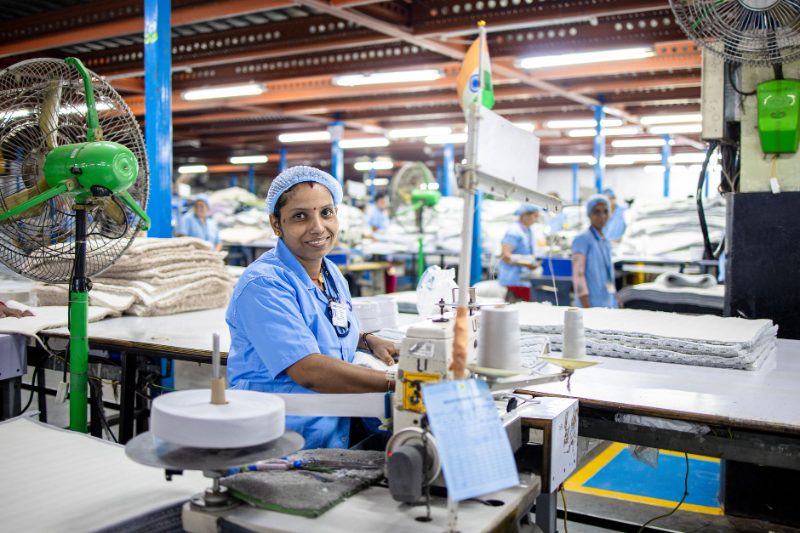
Under the revised threshold, any employee drawing a basic monthly wage of up to ₹25,000 will now fall within the mandatory ambit of the EPFO, requiring employers to contribute 12 percent of basic wages to the Employees’ Provident Fund and Employees’ Pension Scheme, matched by an equal employee contribution. The government estimates that 51 lakh workers, largely in the unorganised and semi-formal sectors such as retail, hospitality, logistics and small manufacturing, will be pulled into the formal social security net for the first time. Employers in labour-intensive sectors will see a corresponding rise in statutory payroll costs, since contributions are calculated on the higher wage base.
What Do Economists and Industry Bodies Say?
Labour economists have broadly welcomed the EPFO wage ceiling hike as a long-overdue correction to a threshold that had been eroded by wage inflation since 2014. Industry bodies, however, have flagged the added compliance and cost burden on small and medium enterprises that employ large numbers of workers near the ₹15,000-₹25,000 band. The Ministry of Labour and Employment is expected to issue implementation guidelines specifying the effective date and any phased transition for smaller establishments, since a sudden jump in mandatory contributions can strain thin margins in micro and small enterprises.
Market and Trade Reaction
The announcement drew a measured response from listed staffing and human resources services companies, several of which flagged the change as a net positive for compliance-driven formalisation of the workforce over the medium term. Sectors with high concentrations of workers near the revised ceiling, including textiles, retail chains and logistics, are watching closely for the notification date, since payroll systems and cost projections for FY27 will need to be revised once the new ceiling takes legal effect.
What Happens Next?
The Ministry of Labour and Employment must now issue a formal notification under the EPF Act specifying the implementation date, which is expected in the coming weeks. Employers will need to update payroll systems to apply EPF and EPS contributions to the new ₹25,000 ceiling, while the EPFO is likely to conduct an outreach drive to register newly eligible employees and update Universal Account Numbers. Industry watchers expect the Ministry to also clarify transition rules for employees already contributing voluntarily above the earlier ceiling.
Frequently Asked Questions
What is the new EPFO wage ceiling?
The Union Cabinet has raised the EPFO wage ceiling from ₹15,000 to ₹25,000 per month, meaning employees earning up to ₹25,000 in basic wages will now be mandatorily covered under the EPF and EPS schemes.
How many workers will benefit from the EPFO wage ceiling hike?
The government estimates that more than 51 lakh additional workers, mostly in the unorganised and semi-formal sectors, will come under mandatory provident fund and pension coverage as a result of the revised ceiling.
When was the EPFO wage ceiling last revised?
The EPFO wage ceiling was last revised in September 2014, when it was raised from ₹6,500 to ₹15,000 a month, making the 2026 hike to ₹25,000 the first change in over a decade.














Leave a comment