

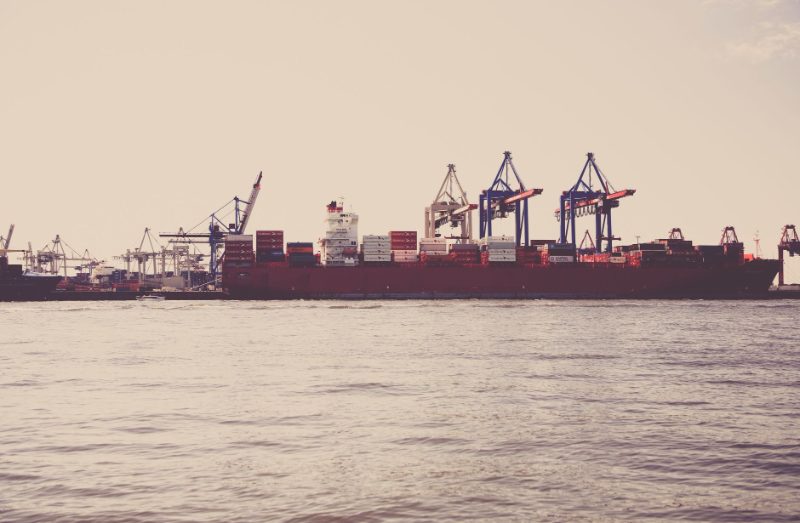
India’s overall trade deficit widened to $119.30 billion in the financial year 2025-26, up from $94.66 billion a year earlier, as imports grew faster than exports despite a string of new trade agreements meant to boost outbound shipments. Merchandise and services exports combined rose 4.22 percent to $860.09 billion for the year, but imports climbed a sharper 6.47 percent to roughly $970 billion, according to trade data released by the commerce ministry.
A Widening Gap Despite New Trade Deals
The widening deficit comes at an important juncture for India’s trade policy, following the signing of two landmark agreements earlier in the year — the US-India trade deal in February, which cut US tariffs on Indian goods from a punitive 50 percent to a consolidated 18 percent, and the EU-India Free Trade Agreement in January, which grants immediate duty-free access to more than 70 percent of Indian tariff lines. Both deals were expected to provide a meaningful lift to Indian exports, and while early data shows momentum building, the impact has not yet been enough to offset a broader import surge, driven in part by energy, electronics and capital goods purchases.
Monthly data suggests exports are on an improving trajectory, rising to $45.20 billion in May 2026 from $43.56 billion in April, indicating that the new trade agreements may be starting to translate into higher outbound shipments even as the annual deficit figure reflects the full-year picture, including months before the deals took effect.
Services Exports Remain a Bright Spot
One consistent strength in India’s external trade profile has been services. Services exports rose to $418.31 billion in FY26 from $387.55 billion the previous year, continuing to act as a crucial offset to the persistent merchandise trade deficit. IT services, business process outsourcing and a fast-growing global capability centre ecosystem have underpinned this growth, helping to keep the overall current account deficit more manageable than the headline merchandise figures might suggest.
Trade economists note that India’s reliance on services exports as a buffer is likely to persist in the near term, even as the government pushes to diversify merchandise export baskets toward higher value-added manufacturing under schemes like production-linked incentives (PLI) in electronics, semiconductors and specialty chemicals.
Policy and Market Implications
The widening deficit is likely to sharpen debate in New Delhi over the pace and sequencing of trade liberalisation. Critics of rapid tariff reduction under new FTAs argue that opening up further to European and other imports without commensurate export gains could exacerbate the deficit in the short run, even if the agreements pay off over a longer horizon as Indian exporters adjust to new market access. Commerce ministry officials, however, have expressed confidence that the full-year impact of the EU and US deals will become clearer only in FY27, once exporters fully realign supply chains to exploit preferential access.
For now, markets are treating the trade data as a mixed signal — evidence of a domestic economy absorbing higher import volumes, consistent with continued capital expenditure and consumption growth, but also a reminder that India’s aspiration to significantly narrow its trade gap will require sustained export competitiveness gains rather than trade agreements alone.













Leave a comment