

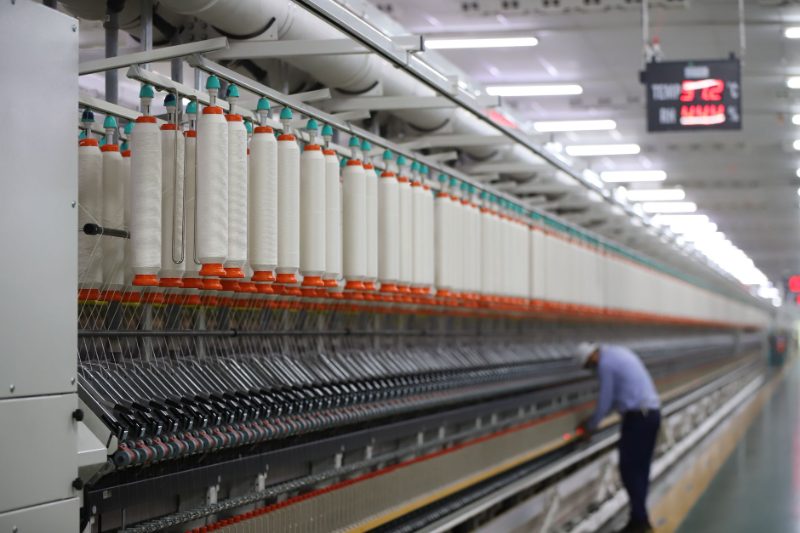
India has extended zero customs duty on imports of purified terephthalic acid (PTA) and monoethylene glycol (MEG) — the two primary raw materials for polyester production — until July 15, 2026, providing temporary cost relief to polyester manufacturers amid West Asia-related supply disruptions. Separately, India’s technical textiles sector has emerged as a significant growth engine, with exports reaching ₹28,392 crore, according to Minister of State for Textiles Pabitra Margherita — underscoring the dual momentum in India’s textiles industry from both input-cost policy and product diversification.
The zero-duty extension on PTA and MEG, announced by the Ministry of Finance, is a continuation of a policy measure introduced earlier in 2026 in response to supply chain disruptions in the Red Sea and Persian Gulf corridors that tightened polyester raw material availability and temporarily elevated prices. PTA and MEG are the feedstocks for polyester fibre, polyester filament yarn (PFY), and polyethylene terephthalate (PET) — used widely in apparel, home textiles, and packaging films across India’s textile industry.
Why Did India Extend Zero Customs Duty on PTA and MEG?
Domestic PTA production in India — led by Reliance Industries and ONGC Petro additions Limited (OPaL) — covers only part of the country’s polyester raw material demand. India remains partially import-dependent, sourcing PTA from China, South Korea, and the Middle East. The West Asia supply disruptions in early 2026, linked to heightened geopolitical tensions in the region, caused spot PTA prices to spike by 8–12% over a six-week period, squeezing margins for India’s mid-sized polyester spinners and texturisers. The duty extension is designed to keep landed import costs competitive and protect the cost structure of the downstream polyester textile industry through the festive season production ramp-up.
How Is India’s Technical Textiles Sector Growing?
India’s technical textiles market — the fifth largest in the world — is valued at USD 29 billion and is projected to grow to USD 45 billion by 2026, according to government data. The sector covers 12 application segments: Agrotech, Meditech, Buildtech, Mobiltech, Geotech, Protech, Indutech, Packtech, Hometech, Clothtech, Sportech, and Oekotech. Minister Pabitra Margherita, speaking at the National Conference on Technical Textiles, confirmed that technical textile exports have reached ₹28,392 crore — a significant milestone for a segment that has historically been import-dependent in several sub-categories, particularly medical textiles and high-performance geotextiles.
Market Reaction and Industry Response
Polyester producers have welcomed the PTA/MEG duty extension, though they note that the full benefit to downstream prices will take 4–6 weeks to materialise given high-cost inventories already in the pipeline. Textile exporters, who are ramping production for September–November festive season orders, are relieved at the cost containment measure. On the technical textiles front, companies across segments including nonwovens, coated fabrics, and high-strength fibre applications are investing in capacity backed by the National Technical Textiles Mission (NTTM), which has committed ₹1,480 crore in R&D and market development funding through 2026.
What Happens Next?
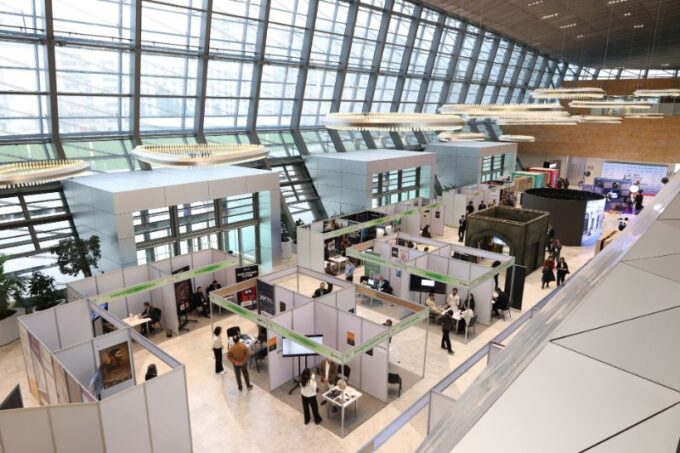
The PTA and MEG duty concession expires on July 15, 2026 — just five days away. Industry bodies including the Synthetic and Rayon Textiles Export Promotion Council (SRTEPC) and the Man-made Textile Export Promotion Council (TEXPROCIL) are lobbying for a further extension through September 2026, arguing that supply chain normalisation from West Asia is incomplete. A decision is expected from the Ministry of Finance within the next week. On technical textiles, the Bharat Tex 2026 expo (July 14–17 in New Delhi) will feature a dedicated Technical Textiles Pavilion — expected to catalyse new export partnerships and investment announcements in the segment.
Frequently Asked Questions
What are PTA and MEG in the textile industry?
Purified Terephthalic Acid (PTA) and Monoethylene Glycol (MEG) are the primary petrochemical feedstocks used to produce polyester — one of the most widely used fibres in India’s textile industry. Together, PTA and MEG account for the majority of the raw material cost in polyester staple fibre (PSF) and polyester filament yarn (PFY) production.
What is India’s technical textiles market size?
India’s technical textiles market is valued at USD 29 billion and is the fifth largest in the world. It is projected to grow to USD 45 billion by 2026. India’s technical textile exports have reached ₹28,392 crore, reflecting growing global demand for Indian-made agrotextiles, medical textiles, geotextiles, and protective fabrics.
How does the zero customs duty on PTA and MEG benefit India’s textile industry?
Zero customs duty on PTA and MEG reduces the landed cost of polyester raw materials for Indian manufacturers, helping maintain price competitiveness for polyester yarn and fabric exports. It particularly benefits mid-sized spinning and texturising units that are price-sensitive to raw material cost movements and have limited ability to hedge through long-term supply contracts.








Leave a comment