

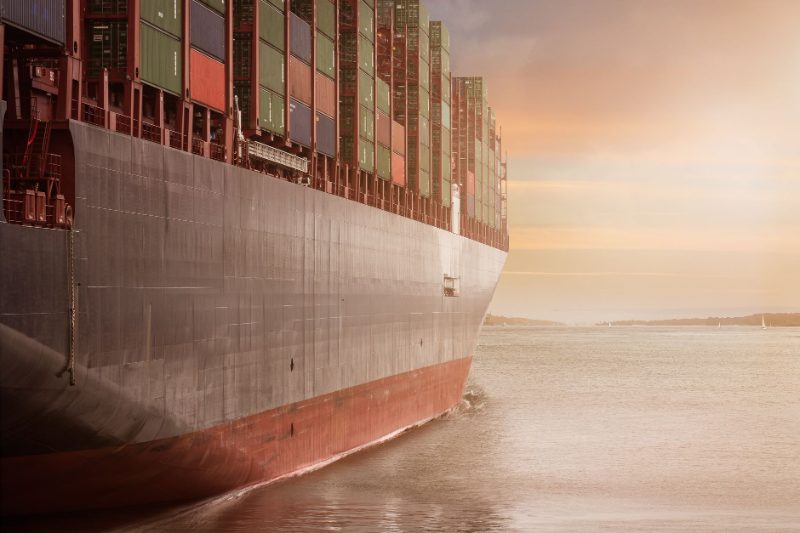
India’s forced labour tariff dispute with the United States centers on a 10% Section 301 duty now applied to roughly 70% of Indian exports entering the US market, even as both sides remain engaged in talks to resolve the standoff. The tariff, which took effect after a temporary rate expired on July 24, 2026, replaced an earlier provisional levy and applies alongside existing Most Favoured Nation duties.
The duty stems from a Section 301 investigation the US Trade Representative launched on March 11-12, 2026, covering 60 economies over concerns about forced labour in supply chains and excess industrial capacity. On June 3, 2026, the USTR issued findings and proposed additional tariffs on imports from 54 economies. India was placed among 17 economies facing the 10% levy, while 43 other countries were hit with a steeper 12.5% rate. Testifying before a USTR panel, Brij Mohan Mishra, Joint Secretary in India’s Ministry of Commerce, argued that the US exempts 1,600 items that cannot be produced domestically from forced-labour scrutiny, calling the approach “inconsistent” with the policy’s stated aim of protecting global supply chains.
How Does This Development Affect Indian Industry?
The India forced labour tariff directly affects textile, apparel, engineering goods and other labour-intensive exporters that rely on the US market, India’s largest single-country export destination. Mishra also flagged that the US grants reduced tariff rates on textile products made with US-origin cotton, a mechanism he said “operates as an arbitrary requirement that influences and constrains the sourcing decisions of foreign manufacturers” without genuinely addressing forced labour concerns. Indian exporters now face compounded costs from the 10% duty layered on top of existing MFN tariffs, squeezing margins in sectors including textiles, gems and jewellery, and engineering goods that compete on price in the US market. A separate US Senate bill also threatens additional duties of up to 100% on Indian exports tied to Russian oil purchases, adding further uncertainty for exporters planning shipments through the rest of 2026.
What Do Officials and Analysts Say?
India’s Commerce and Industry Ministry has responded by restricting imports of goods manufactured using forced labour, a move announced on July 14, 2026, aimed at demonstrating compliance while pushing back on the USTR’s findings. New Delhi has secured exemptions for 1,600 items it says cannot be domestically produced or grown, arguing this proves the US framework is applied selectively. A senior Commerce Ministry official said India and the US remain engaged on trade issues, with New Delhi monitoring developments closely as exporters adjust to the new tariff regime and the added risk of penalties linked to Russian oil purchases.
Market and Trade Reaction
Indian exporters have absorbed the 10% forced labour tariff since it replaced the temporary rate on July 24, 2026, with roughly 70% of India-US trade flows now subject to the levy. Trade bodies have flagged rising compliance costs as companies document supply chains to qualify for exemptions on the 1,600-item list. The broader India-US trade relationship remains a focal point for markets, given bilateral trade of roughly $140 billion in 2026 and projections of it reaching $200 billion by 2030 if a comprehensive trade agreement is finalised, a prospect that continues to support investor sentiment toward export-oriented Indian sectors despite the current tariff friction.
What Happens Next?
Indian officials are expected to continue engaging with the USTR to seek a review of the 10% tariff classification and push for broader exemptions beyond the current 1,600-item list. Exporters and industry bodies will be watching for any US Senate action on the proposed 100% duties linked to Russian oil purchases, as well as progress toward a comprehensive bilateral trade agreement that could supersede the current Section 301 tariff structure. Markets will also track India’s response measures on forced-labour-linked imports, announced July 14, 2026, for signs of reciprocal easing from Washington.
Frequently Asked Questions
What is the current US forced labour tariff on India?
The US applies a permanent 10% Section 301 tariff on Indian exports over forced labour concerns, effective since the temporary rate expired on July 24, 2026. This applies in addition to existing Most Favoured Nation duties on the same goods.
Why did the US impose this tariff on India?
The tariff followed a USTR Section 301 investigation launched in March 2026 covering 60 economies, with findings issued June 3, 2026 proposing additional duties on imports from 54 economies over forced labour concerns in supply chains.
How has India responded to the forced labour tariff?
India restricted imports of goods made using forced labour on July 14, 2026, and has secured exemptions for 1,600 items at USTR hearings, arguing the US applies its own forced-labour framework inconsistently through similar carve-outs.









Leave a comment