

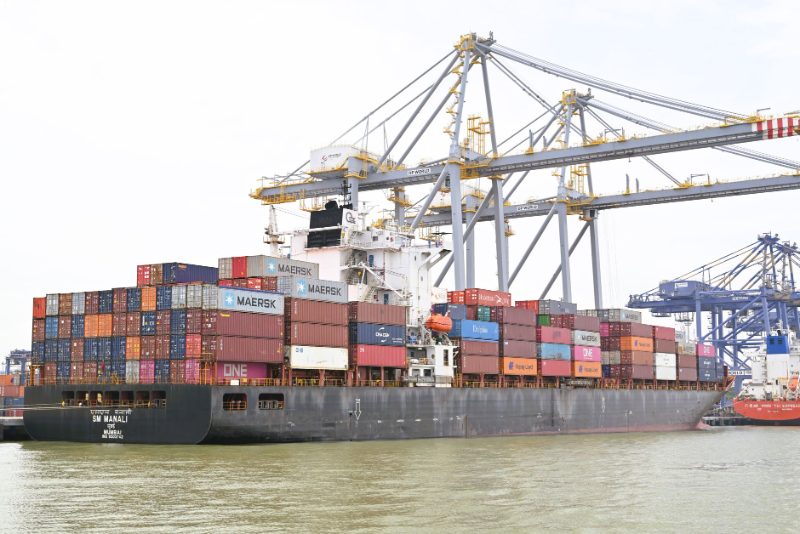
India’s merchandise trade deficit widened to $30.4 billion in June 2026, a five-month high, but the government insists this India trade deficit does not signal structural weakness in the economy. Minister of State for Commerce and Industry Jitin Prasada told the Lok Sabha in a written reply on Tuesday, August 11, that the wider gap mainly reflects higher imports of goods essential for economic growth, not a loss of export competitiveness.
The June 2026 deficit was marginally above the trailing 12-month average of $29.3 billion, the Ministry of Commerce and Industry said. Petroleum products accounted for about 26 percent of India’s total imports in FY 2025-26, machinery, capital goods and electronic goods together made up nearly one-fourth of the import bill, and gold, precious stones and gems contributed roughly 14 percent, according to the ministry’s submission to Parliament. Together these three categories represent more than half of India’s total import basket, underscoring how energy and capital-goods demand, rather than weak exports, is driving the trade gap this year.
Why Is India’s Trade Deficit Widening?
The commerce ministry attributed the higher import bill to crude oil, electronic goods, machinery and capital goods, gold, and fertilisers required by a rapidly expanding economy. The increase in the merchandise trade deficit largely reflects higher imports of essential and productive goods required for economic growth, industrialisation and export competitiveness, rather than any structural weakness in India’s external sector, the ministry said in its written reply to Parliament. Officials added that a single month’s deficit does not by itself capture overall trade performance, since energy and capital-goods imports fluctuate with global commodity prices, seasonal demand and domestic investment cycles. The ministry noted that the same imports feeding this deficit, such as machinery, electronic components and industrial inputs, are also the building blocks for India’s own manufacturing and export capacity in later stages of the supply chain.
What Is the Government Doing to Narrow the Gap?
To cut strategic import dependence, the government is building domestic capacity in electronics, semiconductors, renewable energy, critical minerals and advanced manufacturing. Key levers cited by the ministry include Production Linked Incentive (PLI) schemes, PM Gati Shakti, the National Logistics Policy and the National Industrial Corridor Development Programme. The ministry also pointed to trade remedies, Quality Control Orders (QCOs), Rules of Origin enforcement and tariff rationalisation as tools to manage sensitive imports, alongside efforts to diversify sourcing of crude oil, fertilisers and other strategic commodities away from concentrated supplier bases. Officials said these measures are aimed squarely at reducing the import intensity of sectors most exposed to global price swings, while building supply-chain resilience for the next phase of industrial growth.
Market and Trade Reaction
Despite the wider India trade deficit, the ministry highlighted macroeconomic buffers supporting the balance of payments. India’s current account deficit moderated to 0.6 percent of GDP in FY 2025-26, while foreign exchange reserves stood at $671.6 billion in June 2026, giving the Reserve Bank of India ample cover for import bills and currency stability. A strong services trade surplus, steady remittance inflows and stable capital flows continued to offset the goods trade gap, the ministry said, even as elevated global crude oil and fertiliser prices kept pressure on the import bill through the first quarter of FY 2026-27. The government’s written reply framed these buffers as evidence that the widening deficit is a function of import composition rather than a warning sign for the rupee or reserves.
What Happens Next?
The commerce ministry will continue tracking monthly trade data, with July 2026 export-import figures due for release in the coming weeks. Officials said they will keep monitoring crude oil, gold and electronics import trends against export growth in labour-intensive and manufacturing sectors through the rest of FY 2025-26, while pushing PLI-linked production and logistics reforms to narrow the merchandise trade deficit over the medium term. Exporters and industry bodies are expected to watch the July data closely for early signs of moderation, particularly in energy import costs and gold demand ahead of the festive season.
Frequently Asked Questions
What was India’s trade deficit in June 2026?
India’s merchandise trade deficit stood at $30.4 billion in June 2026, a five-month high, marginally above the trailing 12-month average of $29.3 billion, according to the Ministry of Commerce and Industry.
Why did the government say the trade deficit is not a cause for concern?
Minister Jitin Prasada told the Lok Sabha the deficit largely reflects higher imports of crude oil, electronics, machinery, gold and fertilisers needed for growth and industrialisation, not a structural weakness in India’s external sector.
What is India doing to reduce import dependence?
The government is using PLI schemes, PM Gati Shakti, the National Logistics Policy and the National Industrial Corridor Development Programme to build domestic capacity in electronics, semiconductors, renewable energy and critical minerals, while using QCOs and tariff rationalisation to manage imports.










Leave a comment