

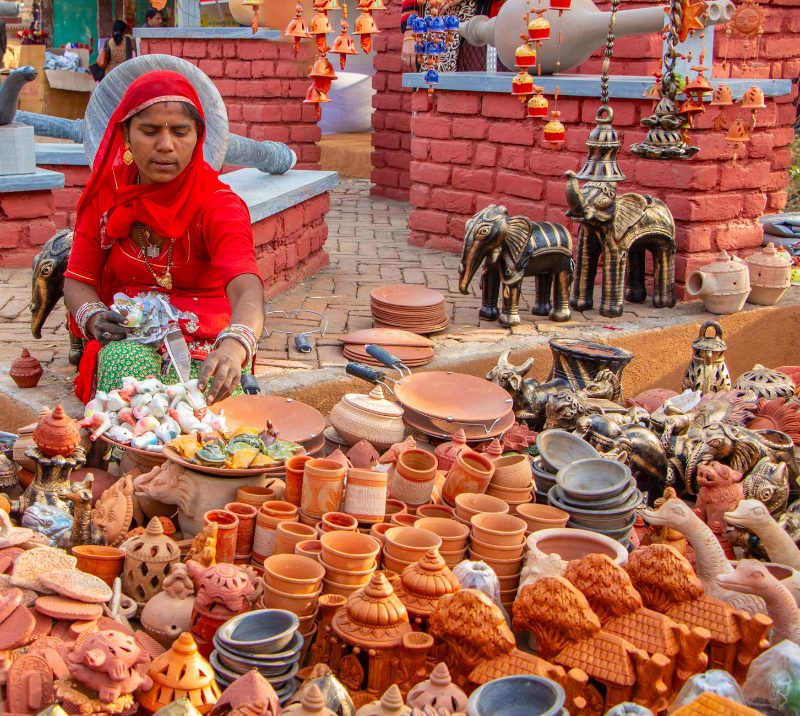
The Ministry of Micro, Small and Medium Enterprises (MSME) and the Department for Promotion of Industry and Internal Trade (DPIIT) have signed an MoU to commercialise India’s GI-tagged products and push them into global markets. The agreement, reported today, was signed on August 5, 2026, at Vanijya Bhawan in New Delhi, and aims to convert legally protected regional products into scalable, export-ready enterprises.
The GI products MoU was signed by Md. Salik Parwaiz, Director, Ministry of MSME, and Karan Thapar, Director, IPR Division, DPIIT, in the presence of senior officials from both organisations, according to the Ministry of MSME. DPIIT is the nodal department for registering and legally protecting Geographical Indications under the Geographical Indications of Goods (Registration and Protection) Act, 1999, while the MSME Ministry drives growth and financial support for micro, small and medium enterprises, traditional industries and artisans across India.
How Will the GI Products MoU Affect Artisans and Exporters?
The agreement directly targets indigenous artisans, weavers and producers who hold GI tags but have historically struggled to convert legal protection into commercial scale. As of June 2026, India counted 104 GI-registered handloom products, with 53 registrations already receiving support under the Handloom Marketing Assistance scheme, giving a sense of the base the new MoU intends to build on. Under the joint framework, DPIIT and the MSME Ministry will integrate the One District One Product (ODOP) initiative into their programme design, onboard GI collectives and authorised users onto the Open Network for Digital Commerce (ONDC) and the Government e-Marketplace (GeM) under a dedicated “Bharat GI” banner, and co-sponsor GI pavilions at domestic and international trade expos and buyer-seller meets. For exporters, the practical effect is easier digital discoverability and market access for products ranging from textiles and handicrafts to agricultural specialities that carry GI certification.
What Do Officials Say About the ODOP and GI Push?
Officials from both ministries said the partnership recognises that legal registration alone protects regional identity but does not automatically generate economic value; that requires coordinated market-building effort. The framework is designed to align DPIIT’s intellectual-property mandate with the MSME Ministry’s enterprise-development focus, combining capacity building, digital enablement and expanded market reach for GI producers. Government officials noted the initiative supports the integration of regional products into premium domestic and international markets as part of the broader Atmanirbhar Bharat push toward self-reliance and local manufacturing. The emphasis on ONDC and GeM onboarding also reflects a wider government pattern of routing MSME and artisan support through India’s digital public infrastructure rather than standalone subsidy schemes.
Market and Trade Reaction
Because this is an inter-ministerial coordination agreement rather than a budgetary announcement, it produced no direct movement in equity markets or currency; its impact will show up gradually in export volumes and GeM/ONDC onboarding numbers for GI collectives rather than in same-day trade data. India currently holds several hundred registered GI products spanning textiles, food and handicrafts, with states such as Uttar Pradesh and Tamil Nadu among the largest contributors, and the export-oriented push under this MoU is aimed squarely at monetising that existing GI base rather than creating new registrations. Industry watchers in the MSME and handicrafts export space will be tracking GeM order volumes tagged under the new “Bharat GI” banner as an early indicator of traction.
What Happens Next?
DPIIT and the MSME Ministry are expected to begin onboarding GI collectives and authorised users onto ONDC and GeM under the “Bharat GI” banner in the coming months, alongside planning for GI pavilions at upcoming domestic and international trade fairs. Producers and exporters holding GI certification should watch for formal onboarding calls from their respective GI collectives, as well as ODOP programme updates that will increasingly reference this MoU. A review of onboarding numbers and export traction would typically follow within two to three quarters as both ministries assess how effectively the framework is converting legal GI protection into actual export revenue.
Frequently Asked Questions
What is the DPIIT-MSME GI products MoU?
It is an agreement signed on August 5, 2026, between the MSME Ministry and DPIIT to commercialise India’s Geographical Indication (GI) tagged products by onboarding them onto ONDC and GeM and supporting artisans through the ODOP framework.
Who signed the GI products MoU?
Md. Salik Parwaiz, Director, Ministry of MSME, and Karan Thapar, Director, IPR Division, DPIIT, signed the MoU at Vanijya Bhawan, New Delhi.
How will this MoU help GI-tagged product exports?
It will onboard GI collectives onto ONDC and GeM under a “Bharat GI” banner, co-sponsor GI pavilions at trade expos, and integrate GI promotion into the One District One Product scheme to expand market access for artisans and exporters.











Leave a comment