

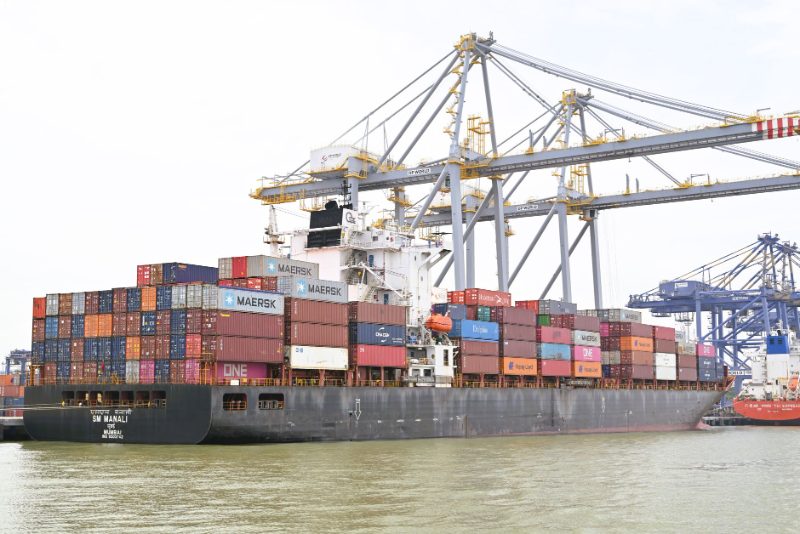
India’s total exports reached a record $863.1 billion in FY26, the Ministry of Commerce and Industry told Parliament, with merchandise exports at $441.8 billion and services exports at $421.3 billion. The government credited free trade agreements for expanding market access and driving growth across labour-intensive manufacturing and services sectors.
The record export figure comes as India’s trade agreements with Oman, the European Free Trade Association (EFTA) bloc and other partners begin showing measurable traction. Commerce Ministry data presented in Parliament highlighted specific FTA-driven gains, positioning India’s export diversification strategy as a key pillar of its trade policy through FY26 and into FY27.
Which Trade Agreements Are Driving India’s Export Growth?
The India-Oman Comprehensive Economic Partnership Agreement (CEPA), effective since June 1, 2026, has shown strong early traction, with exports to Oman rising to $622.8 million in June 2026 alone, a 54.7% month-on-month increase and a 189.6% year-on-year jump. The India-EFTA Trade and Economic Partnership Agreement (TEPA), operational since October 2025, has also gained steady uptake, with 7,885 Certificates of Origin issued to exporters so far under the pact.
What Do Trade Officials and Exporters Say?
Commerce Ministry officials attributed the record export performance to a combination of FTA-driven market access and sustained demand from key partner economies, even as global trade growth is expected to slow through the rest of 2026. Among FTA partners, ASEAN countries accounted for the highest merchandise exports at $38.42 billion, followed closely by the UAE at $37.36 billion, underlining the importance of India’s regional trade partnerships alongside newer agreements like CEPA and TEPA.
Market and Trade Reaction
Export-oriented sectors, including engineering goods, pharmaceuticals, textiles and gems and jewellery, are seen as key beneficiaries of the FTA-driven export push, with industry bodies noting that predictable market access under these agreements gives exporters more confidence to invest in capacity expansion. The record export data also comes against the backdrop of India’s reduced 18% US tariff rate secured earlier in 2026, which analysts say has helped labour-intensive sectors like textiles and apparel remain competitive against regional rivals such as Vietnam and Bangladesh.
What Happens Next?
The Commerce Ministry is expected to continue prioritising FTA implementation and utilisation tracking, particularly for the Oman CEPA and EFTA TEPA agreements, as it works toward its broader target of $800 billion-plus annual exports becoming a sustained baseline rather than a one-off peak. Attention will also turn to the pending India-EU Free Trade Agreement, which could open further export opportunities once ratification concludes.
Frequently Asked Questions
What was India’s total export figure for FY26?
India’s exports reached a record $863.1 billion in FY26, comprising $441.8 billion in merchandise exports and $421.3 billion in services exports, according to the Commerce Ministry.
Which free trade agreement showed the fastest export growth?
The India-Oman CEPA showed the fastest early growth, with exports to Oman rising 189.6% year-on-year to $622.8 million in June 2026 alone.
Which country or bloc received the most Indian merchandise exports?
ASEAN countries received the highest merchandise exports at $38.42 billion, followed by the UAE at $37.36 billion.











Leave a comment