

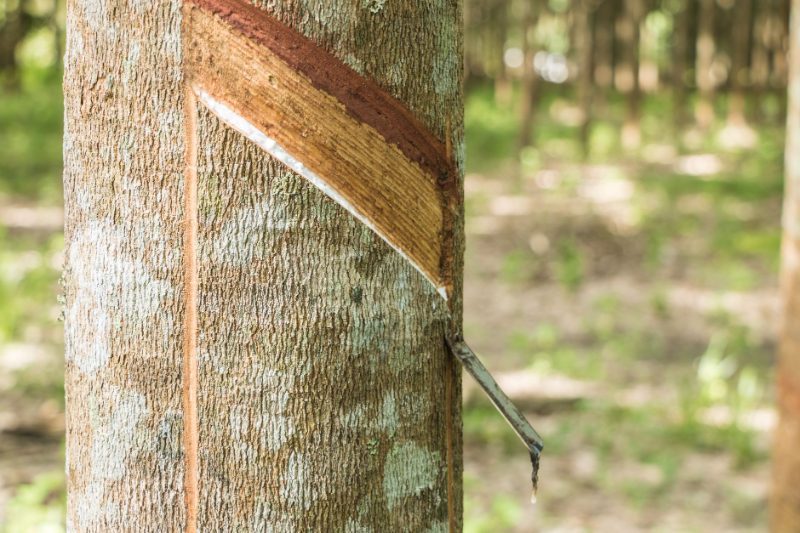
Global rubber prices slipped to 214.50 USD cents per kilogram on July 14, 2026 — down 4.88% over the past month — as heavy monsoon rains disrupted harvesting operations across Southeast Asia and weak demand from China’s tyre sector limited any price recovery. Despite the recent decline, rubber remains 29.84% more expensive than it was a year ago, underlining the tight supply fundamentals that continue to underpin the market.
The price correction follows a prolonged period of elevated rubber prices driven by a combination of supply concerns and geopolitical disruptions. Southeast Asia — the source of over 90% of the world’s natural rubber — is currently in its mid-season harvesting phase, but sustained monsoon rainfall in Thailand, Indonesia, and Vietnam has been slowing latex collection and complicating logistics at plantation level.
Why Are Rubber Prices Falling Despite Supply Concerns?
The month-on-month price decline reflects a tug-of-war between supply-side headwinds and demand-side weakness. China, the world’s largest rubber consumer, is the primary source of demand pressure. Chinese broker Gouxin Futures noted that the semi-steel tyre segment remains under stress, with manufacturers contending with weak new-order expectations and rising finished goods inventories. With Chinese tyre producers pulling back on procurement, the usual seasonal support for prices has been muted even as supply conditions remain challenged. Japan’s rubber futures contracts — a key market barometer — firmed briefly after Liberia’s ban on raw rubber exports, but the underlying demand weakness from China has capped any sustained rally.
What Is the Impact of Liberia’s Rubber Export Ban?
President Joseph Boakai of Liberia issued an indefinite ban on the export of unprocessed natural rubber effective July 1, 2026, citing the need to accelerate domestic value addition and industrialisation. The executive order carries penalties of up to USD 100,000 for corporate violations and USD 50,000 for smallholder farmers. While Liberia is not among the largest global rubber producers, the ban has added a psychological premium to already-tight global inventory levels. Global inventories were already running low heading into this year, and analysts had flagged a projected supply deficit of approximately 400,000 tonnes for 2026. The Liberia ban exacerbates this picture, even if Southeast Asian production expansion partly offsets it.
Market Reaction and Industry Response
For India’s rubber-consuming industries — which include tyre manufacturers, automotive parts producers, and industrial rubber goods makers — the 4.88% monthly price decline offers some cost relief after a period of elevated input prices. India imports significant volumes of natural rubber from Vietnam (USD 6.2 million), Thailand (USD 4.2 million), and Malaysia, making it sensitive to Southeast Asian supply dynamics. Domestic Kerala production, which accounts for the majority of India’s natural rubber output, has also been affected by monsoon conditions. The Rubber Board of India has been monitoring the situation, and tyre companies have been adjusting procurement strategies accordingly.
What Happens Next?
Rubber market participants are watching three key factors: the pace of monsoon progression across Thailand, Indonesia, and Malaysia; any recovery signal from China’s tyre and automotive sectors; and the practical implementation and enforcement of Liberia’s export ban. The monsoon season typically peaks between July and September, meaning supply disruptions could persist for several more weeks. On the demand side, any stimulus measures from the Chinese government directed at the automotive sector would be the most significant upside catalyst for rubber prices in the near term.
Frequently Asked Questions
What is the current price of natural rubber in July 2026?
Natural rubber fell to 214.50 USD cents per kilogram on July 14, 2026, down 0.09% on the day and 4.88% over the past month. Despite the recent decline, prices remain 29.84% higher than a year earlier.
Why has Liberia banned rubber exports?
Liberia’s President Joseph Boakai issued an indefinite ban on raw natural rubber exports effective July 1, 2026, to drive domestic value addition, create local processing jobs, and accelerate industrialisation in the country’s rubber sector.
How do monsoon rains affect natural rubber supply?
Heavy monsoon rainfall interferes with latex tapping operations in Southeast Asian rubber plantations, as tapping cannot proceed efficiently in wet conditions. Prolonged rains delay harvesting, reduce yields per tapping cycle, and disrupt logistics, tightening near-term supply availability.









Leave a comment