

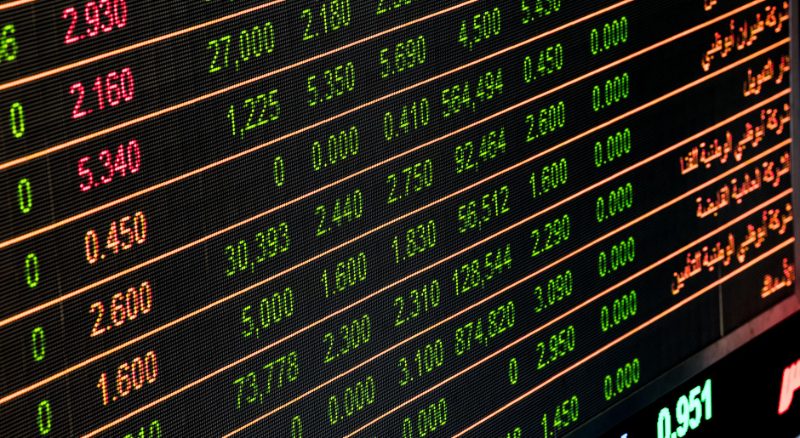
SEBI’s new Closing Auction Session (CAS) took effect on August 3, 2026, replacing the earlier 30-minute VWAP-based closing price methodology with an auction-based equilibrium price mechanism for Futures & Options (F&O)-eligible stocks. The change directly affects how the daily closing price is determined for derivatives settlement, benchmark index computation, and mutual fund NAV calculation.
The Securities and Exchange Board of India introduced the Closing Auction Session in the equity cash segment starting today, August 3, 2026, for all F&O-eligible stocks traded on Indian exchanges. Under the revised schedule, continuous trading for these stocks will run until 3:15 pm, followed by the Closing Auction Session until 3:35 pm, with stock and index F&O trading continuing until 3:40 pm and a post-close session from 3:50 pm to 4:00 pm. Non-F&O stocks are unaffected in this initial phase and will continue trading until 3:30 pm as before.
How Does the New Closing Auction Session Work?
Previously, the closing price for stocks was derived from the volume-weighted average price (VWAP) of trades executed in the last 30 minutes of the trading session. Under the new mechanism, F&O-eligible stocks move to an order-driven auction format between 3:15 pm and 3:35 pm, where buy and sell orders are aggregated into a single pool to arrive at an equilibrium price. Stock and index F&O contracts continue trading until 3:40 pm, five minutes after the cash market auction ends, and a post-close session runs from 3:50 pm to 4:00 pm. Non-F&O stocks continue to follow the previous 3:30 pm closing time, meaning the two segments of the market now operate on different closing schedules.
What Is the Rationale Behind the Change?
Market analysts note that the shift to an auction-based equilibrium price is intended to strengthen price discovery by pooling buy and sell interest into a single liquidity window rather than spreading it across a rolling 30-minute VWAP window. Industry commentary points out that this can improve execution of large institutional orders near the close and reduce the scope for price manipulation in the final minutes of trade, since the closing price feeds directly into derivatives settlement values, index computation, and mutual fund NAVs. Brokerages have also flagged that traders and fund managers will need to recalibrate order-placement strategies around the new 3:15 pm to 3:35 pm auction window.
Market and Trade Reaction
Brokerages and market commentary platforms including Angel One, HDFC Sky, Tradebrains, Religare, Ventura Securities, Outlook Business, and Paytm Money published explainers around August 3, 2026, detailing the new timings and mechanics for traders. The commentary has largely framed the Closing Auction Session as a structural, process-level change to how prices are set at the end of the trading day rather than a shift expected to alter the direction of stock prices themselves. Traders in F&O-eligible stocks are being advised to track the new 3:15 pm cutoff for continuous trading closely, since order books for these stocks will behave differently in the last 20 minutes of the session compared to non-F&O stocks, which remain on the earlier 3:30 pm close.
What Happens Next?
The Closing Auction Session is now live and applies only to F&O-eligible stocks in this initial phase, with non-F&O stocks continuing on the earlier 3:30 pm closing schedule. Market participants will be watching how closing prices behave under the new auction mechanism in the coming sessions, particularly around derivatives expiry days and index rebalancing dates, when closing-price-linked flows tend to be the heaviest. Fund houses computing NAVs and index providers using closing levels for benchmark calculation will also need to align their internal processes with the new 3:35 pm auction close and the subsequent 3:40 pm F&O close.
Frequently Asked Questions
What is SEBI’s Closing Auction Session (CAS)?
The Closing Auction Session is a new auction-based mechanism introduced by SEBI, effective August 3, 2026, that determines the closing price of F&O-eligible stocks through an equilibrium price auction instead of the earlier 30-minute VWAP method.
Which stocks are affected by the Closing Auction Session?
Only Futures & Options (F&O)-eligible stocks are covered in this initial phase. Non-F&O stocks are unaffected and continue trading until 3:30 pm as before.
What are the new market timings for F&O-eligible stocks?
Continuous trading runs until 3:15 pm, followed by the Closing Auction Session until 3:35 pm. Stock and index F&O trading continues until 3:40 pm, followed by a post-close session from 3:50 pm to 4:00 pm.








Leave a comment