

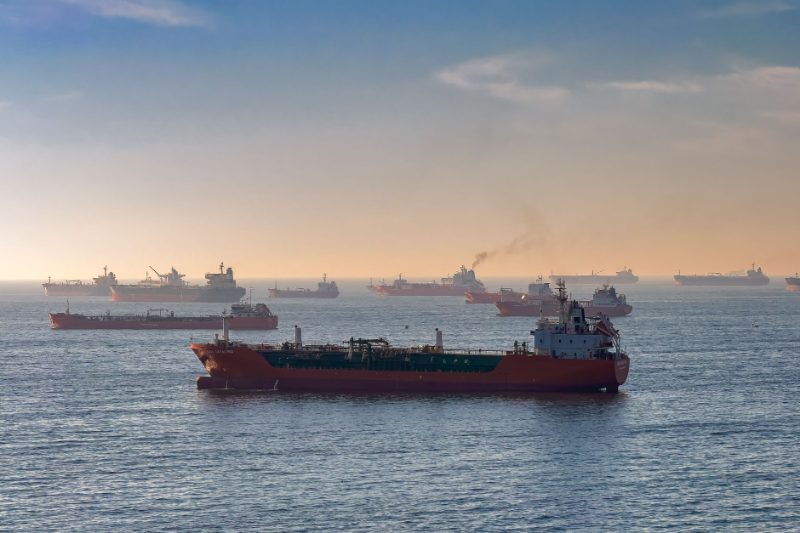
The Strait of Hormuz crisis has caused what the International Energy Agency calls the “largest supply disruption in the history of the global oil market,” with shipping traffic through the chokepoint largely blocked since late February 2026. Fresh US strikes on Iran on July 15, 2026 targeted Bandar Abbas as the conflict entered its fifth month, pushing Brent crude toward $85 a barrel.
Before the conflict began, about 25% of the world’s seaborne oil trade and 20% of global liquefied natural gas (LNG) passed through the strait. Iran’s Revolutionary Guard Corps has restricted passage, boarded and attacked merchant ships, and laid sea mines, cutting tanker traffic to almost nothing. Iran’s government says US strikes have killed more than 30 civilians and wounded over 260.
How Is the Hormuz Crisis Affecting Global Trade and Energy Prices?
Brent crude has swung from a 10-13% surge to around $80-82 a barrel in early March 2026, back down near $70 by early July, and now up more than 4% again as US-Iran strikes continue, trading close to $85. Higher energy, fertiliser, and freight costs — including bunker fuel and insurance premiums — are pushing up food and shipping costs worldwide, according to UN Trade and Development (UNCTAD), which has warned of intensifying cost-of-living pressure on the most vulnerable economies.
What Do Trade Bodies and Analysts Say?
UNCTAD’s analysis on Hormuz disruptions flags urea, LNG, and refined petroleum distribution as particularly exposed, given the strait’s outsized role in global fertiliser and gas trade. Brookings researchers describe the situation as a shift “from chokepoint to crisis” for global oil markets, warning that prolonged disruption could keep energy costs structurally elevated even if the conflict eventually de-escalates.
Market and Trade Reaction
Latin American commodity exporters are seeing a mixed impact, with the crisis supporting export revenues for oil producers while stoking inflation fears elsewhere; Brazil’s central bank is expected to maintain a restrictive policy stance partly in response. In Asia, memory chip and equipment makers led a sharp selloff in Tokyo and Seoul, while the Bank of Korea delivered a 25 basis point rate hike to defend a depreciating won.
What Happens Next?
President Trump has signalled potential further escalation, telling Fox News that power plants and bridges could be targeted “next week” absent negotiations, while also gesturing toward a possible diplomatic opening. Markets will watch for any ceasefire signals or further strikes, both of which would have immediate consequences for oil prices, shipping insurance costs, and global trade flows.
Frequently Asked Questions
What is the Strait of Hormuz crisis?
It is an ongoing conflict, beginning in late February 2026, in which US and Israeli strikes on Iran have led Iran to block shipping through the Strait of Hormuz, a chokepoint for roughly 25% of the world’s seaborne oil trade.
How has the crisis affected oil prices?
Brent crude has been highly volatile, surging to $80-82 a barrel in March 2026, easing near $70 by early July, and climbing back toward $85 in mid-July amid renewed strikes.
Which economies are most affected by the Hormuz disruption?
Oil and LNG-importing economies face the sharpest cost pressure, while fertiliser-dependent agricultural economies are also affected given the strait’s role in global urea and gas trade.










Leave a comment