

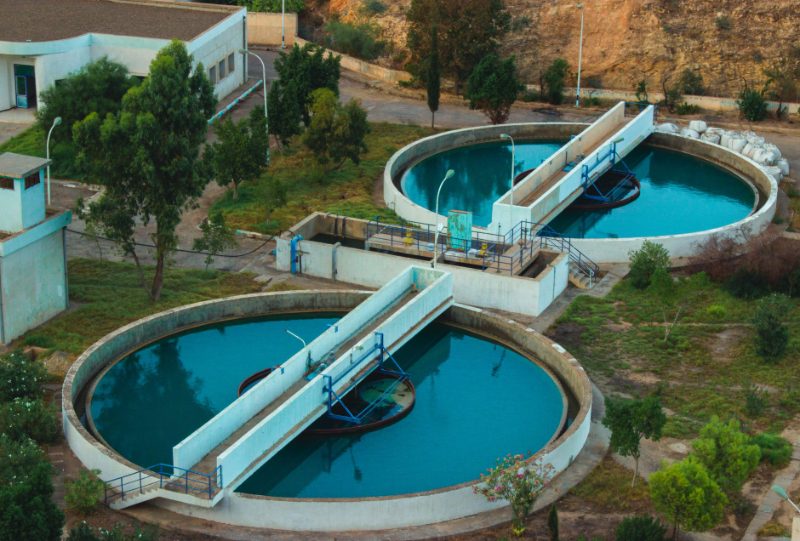
Specialty chemicals maker Vipul Organics said on Monday, September 14, 2026, that its membrane technology unit AdiMem Technologies has commenced commercial sales of indigenously developed reverse osmosis (RO) and ultrafiltration (UF) membranes, marking the company’s entry into India’s water filtration and treatment market. Vipul Organics is targeting 25% of its consolidated revenue from membranes and membrane-based solutions within the next three years.
AdiMem Technologies is transitioning from pilot-stage operations to full-scale manufacturing at Vipul Organics’ Sayakha facility in Gujarat, using a proprietary Reverse Phase Transition technology to produce high-performance membranes domestically. The unit’s product range spans microfiltration, ultrafiltration, nanofiltration and reverse osmosis membranes, along with tubular and hollow-fibre configurations and membrane bioreactor (MBR) systems, positioning AdiMem as a fully indigenous membrane manufacturer at a time when India imports a significant share of its advanced filtration membranes.
Why Is Vipul Organics Entering the Membrane Manufacturing Business?
Vipul Organics, traditionally known as a pigments and dyes manufacturer, is diversifying into water filtration technology as India’s demand for industrial water treatment and recycling solutions grows alongside tightening environmental compliance norms. The company showcased AdiMem’s membrane capabilities at IFAT India 2025, the country’s leading environmental technology exhibition, and has now moved to full commercialisation within months, a relatively swift transition from demonstration to market-ready product. India’s water and wastewater treatment market has been growing steadily as industrial clusters face stricter zero-liquid-discharge norms from state pollution control boards, creating sustained demand for membrane-based recycling systems across sectors ranging from textile dyeing units to pharmaceutical manufacturing. Company management has framed the entry into membranes as a strategic diversification that leverages existing specialty chemicals manufacturing expertise while tapping a faster-growing end market than legacy dyes and pigments.
What Does This Mean for India’s Water Treatment and Chemicals Industry?
AdiMem’s membranes, which the company says can enable up to 90% water recovery across industrial use cases, address a segment of India’s water treatment supply chain that has historically relied heavily on imported RO and UF membrane technology from global players. A credible indigenous alternative could reduce costs and import dependence for industries such as textiles, pharmaceuticals, food processing and municipal water utilities that rely on membrane-based filtration for effluent treatment and water recycling. For Vipul Organics, successful scale-up would diversify the company’s revenue base beyond its traditional dyes and pigments business, which has faced its own cyclical pricing pressures.
Market Reaction and Industry Response
Vipul Organics’ stock has drawn investor attention around the AdiMem announcement, with market commentary framing the move as a credible step toward the company’s stated goal of building a meaningful new revenue stream. Water technology and filtration industry observers have noted that indigenous membrane manufacturing is a nascent but strategically important segment in India, given the country’s broader push toward water security and industrial effluent compliance. Competing membrane suppliers, largely multinational, are expected to watch AdiMem’s commercial traction closely as a test of whether domestically manufactured membranes can match imported product performance at competitive pricing. The company’s move also comes as several Indian specialty chemical and engineering firms have begun investing in water technology as a hedge against volatility in traditional commodity and specialty chemical pricing cycles.
What Happens Next?
Vipul Organics will need to scale AdiMem’s manufacturing output and build out a distribution and technical support network to hit its three-year revenue target, a process that will likely include securing reference installations with large industrial and municipal customers. Investors and industry watchers will be tracking quarterly disclosures from the company for early signs of order wins and revenue contribution from the membrane business. The success or failure of this diversification could also influence whether other Indian specialty chemical companies pursue similar moves into adjacent, higher-growth technology segments.
Frequently Asked Questions
What did Vipul Organics announce about AdiMem Technologies?
On September 14, 2026, Vipul Organics said its unit AdiMem Technologies has begun commercial sales of indigenously developed RO and UF membranes, targeting 25% of company revenue within three years.
What products does AdiMem Technologies manufacture?
AdiMem makes microfiltration, ultrafiltration, nanofiltration and reverse osmosis membranes, along with tubular and hollow-fibre configurations and membrane bioreactor systems, at its Sayakha, Gujarat facility.
Why does indigenous membrane manufacturing matter for India?
India currently relies heavily on imported RO and UF membranes for water treatment; a credible domestic alternative could reduce import dependence and costs for industrial and municipal water treatment.









Leave a comment