

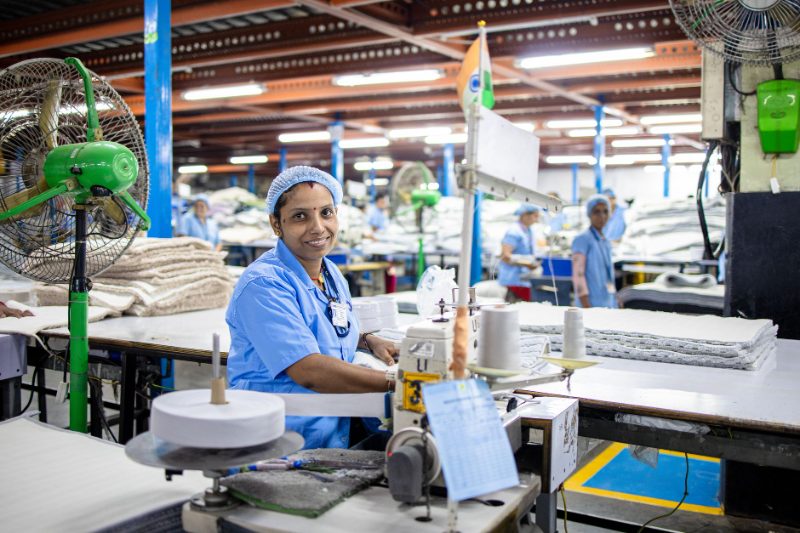
India’s Production Linked Incentive (PLI) scheme for food processing has created 3.39 lakh direct and indirect jobs by February 2026, significantly surpassing its original target of 2.5 lakh jobs for FY2026-27. The PLI scheme food processing India milestone reflects the programme’s success in attracting large-scale investment and generating employment across the country’s vast food manufacturing landscape.
The Ministry of Food Processing Industries (MoFPI) confirmed the employment achievement as part of an update on scheme disbursements. The Union Budget 2026-27 has allocated Rs. 4,064 crore (approximately USD 459.86 million) to MoFPI, with the PLI scheme receiving Rs. 1,200 crore specifically to expand coverage into high-growth categories including millets, organic foods, and nutraceuticals.
How Has the PLI Scheme for Food Processing Exceeded Its Employment Targets?
The PLI scheme food processing India programme incentivises companies that achieve targeted increases in sales of processed food products above a base year. Beneficiaries across categories including ready-to-eat foods, processed fruits and vegetables, marine products, mozzarella cheese, and innovative food products collectively created 3.39 lakh jobs — 35% above the 2.5 lakh target — by February 2026. Export commitments from PLI beneficiaries are expected to cross Rs. 40,000 crore in FY2026-27, with several large food conglomerates having already deployed over Rs. 10,000 crore in new processing facilities since the scheme’s launch.
Which Sectors Within Food Processing Are Driving the Most Growth?
Ready-to-eat and ready-to-cook food products have emerged as the PLI scheme’s standout performers, driven by rising urbanisation and changing consumer lifestyles. Marine product processing has also seen significant investment, particularly in coastal states like Gujarat, Andhra Pradesh, and Kerala. The millet processing segment is receiving particular government attention in 2026 following India’s successful hosting of the International Year of Millets in 2023, with several PLI-backed millet brands now achieving pan-India distribution. The nutraceuticals segment, while newer, is attracting significant foreign direct investment (FDI), with India receiving USD 2.2 billion in food processing FDI in FY2025-26.
Market Reaction and Industry Response
The food processing PLI scheme’s performance has drawn positive responses from both industry bodies and investors. The Confederation of Indian Food Trade and Industry (CIFTI) noted that the scheme has catalysed the creation of modern food processing clusters in Tier-2 and Tier-3 cities, reducing the sector’s traditional concentration in metros. Shares of listed food processing companies including Varun Beverages, Bikaji Foods, and Prataap Snacks have seen positive revaluations in H1 2026 as market participants factor in PLI-driven capacity expansions. Several multinational food companies are also reportedly exploring expansion of India manufacturing operations to qualify for PLI incentives.
What Happens Next?
The MoFPI is scheduled to conduct its next PLI scheme review in September 2026, where the second tranche of incentives will be disbursed to top-performing beneficiaries. The government is expected to announce whether the scheme will be expanded to include new categories such as functional foods, plant-based proteins, and premium dairy products — segments where domestic demand is growing at over 20% annually. APEDA’s complementary initiative targets ₹50,000 crore in processed food exports by FY2027-28, with PLI beneficiaries positioned to supply a significant share of this export volume.
Frequently Asked Questions
How many jobs has India’s PLI scheme for food processing created?
India’s PLI scheme for food processing created 3.39 lakh direct and indirect jobs by February 2026, surpassing the government’s original target of 2.5 lakh jobs for FY2026-27 by approximately 35%. The scheme’s success reflects strong participation from large food companies investing in new processing facilities across India.
What is the budget allocation for the PLI food processing scheme in 2026-27?
The Union Budget 2026-27 allocated Rs. 1,200 crore specifically to the PLI Scheme for Food Processing, as part of a total Rs. 4,064 crore allocation to the Ministry of Food Processing Industries. The PLI funding will support expansion into millets, nutraceuticals, and organic food processing categories.
Which food categories are covered under India’s PLI food processing scheme?
India’s PLI Scheme for Food Processing covers ready-to-eat foods, processed fruits and vegetables, marine products, mozzarella cheese, and innovative/organic food products. The government is evaluating expansion of the scheme to include millets, nutraceuticals, functional foods, and plant-based proteins in the next phase.









Leave a comment