

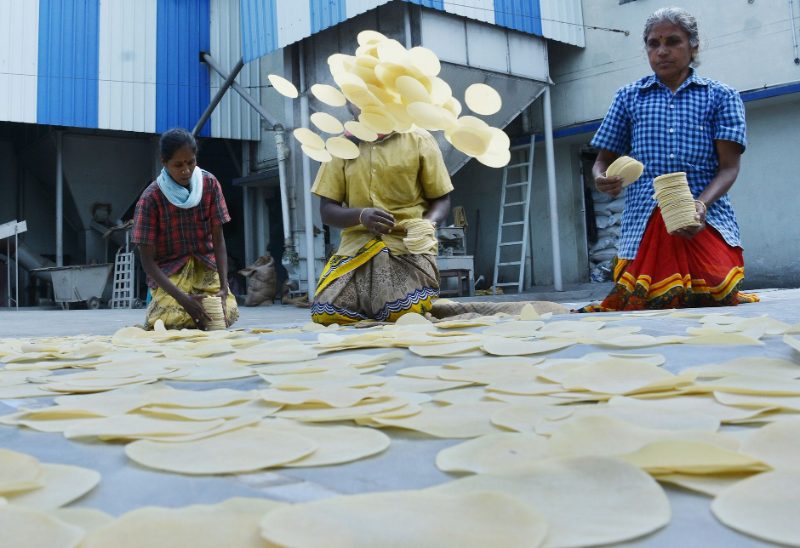
India’s Production Linked Incentive Scheme for Food Processing Industry (PLISFPI) has created 3.39 lakh direct and indirect jobs as of February 2026, sailing past its original target of 2.5 lakh jobs by 2026-27 nearly a year ahead of schedule. The food processing PLI scheme has also added 34 lakh MT per annum of new processing and preservation capacity, according to data released by the Ministry of Food Processing Industries.
The milestone was highlighted during the SAPLING Dialogue 2026 in Ahmedabad, where Union Minister for Food Processing Industries Chirag Paswan brought together policymakers, industry leaders, development agencies and entrepreneurs from across South Asia. Separately, dairy major Amul is laying the foundation stone for a new dairy plant in West Bengal, signaling fresh private investment riding on the back of the PLI-driven expansion. A report released at SAPLING 2026 also showed India’s overall food processing levels rising from around 10 percent in 2016 to nearly 17 percent by 2023.
What Is Driving the Success of India’s Food Processing PLI Scheme?
The food processing PLI scheme ties incentive payouts directly to incremental sales and capacity addition, which has pushed both large FMCG players and mid-sized processors to fast-track factory expansions. With 34 lakh MT per annum of processing and preservation capacity added since the scheme launched, companies are converting perishable output — fruits, vegetables, dairy, marine products — into shelf-stable, higher-margin goods closer to farm gate. The Ministry credits this capacity build-out for pulling processing levels up nearly seven percentage points in under a decade.
What Does This Mean for the Broader Food Processing Industry?
The ripple effects extend well beyond the companies directly enrolled in the scheme. Amul’s new West Bengal dairy plant adds regional processing muscle in an eastern market that has historically lagged western and southern India in cold-chain infrastructure. MPEDA’s plan to host the second National Seafood Skill Olympiad during Seafood Expo Bharat 2026 points to parallel efforts to upgrade workforce skills in value-added seafood processing, an export-facing segment competing directly with Vietnam and Thailand. Smaller processors that are not PLI beneficiaries are also under pressure to modernize, since retailers and export buyers increasingly expect PLI-grade quality and traceability standards across the supply chain.
Market Reaction and Industry Response
Industry bodies attending SAPLING Dialogue 2026 in Ahmedabad broadly welcomed the jobs data, framing it as evidence that incentive-linked manufacturing policy can outperform targets when paired with private capital. Dairy cooperatives and export councils have used the milestone to push for a second phase of the scheme with a wider product basket, including millets and ready-to-eat categories. At the same time, some processors have flagged that incentive disbursement timelines remain slower than capacity build-out, creating working-capital strain for mid-sized units that have already invested in plant and machinery.
What Happens Next for India’s Food Processing Sector?
The Ministry of Food Processing Industries is expected to publish a full scheme review closer to the 2026-27 fiscal year-end, which will determine whether the PLI outlay is extended or expanded. Watch for Amul’s West Bengal plant commissioning timeline, further state-level dairy and seafood investment announcements around Seafood Expo Bharat 2026, and any follow-up policy from the SAPLING Dialogue on cross-border food processing cooperation within South Asia.
Frequently Asked Questions
What is the PLI scheme for food processing?
The Production Linked Incentive Scheme for Food Processing Industry (PLISFPI) is a central government program that pays incentives to food companies based on incremental sales from processed food, encouraging investment in manufacturing capacity and branding.
How many jobs has the food processing PLI scheme created?
As of February 2026, the scheme has created around 3.39 lakh direct and indirect jobs, exceeding its original target of 2.5 lakh jobs set for 2026-27.
Why is Amul building a new dairy plant in West Bengal?
Amul is expanding into West Bengal to strengthen regional dairy processing and cold-chain capacity in eastern India, a market that has historically had less processing infrastructure than western and southern states.










Leave a comment