

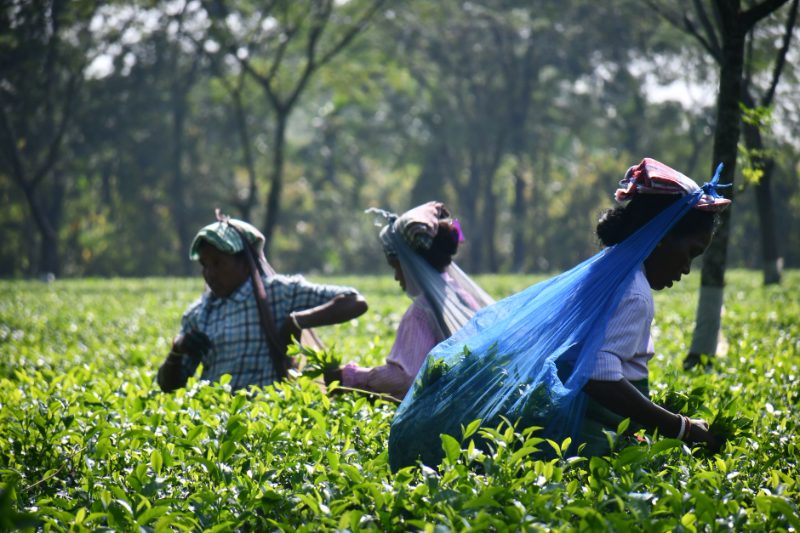
India replaced the two-decade-old Mahatma Gandhi National Rural Employment Guarantee Act (MGNREGA) with the Viksit Bharat-Guarantee for Rozgar and Ajeevika Mission (Gramin) — VB-G RAM G Act, 2025 — effective July 1, 2026. The new India rural employment scheme 2026 sets a statutory floor wage of ₹300 per day for rural workers, a significant increase from the MGNREGA wage rates which averaged ₹230–₹265 in most states. The shift signals a fundamental redesign of India’s flagship rural safety net programme under the Viksit Bharat vision.
The VB-G RAM G Act was notified by the Ministry of Rural Development under Union Minister Shivraj Singh Chouhan. The new framework moves beyond MGNREGA’s demand-driven employment guarantee model toward a broader livelihood mission that integrates skills development, self-employment, and guaranteed wage work into a single unified programme for rural households below the poverty line.
How Does VB-G RAM G Differ from MGNREGA?
The VB-G RAM G Act introduces three key changes from the previous MGNREGA framework. First, the statutory floor wage of ₹300 per day is now uniform across all states, replacing the state-specific wage schedule under MGNREGA which led to wide disparities — ranging from ₹211 per day in Chhattisgarh to ₹357 in Haryana in FY 2025–26. Second, the scheme integrates livelihood support through skill training and micro-enterprise linkages, going beyond pure wage employment. Third, digital disbursement is now mandatory, with 100% of wages to be transferred directly to Aadhaar-linked bank accounts within 15 days of work completion, eliminating the delays that affected over 40% of MGNREGA payments historically.
What Do Economists and Rural Welfare Experts Say?
Economists have offered mixed assessments. Proponents argue the ₹300 floor wage brings rural earnings closer to urban minimum wages and could reduce distress migration. Dr. Reetika Khera of IIT Delhi, a long-standing MGNREGA researcher, has called for independent monitoring to ensure the wage increase translates to actual disbursements and not just on-paper entitlements. The Centre for Policy Research estimates the new scheme could benefit approximately 15 crore rural households. Rural development experts have also flagged that the scheme’s success depends on timely fund releases from the Centre — a structural challenge that plagued MGNREGA, which saw ₹12,000 crore in pending dues at various points.
Market and Trade Reaction
The shift is expected to boost rural consumption, which accounts for approximately 55% of India’s private final consumption expenditure. Consumer goods companies with strong rural distribution — including FMCG majors like HUL, Dabur, and Marico — saw their shares rise 1–3% in early July 2026 on expectations of improved rural purchasing power. The ₹300/day wage floor could inject an estimated ₹45,000–₹55,000 crore annually into rural economies if scheme coverage is maintained at MGNREGA-era levels of 250–280 million person-days per year.
What Happens Next?
The Ministry of Rural Development is expected to release implementation guidelines by July 31, 2026, with states required to update their job card databases and payment infrastructure by September 30, 2026. The first quarterly review of VB-G RAM G implementation is scheduled for October 2026. Parliament’s Standing Committee on Rural Development will assess scheme rollout during the Monsoon Session, and states have been asked to submit convergence plans linking VB-G RAM G with PM Awas Yojana and PMGSY (rural roads).
Frequently Asked Questions
What is the VB-G RAM G Act 2025 and how does it replace MGNREGA?
The Viksit Bharat-Guarantee for Rozgar and Ajeevika Mission (Gramin) Act, 2025, effective July 1, 2026, replaces MGNREGA with an upgraded rural livelihood programme that guarantees a floor wage of ₹300/day, integrates skills training, and mandates digital wage payments directly to Aadhaar-linked accounts.
Who is eligible for the VB-G RAM G scheme?
Rural households registered with gram panchayats across India are eligible. Priority is given to Below Poverty Line (BPL) households, women-headed households, Scheduled Castes, and Scheduled Tribes. Applicants must hold a valid job card updated under the new digital framework.
Will existing MGNREGA job cards remain valid under VB-G RAM G?
Existing MGNREGA job cards will be migrated to the new VB-G RAM G system through a gram panchayat-level digital updation exercise to be completed by September 30, 2026. Workers do not need to apply afresh, but must verify and update their Aadhaar-bank linkage to receive the new ₹300/day wage directly.










Leave a comment