

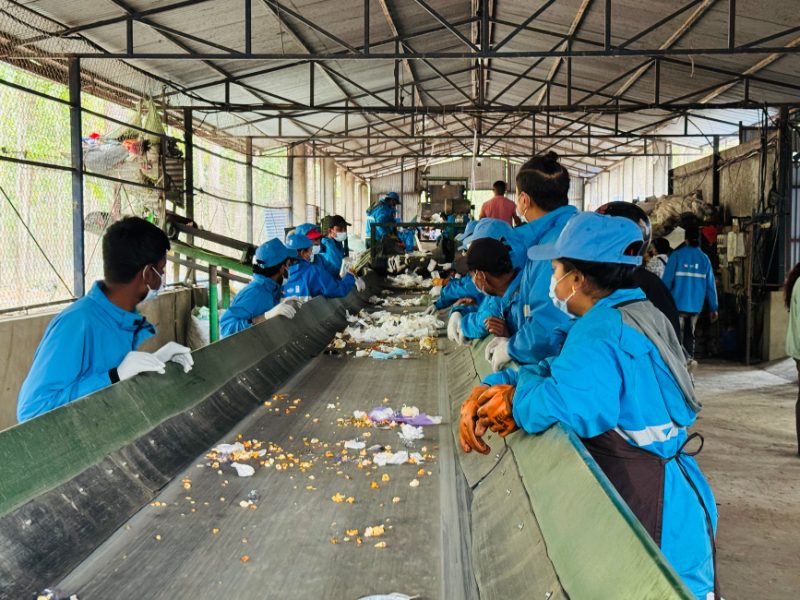
The 3rd Global Conclave on Plastics Recycling and Sustainability (GCPRS 2026), held from July 2–5 at Bharat Mandapam in New Delhi, concluded with a strong consensus that India’s plastics recycling sector — currently valued at approximately Rs 30,000 crore — must scale through advanced technologies and robust EPR compliance to fulfil its circular economy potential. The India plastics recycling conclave 2026 brought together manufacturers, recyclers, policymakers, and technology companies to chart a roadmap for the next decade.
The event was jointly organised by the All India Plastics Manufacturers’ Association (AIPMA) and the Chemicals and Petrochemicals Manufacturers’ Association (CPMA), positioning it as the highest-profile gathering dedicated to plastics sustainability and recycling in India. It featured live demos of AI-enabled material sorting, chemical recycling innovations, and digital traceability tools that are beginning to reshape how India handles post-consumer plastic waste.
What Technologies Were Highlighted at GCPRS 2026?
The India plastics recycling conclave 2026 spotlighted several cutting-edge technologies gaining traction in the domestic market. Chemical recycling — which breaks down plastic waste into its monomer or fuel components — was a major theme, with presentations on pyrolysis and solvent-based depolymerisation systems now being piloted by Indian firms. AI-enabled conveyor sorting systems capable of identifying polymer types at high speeds were demonstrated, alongside improved washing lines for mixed and contaminated plastics. Digital traceability tools using QR codes and blockchain-based EPR credit systems also featured prominently, addressing compliance requirements under India’s Plastic Waste Management Rules. The domestic plastic recycling industry is estimated at Rs 30,000 crore and is projected to expand strongly over the next decade, with recycled PET (rPET) and recycled HDPE among the fastest-growing sub-segments.
Why Is India’s Plastics Recycling Sector a Priority in 2026?
India generates over 3.5 million metric tonnes of plastic waste annually, and the government’s EPR mandate — which requires plastic producers, importers, and brand owners to collect and recycle plastic packaging in proportion to their market output — has created significant demand for formal recycling capacity. Compliant EPR credit trading has emerged as a new market, and the GCPRS 2026 served as a platform for industry to engage with regulators on improving the EPR credit market’s liquidity and transparency. India’s overall plastics sector, valued at Rs 3–3.5 lakh crore, sees recycling not just as a compliance cost but as a growing commercial opportunity as global brands push for recycled content in packaging.
Market Reaction and Industry Response
The conclave generated strong interest from both domestic recyclers and international machinery suppliers looking to tap India’s growing demand for recycling equipment. Companies active in AI-enabled sorting and washing line technologies reported active buyer interest from mid-sized recyclers in Gujarat, Maharashtra, and Tamil Nadu — the three largest plastics processing states in India. The event also underscored the growing investor interest in the recycled plastics space, with startup activity and early-stage funding increasingly targeting difficult-to-recycle streams such as multilayer flexible packaging, PVC, and EPS foam.
What Happens Next?
Following the GCPRS 2026, industry bodies AIPMA and CPMA are expected to submit a consolidated policy representation to the Ministry of Chemicals and Petrochemicals on revisions to EPR credit norms and recycled content mandates. The next key date for India’s plastics recycling sector is the annual review of Plastic Waste Management Rules, typically announced in Q3 of the calendar year. Separately, PlastIndia 2026 — India’s flagship plastics trade fair held in February 2026 — had already set the stage with a focus on sustainable plastics, and the momentum from GCPRS 2026 is expected to carry into downstream investment decisions through H2 2026.
Frequently Asked Questions
What is India’s plastics recycling industry worth in 2026?
India’s domestic plastic recycling industry is estimated at approximately Rs 30,000 crore in 2026, with strong projected growth over the next decade driven by EPR mandates, brand owner demand for recycled content, and expanding chemical recycling capacity. The broader Indian plastics sector is valued at Rs 3–3.5 lakh crore.
What is EPR in India’s plastics industry?
EPR stands for Extended Producer Responsibility, a framework under India’s Plastic Waste Management Rules that requires plastic producers, importers, and brand owners to collect and recycle plastic packaging proportional to the volume they introduce into the market. EPR credits can be traded between producers and recyclers, creating a market-based mechanism to fund formal recycling infrastructure.
Which cities lead India’s plastic recycling industry?
Gujarat, Maharashtra, and Tamil Nadu are the three largest plastics processing and recycling hubs in India. These states host the highest concentration of plastic converters, recyclers, and raw material suppliers, and see the most active investment in new recycling infrastructure and compliance systems.










Leave a comment