

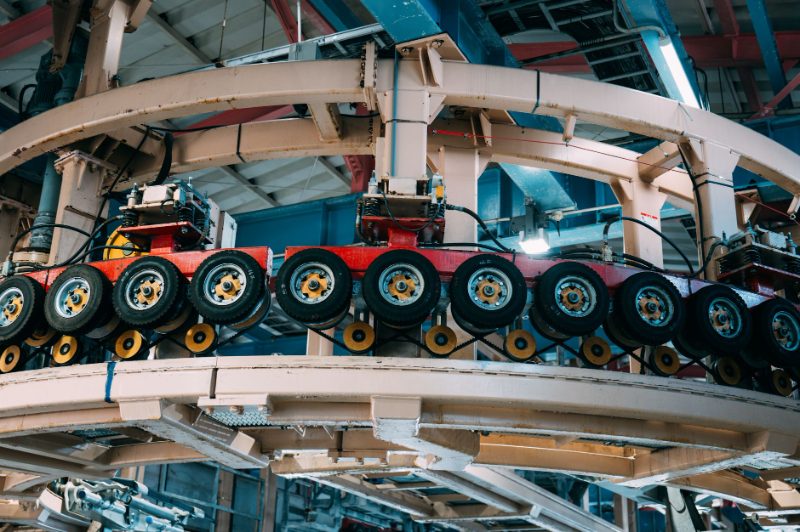
CEAT Limited’s board has approved a Rs 1,205 crore capital expenditure plan to expand tyre manufacturing capacity by about 53,000 tyres per day, with the investment centred on its Nagpur plant’s two-wheeler tyre segment. The decision, taken at a board meeting held on July 16, 2026, comes as the company’s existing plants run at close to full stretch.
CEAT disclosed that it is currently operating at approximately 95% of installed capacity, leaving little room to meet rising demand without fresh investment. The phase-wise expansion, to be completed by FY2031, will be funded through a mix of internal accruals and debt, and will proceed through what the company described as proactive greenfield and brownfield initiatives at Nagpur. The same board meeting also saw CEAT release its unaudited standalone and consolidated results for the quarter ended June 30, 2026, and approve the re-appointment of B S R & Co. LLP as statutory auditors for a second five-year term running to 2032.
Why Is CEAT Expanding Two-Wheeler Tyre Capacity Now?
India’s two-wheeler segment has been one of the more resilient pockets of automotive demand through 2026, and tyre replacement cycles in this segment tend to be shorter than in passenger or commercial vehicles, translating into steady aftermarket volumes. With CEAT’s Nagpur facility nearing full utilisation, the company faces a choice between capacity-constrained growth or committing capital now to capture incremental two-wheeler tyre demand, both from original equipment manufacturers and the replacement market. The Rs 1,205 crore investment signals management’s conviction that two-wheeler tyre demand will stay strong enough through FY2031 to justify a multi-year capacity build-out rather than a smaller, incremental addition.
What Does This Mean for India’s Rubber and Tyre Industry?
CEAT’s expansion adds to a broader capital expenditure cycle across India’s tyre industry, with peers Apollo Tyres, MRF and JK Tyre all having announced or executed capacity additions over the past two years. For India’s rubber and tyre manufacturing base, sustained capex commitments from multiple large players suggest confidence that both domestic automotive demand and export volumes can absorb the additional supply without triggering the kind of pricing pressure that hurt margins in previous capacity cycles. It also reinforces Nagpur and the broader Maharashtra tyre manufacturing corridor as a continuing hub for two-wheeler tyre production in India.
Market Reaction and Industry Response
Following the board’s disclosure, CEAT confirmed that its trading window for dealing in company securities would reopen 48 hours after the results declaration, a standard SEBI-mandated procedural step. Tyre sector stocks, including CEAT, have shown sensitivity through 2026 to crude oil and synthetic rubber price movements, since these are key cost inputs; a sustained period of softer crude prices earlier in the year had already supported margin expectations across the tyre segment, providing a favourable backdrop for CEAT’s capacity decision. Industry watchers have noted that CEAT’s move to commit fresh capital, even as its overall industry navigates raw material cost volatility, points to management confidence in demand visibility over the FY27-FY31 window.
What Happens Next?
CEAT’s Q1 FY27 financial results, released alongside the capex approval, will offer the first data point on how the company’s underlying tyre business is performing entering this expansion cycle. Investors will track subsequent updates on the pace of the Nagpur build-out, including any greenfield land acquisition or brownfield construction milestones, as CEAT works toward the FY2031 completion target. Analysts will also be watching whether rival tyre makers announce matching or larger capacity expansions in response, given the broader industry-wide capex trend.
Frequently Asked Questions
How much is CEAT investing in its Nagpur plant expansion?
CEAT’s board approved a Rs 1,205 crore investment on July 16, 2026, to add approximately 53,000 tyres per day of capacity at its Nagpur plant by FY2031, funded through internal accruals and debt.
Why is CEAT expanding two-wheeler tyre capacity specifically?
The company is currently running at about 95% of installed capacity, and two-wheeler tyre demand from both OEMs and the replacement market has stayed strong, prompting the board to commit to a multi-year capacity build-out at Nagpur.
How does this fit into the broader Indian tyre industry?
CEAT’s expansion follows similar capacity investments by peers including Apollo Tyres, MRF and JK Tyre, reflecting sector-wide confidence in sustained domestic and export tyre demand through the rest of the decade.









Leave a comment