

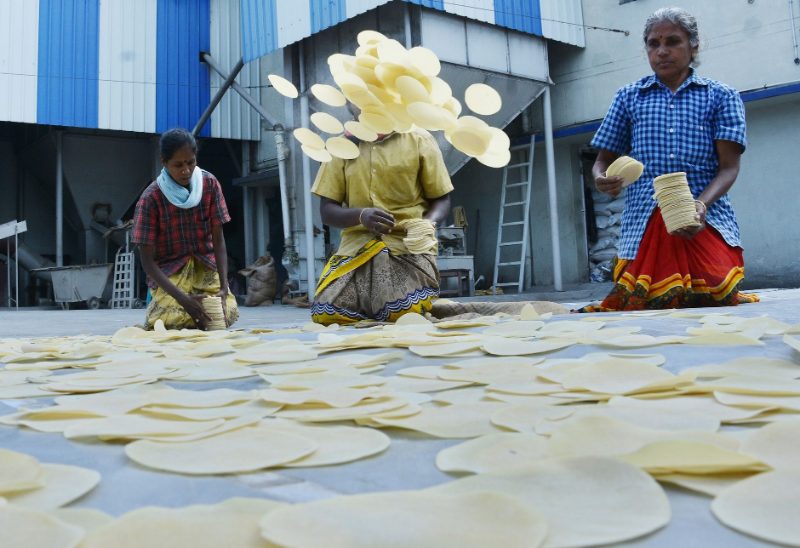
India’s food processing ministry has been allocated Rs 4,064 crore (roughly $459.86 million) in the Union Budget for FY 2026-27, a figure that industry bodies are calling a decisive signal of the government’s intent to scale domestic food manufacturing into a genuine export powerhouse. The allocation lands at a moment when the sector’s numbers are already moving in the right direction: processed food exports touched $7,886.62 million in FY 2024-25, and momentum has continued to build through the first half of 2026.
A Policy Push Years in the Making
The increased outlay builds on the Production Linked Incentive scheme for food processing, which has been steadily drawing fresh capital into segments ranging from ready-to-eat meals and dairy to marine products and fruit and vegetable processing. Officials at the ministry have framed the budget bump as part of a broader strategy to reduce post-harvest losses, which have historically eaten into farmer incomes and left India’s raw agricultural surplus under-monetised. By channelling funds into cold chain infrastructure, mega food parks and modern abattoirs, the government is betting that value addition closer to the farm gate will do more for rural incomes than raw commodity exports ever could.
Industry watchers note that the timing is significant. India’s food processing industry has been expanding on the back of strong domestic consumption, a growing middle class with rising disposable incomes, and a policy environment that has become considerably more predictable over the past few budget cycles. Analysts tracking the sector expect the current allocation to support new capacity additions in states such as Uttar Pradesh, Maharashtra, Andhra Pradesh and Gujarat, which already host a disproportionate share of India’s food parks and processing clusters.
Exports as the Real Scorecard
The export figure of $7.88 billion for FY 2024-25 is the number the ministry is most keen to build on. Officials have set informal targets to push processed food exports meaningfully higher over the next two to three years, leaning on trade agreements, quality certification support and branding assistance for exporters who have historically struggled to compete with processed food brands from Southeast Asia and China on packaging and shelf appeal. Ready-to-eat and ready-to-cook categories, in particular, have emerged as a bright spot, with a wave of homegrown brands expanding both their retail footprint within India and their presence in international grocery aisles catering to the diaspora and increasingly to mainstream Western consumers curious about Indian cuisine.
Companies operating in the convenience food space have been quick to capitalise on the improved funding environment. Emerging manufacturers focused on premium ready-to-eat and ready-to-cook meal solutions have used the current momentum to expand distribution, betting that urban consumers’ appetite for convenience will only grow as dual-income households become the norm in Indian cities. That expansion is being watched closely by private equity investors, several of whom have quietly increased their exposure to mid-sized food processing companies over the past year in anticipation of consolidation.
What the Market Is Watching Next
The near-term test for the budget allocation will be disbursement speed. Previous PLI tranches for food processing have occasionally been criticised for slow rollout, with applicant companies citing delays in approvals and disbursals that blunted the scheme’s intended impact. Industry associations are pressing the ministry to streamline the application process this cycle, arguing that faster capital deployment matters more than the headline allocation figure. There is also a push from exporters for the government to expand support for food safety certification, since compliance with international standards such as HACCP and BRC remains one of the biggest friction points for small and mid-sized processors trying to break into new export markets.
Taken together, the budget allocation, the PLI scheme’s continued rollout and the export growth trajectory point to a sector that is transitioning from a domestically focused, fragmented industry into one with genuine global ambitions. Whether that transition accelerates will depend less on the size of the next budget line item and more on how efficiently the money reaches the factories, cold chains and farmer-facing infrastructure it is meant to build.










Leave a comment