

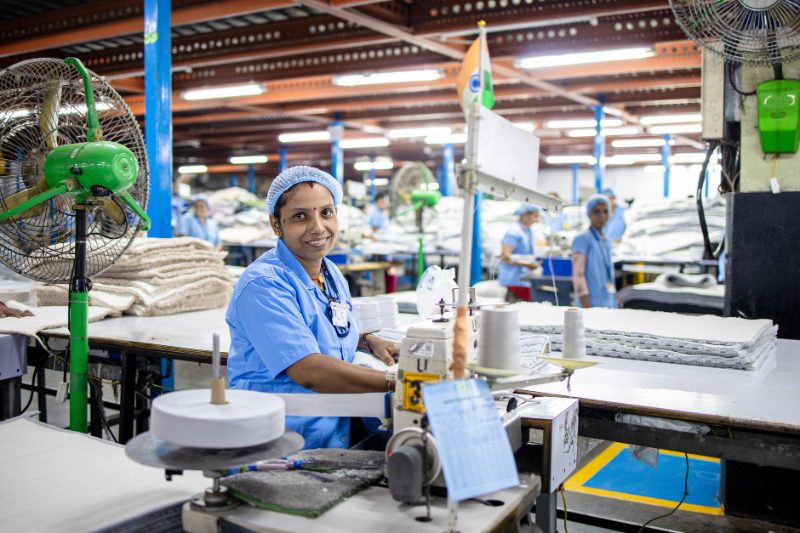
India’s Department for Promotion of Industry and Internal Trade has notified the Furniture Quality Control Order, mandating ISI certification for work chairs, general-purpose chairs, tables, storage units, beds, and bunk beds, with enforcement effective from February 13, 2026. The order carries specified exemptions for micro, small, and medium enterprises, but marks the most significant regulatory shift the country’s furniture manufacturing sector has faced in over a decade.
Why the Government Is Stepping In
The QCO follows a familiar template India has applied across sectors from toys to steel: use mandatory quality standards to squeeze out substandard imports and informal, uncertified production, while pushing the domestic industry toward globally competitive manufacturing norms. Officials argue that furniture sold in India has historically lacked consistent safety and durability benchmarks, particularly in categories like children’s furniture, storage units, and stacked bedding, where structural failure poses direct safety risks. By requiring Bureau of Indian Standards certification, the government aims to standardize quality across a market valued at roughly USD 29-32 billion.
A Market Already in Transition
India’s furniture market nearly doubled over the past decade, growing to become the world’s fourth-largest and the second-largest in the Asia-Pacific region behind China, with size projected to expand from USD 32.19 billion in 2026 to USD 45.42 billion by 2032. That growth, however, has been driven largely by a highly fragmented base of unorganized carpenters, small workshops, and regional manufacturers alongside a smaller organized segment of branded players. The QCO is expected to accelerate consolidation, favoring companies with the capital and process discipline to secure and maintain certification.
Compliance Costs and MSME Concerns
Industry associations representing smaller manufacturers have raised concerns about the cost and administrative burden of BIS certification, testing infrastructure access, and the risk that informal producers serving hyper-local, custom furniture demand could be pushed out of formal retail channels entirely. While the order carves out MSME exemptions, questions remain about how strictly enforcement will be applied at the retail and e-commerce level, where much of India’s furniture is now sold. Compliance windows closing through 2026 are expected to force many smaller producers to either invest in certification or shift toward informal, non-branded distribution.
Winners in the New Regime
Branded and organized players, including online-first retailers that have already invested in quality assurance processes to support warranty and return policies, are best positioned to benefit. Platforms serving the fast-growing online furniture segment, alongside larger manufacturers with existing export relationships that already meet international certification norms, are expected to gain market share as certified furniture becomes a differentiator with increasingly quality-conscious urban consumers.
Investment Signals Continue Despite Uncertainty
Even as the regulatory transition unfolds, investment activity in the sector has continued, with online furniture retailer Pepperfry raising fresh capital for studio expansion from existing investors. Government manufacturing data shows the broader sector’s gross value added expanding robustly through 2025-26, a tailwind that industry watchers say should help absorb near-term compliance costs across the furniture supply chain.
What to Watch Next
The coming months will test how strictly customs and market surveillance authorities enforce the QCO against imported furniture and how quickly BIS testing infrastructure can scale to meet certification demand from thousands of manufacturers nationwide. Industry observers expect a wave of consolidation and certification-driven partnerships between smaller producers and larger branded manufacturers over the next 12 to 18 months as the market recalibrates around the new quality regime.











Leave a comment