

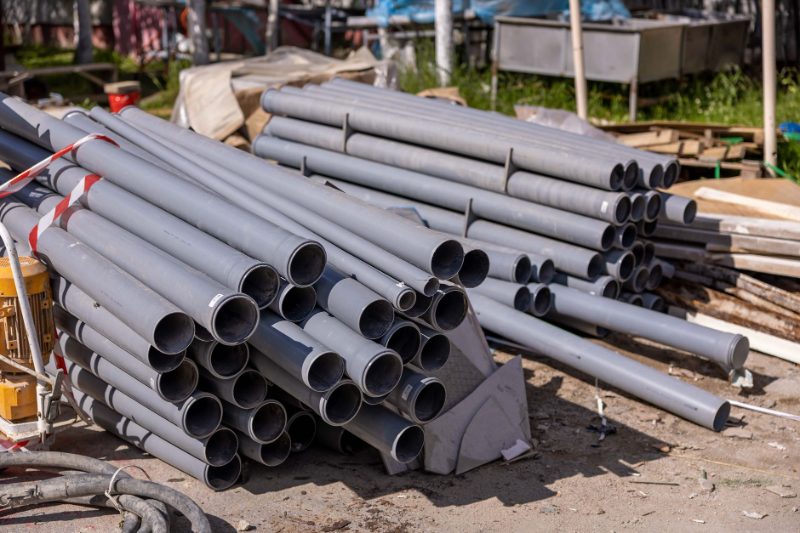
Reliance Industries’ 1.5 million-tonne-per-annum (MTPA) PVC complex and Adani Group’s 2 MTPA PVC build-out are together expected to narrow India’s roughly 2.5 million-tonne local supply gap by 2027, according to industry capacity trackers. The PVC capacity India 2027 push marks one of the largest domestic manufacturing expansions in the country’s plastics industry in over a decade.
India currently imports a significant share of its polyvinyl chloride (PVC) requirements to meet demand from pipes, cables, packaging and construction applications, leaving domestic converters exposed to volatile global feedstock prices and shipping costs. With the India Plastic Industry valued at $47.04 billion in 2026 and growing at a 6.24% CAGR toward $63.69 billion by 2031, both Reliance and Adani are moving to capture a larger share of this fast-expanding downstream demand rather than cede it to imports.
Why Are Reliance and Adani Racing to Build PVC Capacity?
Packaging alone accounted for 41.62% of India’s plastic industry market size in 2025 and is expanding at a 6.44% CAGR through 2031, while construction-linked PVC pipe demand is rising alongside government infrastructure spending. Reliance’s 1.5 MTPA facility and Adani’s 2 MTPA build-out are designed to feed this growth directly from domestic feedstock, reducing reliance on imported PVC resin and insulating converters from global price swings tied to crude oil and ethylene markets.
What Does This Mean for India’s Plastics Supply Chain?
Once fully operational, the combined 3.5 MTPA of new capacity should materially reduce India’s PVC import dependence, potentially lowering input costs for thousands of small and mid-sized converters who currently pay a premium for imported resin. It also strengthens India’s position as a regional plastics manufacturing hub, a theme that was central to the PLASTINDIA 2026 exhibition held at Bharat Mandapam, New Delhi, in February, where the world’s largest plastics show connected Indian manufacturers with global buyers and technology partners.
Market Reaction and Industry Response
India’s Commerce Minister has called for the plastics sector to target a 20% annual growth rate, and the government has continued backing large-scale petrochemical investment as part of its broader manufacturing push. Converter associations have welcomed the new capacity as a hedge against import volatility, though some industry voices caution that oversupply risk exists if global PVC demand softens before both projects ramp to full output.
What Happens Next for India’s PVC Market?
Watch for commissioning updates from both Reliance and Adani over the next 12-18 months as their PVC lines move toward full capacity. Converter pricing and import volume data over the coming quarters will show how quickly the new domestic supply is displacing imported PVC resin in India’s plastics industry.
Frequently Asked Questions
How much new PVC capacity is being added in India?
Reliance Industries is building a 1.5 MTPA PVC complex and Adani Group is developing a 2 MTPA PVC facility, together adding 3.5 MTPA of new domestic capacity aimed at closing India’s roughly 2.5 million-tonne supply gap by 2027.
Why does India rely on PVC imports today?
Domestic PVC production has not kept pace with rising demand from pipes, cables, packaging and construction, forcing converters to import resin and exposing them to global feedstock price volatility.
How big is India’s overall plastics market?
The India Plastic Industry was valued at $47.04 billion in 2026 and is projected to grow at a 6.24% CAGR to reach $63.69 billion by 2031, with packaging as the largest application segment.









Leave a comment