

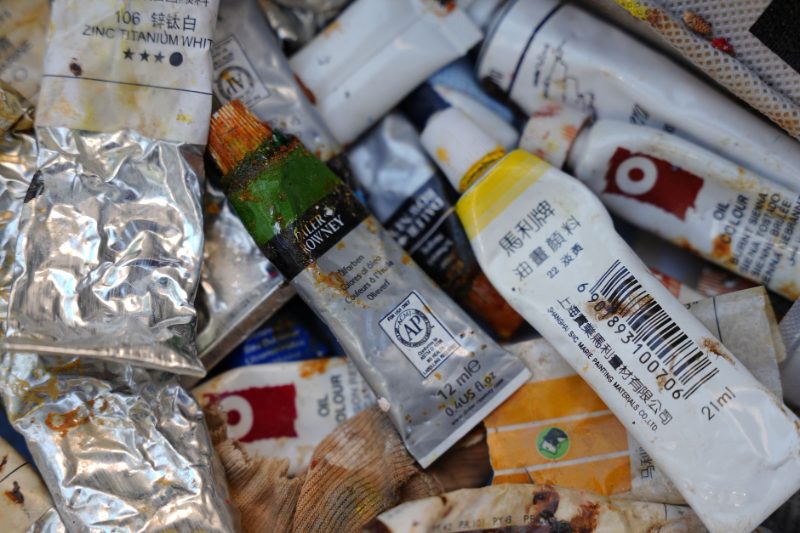
Titanium dioxide, the whitening pigment that underpins nearly every can of paint sold worldwide, has become the coatings industry’s most acute cost headache of 2026. Prices for the pigment have climbed roughly $450-$500 a tonne since January, with output falling nearly 5% month-on-month in April and cumulative year-on-year production down almost 10% through the first four months of the year. For an industry that relies on titanium dioxide for opacity and durability in everything from architectural emulsions to automotive coatings, the shortage is rewriting cost structures just as demand enters its seasonally strongest stretch.
A Sulfur Bottleneck, Not a Demand Story
Unlike past pigment cycles driven by end-market demand, this squeeze originates upstream. Geopolitical tensions in the Middle East have disrupted sulfur and sulfuric acid flows through the Strait of Hormuz, a critical corridor for feedstock used in the sulfate process that a large share of global titanium dioxide capacity depends on. Smelting acid indices have risen roughly 45% as producers scramble for alternative supply, and that cost is flowing directly into pigment quotations. Compounding the squeeze, tightening environmental regulation in key manufacturing regions is adding compliance costs to producers already grappling with capacity constraints, leaving little room for supply to catch up with even modestly firm demand.
The pigment now accounts for 44% of the application mix within the broader titanium dioxide market, which was valued near $22.4 billion in 2025 and is tracking toward $23.9 billion this year — underscoring just how central paints and coatings are to the pigment’s demand base, and how exposed the sector is to any upstream disruption.
Margins Under Pressure, Price Hikes in Motion
Coatings manufacturers are responding the only way they can in the short term: passing costs through. Multiple domestic pigment producers have issued successive price-hike notices over the past three months, and downstream paint companies have followed with their own increases to protect margins. For formulators, the arithmetic is unforgiving — titanium dioxide typically represents one of the largest single raw-material line items in a paint formulation, and a sustained few-hundred-dollar-per-tonne increase can erase a meaningful chunk of gross margin unless recovered through pricing.
The timing is awkward. Paint demand in many markets typically firms up ahead of festive and construction seasons, a period when manufacturers are reluctant to alienate dealers and consumers with aggressive price increases. That tension is forcing companies to weigh trade scheme spending and dealer incentives against outright price hikes, a balancing act that could compress margins even as raw material costs stabilize later in the year.
What It Means for the Broader Market
Analysts tracking the pigment complex expect the current tightness to persist through the second half of 2026 unless sulfur logistics normalize, a scenario contingent on de-escalation in the Middle East rather than any near-term capacity addition. Some relief may come from the fact that new titanium dioxide capacity additions have been in the pipeline globally, but ramping such projects typically takes years, not months, meaning the sulfate-process bottleneck could remain the dominant swing factor in pigment pricing well into 2027.
For paint and coatings companies, the episode is a reminder that raw material risk increasingly originates several tiers upstream, in commodities like sulfur that rarely feature in investor conversations about the sector. Procurement teams that have diversified pigment sourcing across chloride- and sulfate-process suppliers, and locked in longer-term contracts, are better positioned to weather the current cycle. Those still buying primarily on the spot market face a bumpier back half of the year, with formulation reengineering and price pass-through likely to remain the two primary levers available until the upstream bottleneck eases.












Leave a comment