

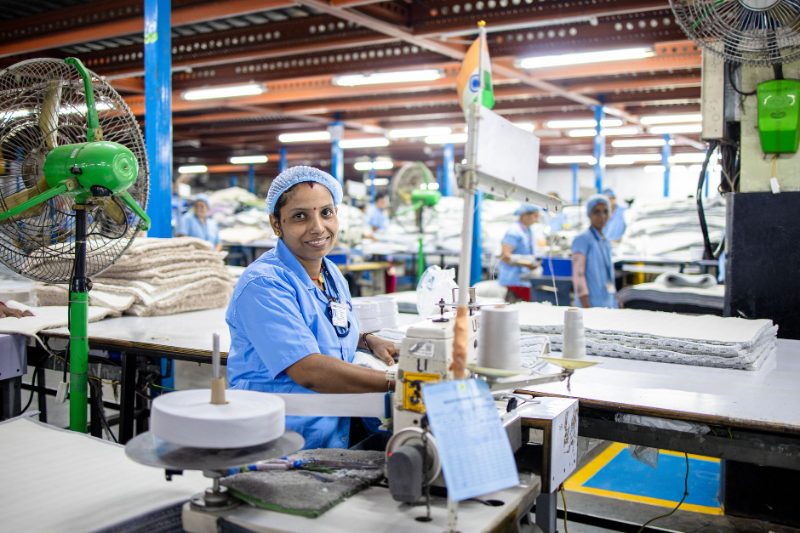
A new 10% United States tariff on Indian textile imports, combined with duty-free quotas granted to competing exporters, is threatening roughly $11 billion of India’s annual textile and apparel shipments to the US, according to industry body the Confederation of Indian Textile Industry (CITI). The tariff, confirmed in reports as of July 24, 2026, stems from a Section 301 investigation into forced-labour practices and adds a fresh layer of cost pressure for Indian exporters just as they compete for global sourcing orders.
The US has set the new tariff on Indian textiles at 10%, compared with a steeper 12.5% levy on rivals China and Vietnam, preserving some of India’s relative price advantage. However, the more consequential change is the introduction of new Textile Tariff-Rate Quotas (TRQs) for Bangladesh, Cambodia, Indonesia and Malaysia, which allow these countries to export set volumes of apparel to the US duty-free, provided they use US-grown cotton in manufacturing.
Why Do the New US Textile Quotas Matter More Than the Tariff Itself?
The 10% tariff alone would still leave India with a pricing edge over China and Vietnam, but the TRQ scheme threatens to erode that advantage from a different direction. Because the duty-free quotas require use of US-grown cotton, they create a strong financial incentive for Bangladesh, currently a major buyer of Indian cotton and fibre, to shift its sourcing toward American cotton in order to qualify. If Bangladeshi manufacturers make that switch, Indian cotton and yarn exporters could see a direct decline in demand from one of their largest regional buyers, independent of what happens to finished garment tariffs.
What Does This Mean for India’s Textile Exporters?
Industry leaders at CITI have flagged that the absence of a clear expiry date for the Section 301 tariffs compounds the uncertainty, making it harder for exporters to plan capacity and pricing. Beyond the direct 10% cost, there is a reputational dimension: the forced-labour investigation behind the tariff could influence sourcing decisions by US brands that weigh environmental, social and governance factors heavily, potentially pushing some orders toward alternative markets regardless of price. With the US accounting for close to $11 billion of India’s annual textile and apparel exports, companies including Vardhman Textiles, KPR Mill, Welspun Living, Arvind, Gokaldas Exports and Trident are all directly exposed to how the tariff and quota regime plays out.
Market Reaction and Industry Response
Textile stocks have swung on tariff-related headlines through 2026, rallying when relief measures such as the cotton import duty waiver were announced, and dropping when new US tariff actions were confirmed. CITI’s public statements have centred on urging government intervention to support export competitiveness, while acknowledging that India’s textile sector retains a comparative edge over China and Vietnam on tariff rates alone. Brokerages tracking the sector, including Motilal Oswal, have highlighted Gokaldas Exports, Arvind and Indo Count Industries among high-conviction picks even amid the tariff overhang, betting that longer-term diversification of India’s client base can offset near-term US market pressure.
What Happens Next?
Exporters and industry bodies will be watching for any clarification on the duration of the Section 301 tariffs, as well as whether the Indian government responds with fresh support measures, following the precedent of the cotton import duty exemption extended through October 30, 2026. Investors should also track export volume data over the coming months to gauge whether the TRQ-driven shift in Bangladesh’s cotton sourcing materialises, and whether US apparel brands adjust order allocations away from India in response to the ESG-related uncertainty tied to the forced-labour probe.
Frequently Asked Questions
What is the new US tariff rate on Indian textile exports?
The US has imposed a 10% tariff on certain Indian textile imports following a Section 301 investigation into forced-labour practices, compared with a 12.5% tariff on rivals China and Vietnam.
What are the new Textile Tariff-Rate Quotas and why do they matter?
The TRQs let Bangladesh, Cambodia, Indonesia and Malaysia export set apparel volumes to the US duty-free if they use US-grown cotton, which could pull Bangladeshi manufacturers away from Indian cotton and yarn, hurting upstream Indian suppliers.
How much of India’s textile exports are at risk?
CITI estimates roughly $11 billion in annual Indian textile and apparel exports to the US are exposed to the combined impact of the new tariff and competing countries’ duty-free quota access.








Leave a comment