

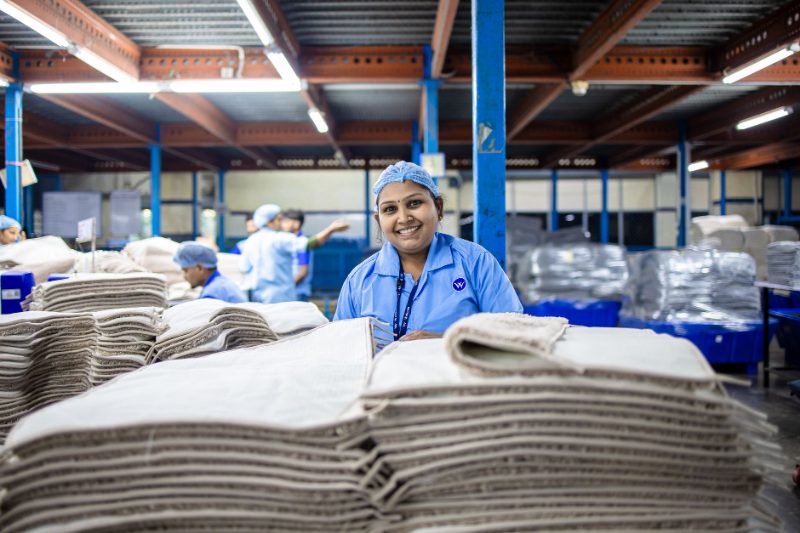
India’s plastics exports are projected to double from approximately $10 billion today to $20 billion by 2030, driven by massive domestic capacity additions in PVC and polyolefins from Reliance Industries and Adani Group. The India plastics industry 2026 outlook is further buoyed by PlastIndia 2026, the sector’s flagship international exhibition held in New Delhi in February 2026, which drew 1,800 exhibitors and underscored India’s ambitions as a global plastics manufacturing hub.
India’s plastics industry is currently valued at $47.04 billion in 2026 and has emerged as one of the country’s fastest-growing manufacturing sectors. The combination of new domestic capacity in key polymers, rising domestic consumption, and competitive labour costs positions India as a credible alternative to China for global plastic component sourcing.
How Are Reliance and Adani Reshaping India’s Plastics Supply Chain?
Two mega-projects are fundamentally altering India’s plastics supply landscape. Reliance Industries is commissioning a 1.5 million tonne per annum (MTPA) PVC complex at its Jamnagar, Gujarat refinery-petrochemical complex, while Adani Group is building a 2 MTPA PVC facility as part of its broader petrochemical ambitions. Together, these two projects will add 3.5 MTPA of PVC capacity, directly addressing India’s long-standing 2.5 million tonne domestic supply gap that currently forces the country to import PVC from China, South Korea, and Taiwan. The projects are expected to reach full capacity by FY27, which will transform India from a net PVC importer to near self-sufficiency—a structural shift that will reduce import dependence worth approximately Rs. 18,000 crore annually.
What Is Driving India’s $20 Billion Plastics Export Target?
India’s plastics exports growth rests on three pillars. First, new domestic polymer capacity will lower raw material costs for downstream plastic product manufacturers—pipes, packaging, automotive components, agricultural films—making Indian exports price-competitive in global markets. Second, the China+1 sourcing strategy adopted by multinational buyers is actively directing procurement toward India for plastic components, especially in packaging, consumer goods, and automotive sectors. Third, the government’s Production-Linked Incentive (PLI) scheme for specialty chemicals and intermediates, which indirectly benefits the plastics value chain, has attracted Rs. 4,200 crore in committed investments as of July 2026. PlastIndia 2026 generated $3.2 billion in projected business enquiries during the five-day event, according to the Plastics Export Promotion Council (PLEXCONCIL).
Market Reaction and Industry Response
The announcements have triggered a wave of downstream investment. Finolex Industries, Supreme Industries, and Astral Limited—India’s leading PVC pipe manufacturers—have all announced capacity expansion plans to capture the anticipated drop in PVC resin prices when Reliance’s plant reaches full output. Supreme Industries plans to add 80,000 tonnes of piping and fittings capacity by FY28, while Astral has committed Rs. 1,200 crore to expand adhesives and plumbing systems. International players including Berry Global (US) and Gerresheimer (Germany) have established manufacturing bases in Pune and Ahmedabad respectively to serve India’s growing pharmaceutical and food packaging markets.
What Happens Next for India’s Plastics Sector?
The commissioning of Reliance’s PVC plant in late FY27 is the single most-watched event for the Indian plastics industry. A successful ramp-up will set domestic PVC prices on a declining path, benefiting the 50,000+ downstream plastic processors who currently pay import-parity prices. Simultaneously, the government is expected to announce the Plastic Parks scheme Phase II in the Union Budget 2027, targeting the establishment of 10 additional integrated plastic manufacturing clusters across states including Tamil Nadu, Telangana, and Uttar Pradesh to absorb downstream demand.
Frequently Asked Questions
What is the current value of India’s plastics industry in 2026?
India’s plastics industry is valued at approximately $47.04 billion in 2026 and is projected to grow to $44.5–50 billion by 2030. Exports currently stand at around $10 billion and are targeted to reach $20 billion by 2030, supported by new PVC capacity from Reliance Industries and Adani Group.
When will Reliance Industries’ PVC plant be commissioned?
Reliance Industries’ 1.5 MTPA PVC complex at Jamnagar, Gujarat is expected to reach full commissioning by FY27 (2026–27). Combined with Adani’s 2 MTPA PVC facility, the two projects will add 3.5 MTPA of domestic PVC capacity, effectively closing India’s 2.5 million tonne supply gap.
How does PlastIndia 2026 reflect India’s plastics industry ambitions?
PlastIndia 2026, held at Bharat Mandapam, New Delhi, attracted 1,800 exhibitors and generated $3.2 billion in projected business enquiries according to PLEXCONCIL. The event highlighted India’s strategic focus on sustainable plastics, biopolymers, and advanced packaging, signalling the sector’s shift toward higher-value manufacturing aligned with global ESG standards.









Leave a comment