

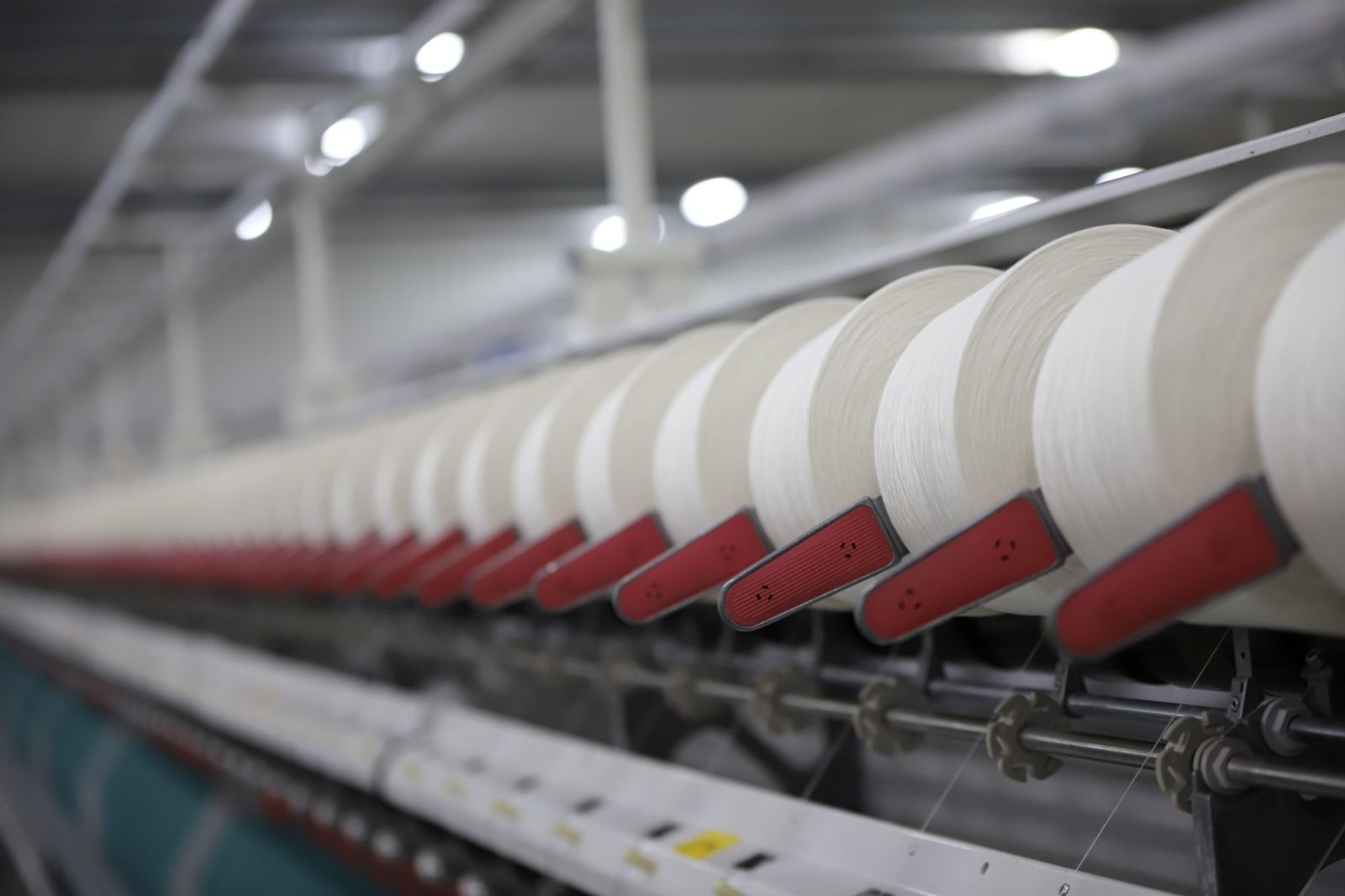
India’s textile industry, worth nearly $190 billion in FY2026, is targeting $350 billion by 2030, even as textile and apparel exports fell 2.7% to $35.8 billion in FY2026. The India textile industry outlook comes from the October 2026 update of Rubix Industry Insights, reported by Fibre2Fashion on 27 October 2026.
The report, from Rubix Data Sciences, says exports recovered in April–August 2026, rising 10.3% year on year including handicrafts. Cotton textiles grew 18.0% and man-made fibre (MMF) textiles grew 13.6% in that period.
Why Did India’s Textile Exports Fall in FY2026?
Exports to the United States fell about 7% in FY2026, while exports to major European markets rose 9%. The US took 31% of FY2026 exports and the EU nearly 16%. Readymade garments held a 44% share of textile exports. Imports rose 17.1% to $9.6 billion.
The report says that in February 2026 a US-India trade framework cut the reciprocal tariff to 18%, against 20% for Vietnam and 30% for China. In July 2026 the US added a separate 10% duty under Section 301 measures on forced-labour import enforcement. As of October 2026, trade negotiations appeared stalled, according to the report.
How Are Exporters Reducing US Dependence?
The report cites two examples. Raymond Lifestyle plans to cut its US export share from 65% to 55–60% over two years. Kitex Garments plans to cut its US share from nearly 100% to 30–35% over two to three years.
What Is Happening With Cotton Prices and Import Duty?
Cotton yarn prices rose about 60% to ₹400 per kg in September 2026 from ₹250 per kg at the start of the year. Domestic cotton production fell to 290.91 lakh bales in 2025–26 from 352.48 lakh bales in 2020–21. Cotton imports were exempt from the 11% import duty from 1 June to 31 October 2026. The industry wants a six-month extension, while farmers worry about price pressure. Industrial Front found no report of a decision on an extension in the sources reviewed.
What Support and Investment Is Planned?
The government is considering a ₹400 billion five-year Textile Expansion and Employment (TEEM) Scheme, per the report. In April 2026, 52 new applications were approved under Round III of the PLI scheme for textiles, with committed investment of ₹67.08 billion. In May 2026 the Union Cabinet approved ₹56.59 billion for the Mission for Cotton Productivity for 2026-27 to 2030-31.
Seven PM MITRA parks have been approved, and the first, in Warangal, Telangana, was inaugurated in May 2026. Among company plans, Grasim Industries announced ₹30.94 billion for phase II Lyocell capacity in June 2026, and Vardhman Textiles announced a ₹36.6 billion capex programme in July 2026.
Market Reaction and Industry Response
The Fibre2Fashion report did not include stock market reaction or trade body comment on the update. The industry’s request for a cotton duty exemption extension is the main stated demand.
What Happens Next?
The cotton import duty exemption window closes on 31 October 2026 unless extended. Other items to watch are the US-India trade talks, the proposed TEEM Scheme and PLI investment rollouts.
Frequently Asked Questions
What is India’s textile export target for 2030?
The industry targets $350 billion by 2030, up from nearly $190 billion in FY2026, according to the Rubix report.
How much did textile exports fall in FY2026?
Textile and apparel exports fell 2.7% to $35.8 billion in FY2026. Exports to the US fell about 7%.
Why does the cotton duty exemption matter?
Cotton imports were exempt from the 11% duty from 1 June to 31 October 2026, and cotton yarn prices rose about 60% to ₹400 per kg in September. The industry wants a six-month extension.
Source: Fibre2Fashion, 27 October 2026, citing Rubix Industry Insights: Textiles Update, October 2026.









Leave a comment