

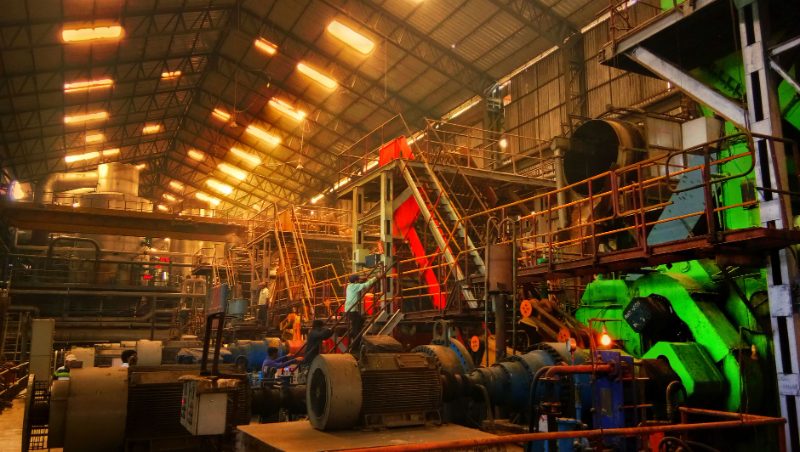
MRF has signed a memorandum of understanding with the Tamil Nadu government to build a new greenfield manufacturing plant in Sivaganga district’s SIPCOT Industrial Park, an investment expected to total around ₹5,300 crore over a 12-year period and generate approximately 1,000 direct jobs. The move by India’s largest tyre maker by revenue signals continued confidence in the domestic tyre market at a moment when raw material costs are easing and demand tailwinds from rising vehicle ownership remain intact.
A Market Sized for Sustained Expansion
The investment lands against a backdrop of robust projected growth for India’s tyre sector. The domestic tyre market reached roughly $14.45 billion in 2025 and is projected to expand to $27.67 billion by 2034, implying a compound annual growth rate of about 7.49% over the 2026-2034 period. That growth is being driven by rapid urbanisation, rising vehicle ownership, expanding road infrastructure, and government production-linked incentive (PLI) schemes that are encouraging domestic manufacturing capacity additions across the auto components value chain.
Structural shifts in the vehicle mix are also reshaping demand within the tyre category itself. Adoption of radial and tubeless tyre technologies continues to rise, while replacement demand — typically a more stable, less cyclical revenue stream than original equipment sales — remains a reliable underpinning for manufacturers with strong aftermarket distribution, a segment where MRF has traditionally held a commanding position in the Indian market.
Electric Vehicles Are Reshaping Product Requirements
Perhaps the most consequential shift underway is the rapid adoption of electric two-wheelers and fleet-integrated electric buses, which is compelling tyre manufacturers to develop specialised low-rolling-resistance, high-durability products suited to EV torque characteristics and weight profiles. EV-specific tyre fitments are now the fastest-growing sub-segment within India’s broader tyre industry, and greenfield capacity additions like MRF’s new Sivaganga plant are widely expected to be configured, at least in part, to serve this emerging category rather than solely legacy internal-combustion-engine vehicle demand.
That positioning matters strategically: manufacturers who build flexible, EV-ready capacity now are better placed to capture share as India’s electric mobility transition accelerates over the coming decade, rather than retrofitting legacy production lines later at higher cost and with first-mover disadvantage against competitors who move early.
Cost Tailwinds Add to the Investment Case
The timing of MRF’s capacity commitment also coincides with an improving raw material cost outlook. CEAT’s chief financial officer has publicly indicated an expectation that raw material prices will decline by 1-2% in the current quarter compared to the previous one, driven by softening crude oil prices and falling international natural rubber costs — a dynamic likely to benefit MRF’s cost structure as well, given the shared exposure of Indian tyre makers to the same global rubber and crude markets.
Taken together, the Sivaganga investment reflects a broader pattern among India’s leading tyre manufacturers: committing substantial capital toward domestic capacity expansion even as the industry navigates near-term cost volatility, on the conviction that structural demand growth — from replacement cycles, infrastructure expansion, and the electric vehicle transition — will comfortably absorb the additional output over the plant’s operating life.












Leave a comment