

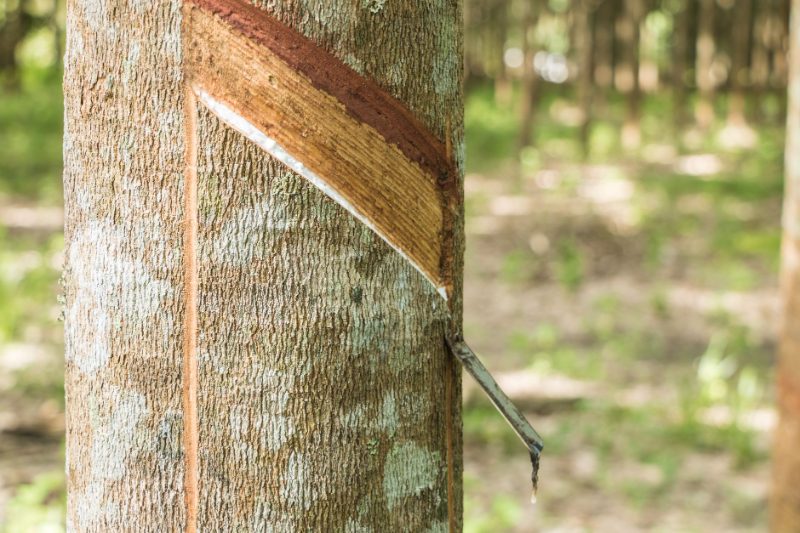
Natural rubber futures have fallen below 210 US cents per kilogram in early July, touching their lowest level in nearly two months, as a darkening outlook for Chinese vehicle demand collides with improving supply from Southeast Asia’s major producing nations. Prices closed at 209.40 cents per kilogram on July 2, down 2.97% on the day, extending a slide that has reset expectations across the tyre and industrial rubber supply chain heading into the second half of 2026.
China’s Auto Slowdown Is the Immediate Trigger
The proximate cause of the latest leg down is weakening Chinese automotive demand, historically the single largest swing factor for global rubber consumption given China’s outsized share of vehicle production and tyre manufacturing. BYD, the country’s largest electric vehicle maker, reported domestic sales down 22% year-on-year in June, a sharp deceleration that has rippled through sentiment across the rubber complex. In response, the China Passenger Car Association has lowered its full-year 2026 sales forecast to an 11% decline, a significant downward revision from a previously projected drop of just 1%, underscoring how quickly demand expectations have deteriorated over a short window.
Because tyre manufacturing consumes the majority of natural rubber output globally, any sustained pullback in vehicle sales — and by extension, replacement and original-equipment tyre demand — feeds directly through to rubber pricing. The scale of the downward revision to China’s auto outlook suggests the demand-side pressure on rubber prices may not be a short-lived blip.
Supply Side Adds to the Pressure
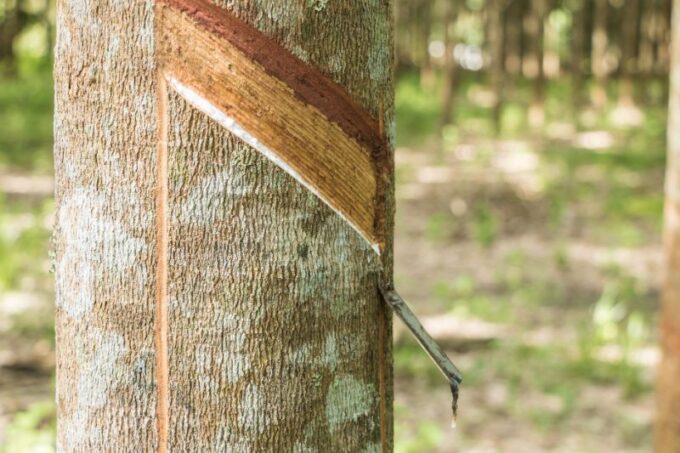
Compounding the demand concerns, supply from major Southeast Asian producers is expanding. Thailand, Indonesia and Vietnam have all reported rising output, with Indonesia and Vietnam entering their seasonal production upswing as favourable weather boosts latex yields and tapping activity. The Association of Natural Rubber Producing Countries (ANRPC) has projected global natural rubber production will rise 2.4% to 15.34 million tonnes in 2026, reinforcing expectations of ample supply even as demand signals soften.
Adding a further headwind, oil prices have also extended their losses, drifting back toward levels seen before the recent Middle East conflict. Because natural rubber competes directly with petroleum-based synthetic rubber in many industrial applications, cheaper oil makes synthetic alternatives more price-competitive, adding another layer of pressure on natural rubber values even independent of the China demand story.
What It Means for Tyre Makers and Growers
For tyre manufacturers, the combination of softer rubber prices and easing crude costs is a welcome, if double-edged, development. Lower raw material costs support margins at a moment when several manufacturers, including India’s CEAT, have already flagged expectations of raw material prices declining by 1-2% in the current quarter compared to the prior one, driven by softening crude oil and international rubber prices. That relief comes even as revenue growth prospects tied to vehicle sales remain uncertain given the broader China-led demand slowdown.
For rubber growers and producing nations, however, the falling price environment is less welcome, particularly for smallholder farmers across Southeast Asia whose incomes are directly tied to tapping volumes and spot prices. With ANRPC projecting continued output growth into 2026, the near-term outlook points to a market that remains oversupplied relative to demand unless China’s auto sector stabilises faster than current forecasts suggest — a dynamic that will keep rubber pricing under close watch across both producing and consuming markets in the months ahead.









Leave a comment