

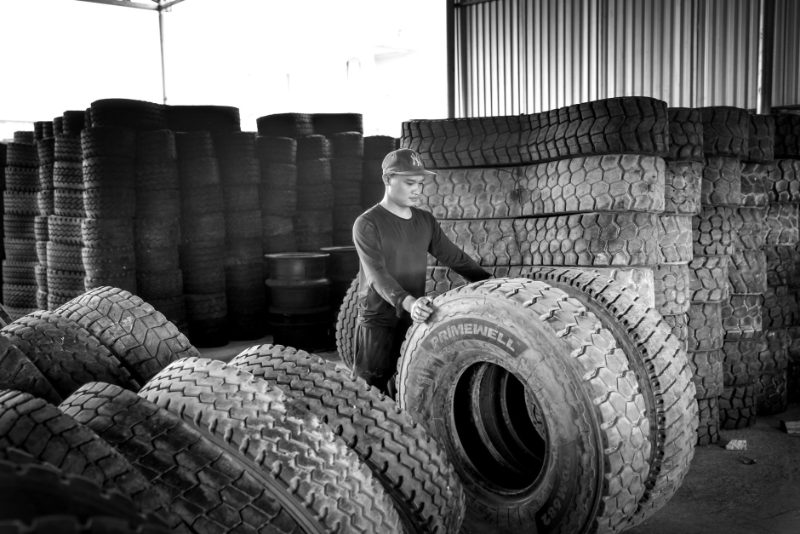
The All India Rubber Industries Association (AIRIA) has renewed its push for higher import duties on finished rubber products, arguing that cheap imports are undercutting domestic manufacturers even as global natural rubber prices decline. The association’s demand comes as India’s rubber processing sector, where more than 80% of manufacturing units operate under the MSME framework, contends with heightened tariff regimes in key export markets, volatile exchange rates, and sustained raw material price pressure.
AIRIA’s representation to the government argues that while falling natural rubber prices are helping large tyre manufacturers, small and medium rubber goods processors — who make products ranging from industrial belts and hoses to footwear and rubber components — continue to face margin pressure from cheaper finished-goods imports, particularly from Southeast Asian producers who have ramped up rubber cultivation and processing capacity in recent years.
Why Is the Rubber Industry Demanding Higher Import Duties Now?
India’s rubber goods sector says the current duty structure fails to protect domestic MSME processors from a flood of cheaper finished rubber products entering the market, even as raw material costs for imported goods have fallen alongside the global natural rubber price decline. With countries like Thailand, Vietnam, Indonesia and Malaysia substantially increasing rubber cultivation to meet automotive industry demand, AIRIA contends that finished-goods exporters from these countries can undercut Indian manufacturers on price, squeezing the MSME-dominated segment of India’s rubber industry that plays a vital role in regional industrial employment.
What Does This Mean for India’s Rubber Manufacturing Sector?
A higher import duty, if implemented, would raise the landed cost of finished rubber goods entering India, potentially giving domestic MSME processors room to compete on price while preserving employment in rubber manufacturing clusters. However, industry watchers note that any duty increase must be balanced against the interests of downstream industries that rely on imported rubber components, as well as India’s broader trade negotiating position in ongoing free trade agreement discussions. The debate echoes similar tensions in India’s plastics and chemicals sectors, where domestic producers have periodically sought tariff protection against cheaper imports.
Market Reaction and Industry Response
AIRIA’s demand has been raised in the context of pre-budget consultations and ongoing discussions between the rubber industry and the Ministry of Commerce and Industry. Rubber goods manufacturers, particularly in MSME clusters, have welcomed the association’s advocacy, while some downstream users of rubber components have cautioned that higher duties could raise input costs for their own products. The Rubber Board of India continues to track raw material price trends closely, given the divergent impact of falling rubber prices on growers versus processors.
What Happens Next?
The government is expected to weigh AIRIA’s import duty request as part of its broader trade and tariff policy review, with any decision likely to be influenced by ongoing free trade agreement negotiations and India’s commitments under existing trade pacts. Industry watchers will track upcoming budget announcements and Ministry of Commerce consultations for signals on whether the government moves to raise duties on finished rubber imports, a decision that would have direct implications for MSME rubber processors ahead of the 2026-27 fiscal year.
Frequently Asked Questions
Why is AIRIA seeking higher import duties on rubber products?
AIRIA argues that cheaper finished rubber goods imports, especially from Southeast Asian producers with expanding rubber capacity, are undercutting India’s MSME-dominated rubber processing sector even as raw material costs decline.
How many rubber manufacturing units in India are MSMEs?
Over 80% of India’s rubber manufacturing units operate under the MSME framework, making them especially sensitive to import competition and raw material price swings.
Could higher import duties affect other industries that use rubber components?
Yes. While higher duties would help domestic rubber processors compete, downstream industries that import rubber components could see increased input costs, a trade-off policymakers are expected to weigh carefully.











Leave a comment